
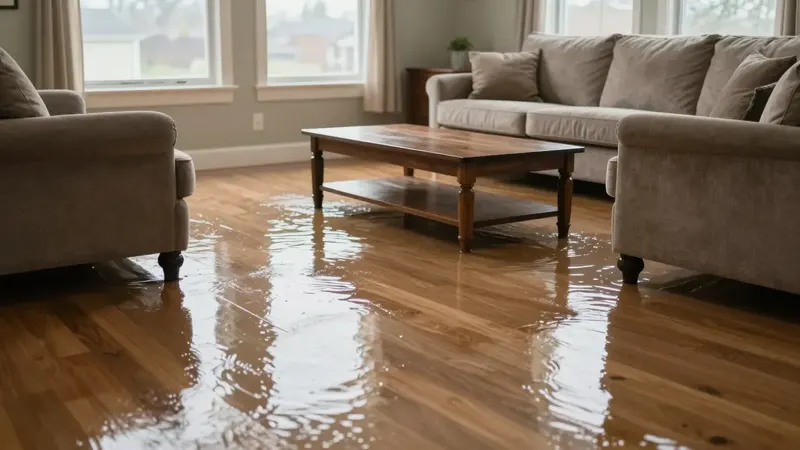
Fire & Water Energy is a referral service, not a contractor. Call (866) 937-3230 and we'll try to connect you with an independent restoration company that serves your part of Texas, from a flooded slab home in Houston to a burst pipe in Lubbock or smoke damage in the Panhandle.
Availability depends on the independent providers working near your address, so we never promise who can come or when. This page outlines the hazards Texans face most often, how they change from region to region, and the state rules that apply to mold work.
Texas hazards, from the Gulf to the Panhandle
The Gulf coast has a long hurricane record. The 1900 Galveston hurricane killed about 8,000 people, the deadliest natural disaster in U.S. history, and later storms including Carla (1961), Alicia (1983), Rita (2005), Ike (2008) and Harvey (2017) caused major damage, according to the Wikipedia article on Texas climate. The upper coast has received 56 percent of the state's tropical cyclone landfalls since 1851.
- Flash floods: The Balcones Escarpment in Central Texas is the most flood-prone area in the state, and floods are most common in spring and early autumn.
- Tornadoes and severe storms: Texas averages 139 tornadoes a year, the most of any state, mostly in North Texas and the Panhandle from April through June. The same storm systems bring hail and wind that damage roofs and let rain into attics.
- Freezes: In February 2021, Austin spent 168 hours at or below freezing and Abilene 252 hours.
- Wildfire: The Smokehouse Creek fire, which began February 26, 2024, near Stinnett, burned about 1,058,482 acres in the Panhandle, the largest wildfire on record in Texas (Wikipedia).
Three events that shaped Texas restoration work
Hurricane Harvey (2017) made landfall near Rockport as a Category 4 on August 26, 2017, then stalled. Nederland recorded 60.58 inches of rain, the wettest tropical cyclone on record in the United States, and flooding in Greater Houston and Southeast Texas inundated hundreds of thousands of homes. Only about 15 percent of Harris County homes had NFIP flood insurance (Wikipedia).
The February 2021 freeze left more than 4.5 million homes and businesses without power. Water service was disrupted for more than 12 million people as pipes froze and burst, and Austin lost more than 325 million gallons to broken pipes by February 18 (Wikipedia). Many homes had water damage from split supply lines in walls and attics.
The July 2025 Central Texas floods sent the Guadalupe River up about 26 feet in 45 minutes. The floods killed 136 people, 117 of them in Kerr County (Wikipedia).
Restoration help in Texas
Call (866) 937-3230 and tell us what happened and where in Texas.
How damage differs by region
Houston and the upper Gulf Coast combine hurricane surge, tropical rain and flat terrain with clay soils, so slab-on-grade homes flood from both rising water and street ponding. Humid air also makes drying slower and mold more likely.
Central Texas and the Hill Country are prone to sudden river and creek flooding along the Balcones Escarpment, where rain on thin soils runs off quickly.
Dallas–Fort Worth and North Texas see spring tornadoes, hail and wind, plus pipe freezes during Arctic outbreaks. Roof and window damage often leads to interior water damage.
West Texas, El Paso and the Panhandle are semi-arid to desert, with the coldest winters in the Panhandle. Wildfire smoke, dust and freeze damage are more common than prolonged flooding, though intense storms can still flood streets.
East Texas is humid, with more than 60 inches of rain a year in the far east and spring severe storms in the Piney Woods. South Texas and the Rio Grande Valley are mostly semi-arid inland but wetter on the coast, and tropical systems can bring heavy rain.
What restoration contractors usually do
A typical restoration contractor inspects the property, maps moisture with meters, and extracts standing water. Contractors commonly remove saturated carpet pad, baseboards and lower drywall, then set air movers and dehumidifiers and take daily readings until materials are dry. For freeze damage, they often open walls to find every split line once a plumber has made repairs.
Fire and smoke projects involve soot cleanup, odor treatment and board-up, and wildfire smoke can require cleaning HVAC systems and contents. See our guides to flood damage restoration, burst pipe water damage and smoke damage cleanup.
Insurance basics and mold licensing in Texas
Most homeowners insurance does not cover flood damage (FloodSmart.gov), and an NFIP policy generally takes effect 30 days after purchase, with limited exceptions (NFIP policy terms). Along the coast, the Texas Windstorm Insurance Association is a not-for-profit insurer offering windstorm and hail coverage to property owners who cannot get it in the regular market. The Texas Department of Insurance answers consumer questions. Coverage depends on your policy; check with your insurer or agent.
Texas regulates mold work through the Texas Department of Licensing and Regulation. According to the TDLR mold FAQ, anyone providing mold assessment must be licensed. Areas of visible mold under 25 contiguous square feet can be cleaned by people who are not licensed, while larger jobs in residential properties with 10 or more units must be done by a licensed remediator. Exemptions can apply to buildings with fewer than 10 rental units, including houses, and to some owners doing their own work. The same company generally may not perform both the assessment and the remediation on one project. Licensed remediators file project notices through TDLR's Mold Remediation Notification System.
Ask any mold contractor for their TDLR license number, and ask whether technicians hold IICRC certification.
Safety and official alerts
Never walk or drive into floodwater. The National Weather Service warns that 6 inches of fast-moving water can knock over an adult, 12 inches can carry away most cars and 2 feet can sweep away SUVs and trucks (Turn Around Don’t Drown). Inside, stay out of water that may touch outlets or the panel, leave if you smell gas, and call 911 in an emergency.
The CDC advises drying a flooded home within 24–48 hours to limit mold, and people with asthma or mold allergies should stay away from cleanup (CDC). The Texas Division of Emergency Management posts disaster updates, TexasReady.gov storm tips, wildfire information and a damage reporting portal. Follow your county emergency management office and NWS forecasts.
Restoration guides
- Flood Damage Restoration
- Water Damage Restoration
- Hurricane Damage Cleanup
- Burst Pipe Water Damage
- Storm Damage Cleanup
- Mold Remediation
- Smoke Damage Cleanup
- Fire Damage Restoration
Texas restoration FAQs
Does Fire & Water Energy send its own workers in Texas?
No. Fire & Water Energy is a referral service. We try to connect callers with independent restoration contractors, who set their own pricing, terms and schedules.
Do I need a licensed contractor for mold in Texas?
TDLR licenses mold assessors and remediation contractors. Small areas under 25 contiguous square feet can be cleaned by unlicensed people, and exemptions apply in some homes, so check TDLR's mold FAQ. If you hire a mold company, ask for its TDLR license.
Does TWIA cover flooding?
TWIA offers windstorm and hail coverage on the Texas coast. Flood is a separate peril, typically covered by a flood policy such as the NFIP. Coverage depends on your policy; check with your insurer or agent.
What should I do first after pipes burst in a freeze?
Close the main water shutoff, cut power to wet areas if it is safe, and photograph everything. A plumber fixes the line; a restoration contractor handles drying and damaged materials.
How quickly should a flooded home be dried?
The CDC recommends drying a home out fully within 24 to 48 hours after a flood to limit mold. Texas Gulf Coast humidity makes this harder, so contractors usually rely on dehumidifiers.
Can you refer someone after a hurricane or major flood?
Call (866) 937-3230 and we'll try. After a large event, demand is high and availability depends on the independent providers serving your address.
Sources
- Climate of Texas (Wikipedia)
- Hurricane Harvey (Wikipedia)
- 2021 Texas power crisis (Wikipedia)
- July 2025 Central Texas floods (Wikipedia)
- Smokehouse Creek fire (Wikipedia)
- Texas Division of Emergency Management
- Texas Department of Insurance: Consumers
- Texas Windstorm Insurance Association
- TDLR: Mold Assessors and Remediators FAQ
- TDLR: Mold Assessors and Remediators
- FloodSmart.gov (NFIP)
- FloodSmart.gov: Buy a Flood Insurance Policy (waiting period)
- National Weather Service: Turn Around Don't Drown
- CDC: About Mold