
The Texas side of Texarkana sits in Bowie County at about 325 feet, with its twin city in Arkansas directly to the east and Lake Wright Patman just outside town. Wagner, Cowhorn, Swampoodle and Days creeks wind through the area, and the Red River runs to the north.
Fire & Water Energy is a phone-based referral service; we don't perform repairs. Call (866) 937-3230 and we will try to connect you with an independent restoration contractor that works in Texarkana, Nash, Wake Village and the surrounding Bowie County area. A match depends on which local providers can take on work at the moment. The how it works page and our referral disclosure spell out the arrangement between callers, us and contractors.
Heavy rain, ice and wind in the Ark-La-Tex
Texarkana has a humid subtropical climate and collects about 52 inches of precipitation in an average year, with December typically the wettest month. Cold snaps reach here too: the record low is minus 6 degrees, set in December 1989, and a couple of inches of snow fall in a typical winter.
Bowie County's federal disaster declarations since 2000 include a Severe Winter Ice Storm (2001), Hurricane Rita (2005), Hurricane Ike (2008), wildfires in 2006 and 2011, severe storms and flooding in 2015 and 2024, the 2021 Severe Winter Storms and Hurricane Beryl (2024). Even Lake Wright Patman produced a waterspout tornado on May 16, 2020.
Why Texarkana houses take on water
With that much rain, roof leaks, clogged gutters and water seeping into crawlspaces are common complaints, especially in older houses near downtown. Ice storms add weight to roofs and trees, and freezing temperatures can split pipes in unheated crawlspaces and exterior walls. Summer brings AC condensate overflows and the usual failures of water heaters and washer hoses.
For water damage restoration in Texarkana, a contractor will normally fix or isolate the source, extract water, check subfloors and framing with meters and run drying equipment until moisture readings are normal. Our pages on water damage restoration and ceiling water damage repair describe the steps.
Federal disaster declarations that included Bowie County
FEMA records show Bowie County was included in 9 major disaster declarations for weather or fire events from 2000 through 2026 (3 hurricane, 2 severe ice storm, 2 fire, 1 flood, 1 severe storm, by FEMA incident type). Declarations are made at the county level, so they do not mean every neighborhood in Texarkana was affected. The most recent:
- 2024 – Hurricane Beryl (DR-4798)
- 2024 – Severe Storms, Straight-line Winds, Tornadoes, and Flooding (DR-4781)
- 2021 – Severe Winter Storms (DR-4586)
- 2015 – Severe Storms, Tornadoes, Straight-line Winds and Flooding (DR-4223)
- 2011 – Wildfires (DR-4029)
- 2008 – Hurricane Ike (DR-1791)
Source: OpenFEMA Disaster Declarations Summaries, retrieved 2026-10-10. Counts include major disaster (DR) declarations with hurricane, flood, severe storm, tropical storm, fire, tornado, coastal storm, winter or ice storm, mudslide and dam/levee incident types.
Water, fire or storm damage in Texarkana?
Call (866) 937-3230 and tell us what happened at your Texarkana property.
Smoke and fire recovery in Bowie County
Bowie County was included in wildfire declarations in 2006 and 2011, so dry spells can bring grass fire smoke to the edge of town. Most residential fires, however, still trace back to kitchens, space heaters in winter and old wiring.
After a fire, a restoration crew usually secures the house, removes debris, cleans soot from walls, ceilings and contents, and deodorizes the HVAC system. Our fire damage cleanup and soot removal pages cover that work in more detail.
Microbursts, ice storms and floodwater cleanup
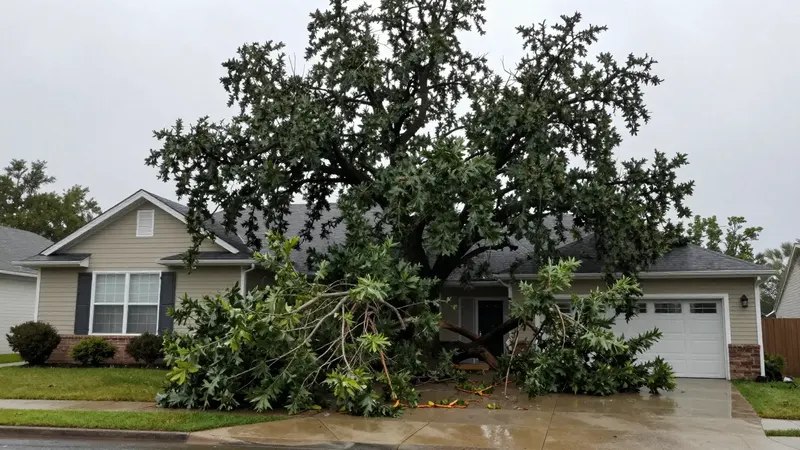
The 2008 microburst showed how fast straight-line winds can bring down trees and power lines. Downed limbs often puncture roofs, letting rain soak attics and ceilings below. Ice storms can do similar damage over a wider area.
When creeks or poor drainage push water into a house, treat it as contaminated: contractors generally remove saturated flooring and lower drywall, disinfect and then dry the frame. Find more on storm damage cleanup and flood damage restoration.
Mold in a wet, humid East Texas town
Humid summers and frequent rain make crawlspaces, attics and bathrooms prime spots for mold. Wet materials can begin to grow it within a day or two.
EPA guidance allows homeowners to clean small areas, generally under 10 square feet, after the moisture is fixed. Larger areas, mold after floodwater, or growth in the duct system are better handled by mold remediation professionals using containment.
Staying safe after damage in Texarkana
- Call 911 for fires, injuries, gas leaks or fallen power lines.
- Stay clear of downed lines and trees tangled in wires after a windstorm.
- Check forecasts and warnings from the National Weather Service in Shreveport, which covers Texarkana.
- Turn off water at the main and cut power to wet areas only if it is safe.
- Photograph damage and keep receipts for tarps, board-up and other temporary repairs.
- Ask your insurer or agent what your policy includes before signing off on major repairs; coverage depends on your policy.
Neighborhoods and nearby communities
Areas in and around Texarkana that callers often mention include:
- Pleasant Grove
Nearby communities with their own pages (straight-line distance from Texarkana):
- Marshall · 64 mi
- Shreveport, LA · 65 mi
- Bossier City, LA · 65 mi
- Minden, LA · 71 mi
- Longview · 75 mi
- Paris · 88 mi
Texarkana restoration FAQs
Which weather office issues warnings for Texarkana?
The National Weather Service office in Shreveport covers Texarkana and posts its observations and climate summaries. Turning on wireless emergency alerts on your phone helps you hear about warnings from that office overnight.
Do ice storms really hit Texarkana?
Yes. Bowie County was part of a Severe Winter Ice Storm declaration in 2001 and the Severe Winter Storms declaration in 2021. Ice can bring down limbs onto roofs and freeze pipes in crawlspaces.
What was the 2008 Stateline Avenue windstorm?
On May 22, 2008, a microburst produced winds up to about 100 mph over Stateline Avenue and nearby areas. Microbursts can cause damage similar to a tornado without any rotation.
I live on the Arkansas side. Can I still call?
You can call (866) 937-3230 from either side of State Line and we will try to connect you with an independent contractor serving your address. A match is never certain, since it rests on which firms near the state line have room on their schedules.
Restoration guides
- Storm Damage Cleanup
- Water Damage Restoration
- Ceiling Water Damage Repair
- Flood Damage Restoration
- Fire Damage Cleanup
- Mold Remediation