
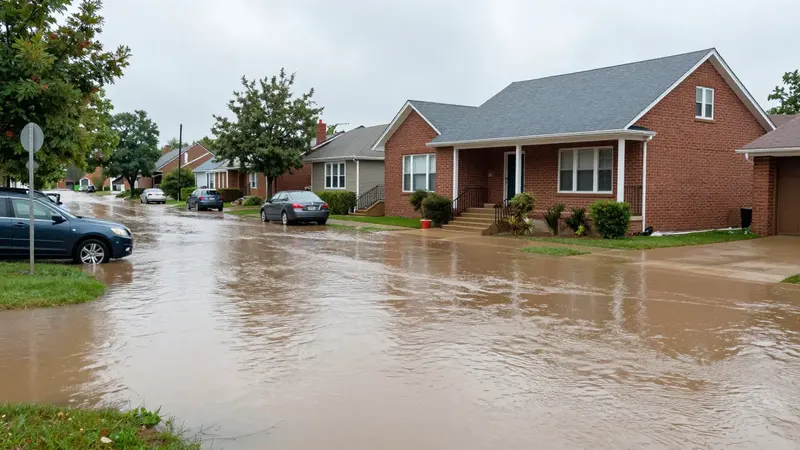
Someone searching for flood damage restoration is usually looking past the first muddy days toward the question of how the house becomes livable again. Restoration is the umbrella for that whole project: emergency mitigation, removal of ruined materials, controlled drying, and the reconstruction that puts walls, floors, cabinets, and finishes back.
Fire & Water Energy does not perform restoration. We are a referral service, and when you call (866) 937-3230 we'll try to connect you with an independent restoration contractor serving your area, subject to which providers are available there.
When a full restoration project makes sense
A restoration contractor is most useful when flood damage goes beyond a quick cleanout. Signs you are looking at a multi-phase project:
- Drywall, insulation, or flooring had to be removed, leaving open wall cavities and bare subfloor.
- Cabinets, doors, trim, or built-ins absorbed water and swelled.
- Mechanical systems such as the furnace, water heater, or ductwork sat in floodwater.
- You need one company, or a coordinated set of trades, to carry the job from wet house to finished rooms.
If you only need water and mud removed right now, flood cleanup describes that narrower first stage.
The restoration sequence most contractors follow
Contractors commonly break a flood job into phases, and each phase should be documented before the next begins:
- Assessment. Walk through for safety hazards, map affected rooms, and take baseline moisture readings.
- Mitigation. Secure openings, extract remaining water, and remove materials that cannot be saved. If roof, window, or door damage lets weather in, the EPA says tarps should be secured before cleanup starts.
- Cleaning and disinfection. Wash and sanitize framing, slabs, and salvageable hard surfaces.
- Drying. Run air movers and dehumidifiers, checking moisture levels on a schedule.
- Dry-standard verification. Confirm framing and subfloors have reached acceptable moisture levels. The EPA stresses that everything must be completely dry before walls and flooring are refinished or replaced, to prevent mold and loss of structural integrity.
- Reconstruction. Replace insulation, drywall, flooring, trim, and cabinets, then paint and finish. Larger rebuilds may move into property damage reconstruction.
Protecting your health during a long project
Restoration stretches over weeks, so safety is not only a day-one concern. Stay out if there is any electrical, gas, or structural hazard, and call 911 in an emergency. Follow instructions from local emergency management about when to return.
- Mold: The EPA notes that things wet for more than two days usually get moldy. Sensitive people should avoid moldy areas until they are cleaned.
- Asbestos and lead: Older homes may contain asbestos, and the EPA advises not to remove asbestos-containing vinyl tile yourself. Disturbing lead-based paint can raise lead dust levels.
- Carbon monoxide: Keep generators and fuel-burning equipment outdoors and away from windows.
- Do not close up walls early to speed things along; trapped moisture can lead to mold and rework later.
Need help with flood damage restoration?
Call (866) 937-3230 and tell us what happened and where.
Working through a flood insurance claim
Most homeowners insurance does not cover flooding, so restoration after a flood is often tied to a separate flood policy. Coverage depends on your policy; check with your insurer or agent about what is included. FloodSmart outlines a claim process that lines up with restoration phases:
- Report the loss to your insurance provider as soon as possible so an adjuster can be assigned.
- Photograph and video damage before cleanup, and keep samples of carpet, flooring, and curtains.
- When the adjuster visits, FloodSmart suggests asking to see their Flood Control Number card and driver's license.
- You can begin repairs before payment, but FloodSmart advises talking with your agent or adjuster before signing a contract with a contractor.
- NFIP policies do not cover mold damage, which is one more reason to keep the drying phase on track.
Choosing a restoration contractor for a flood
A restoration job touches several trades, so vet the company carefully:
- Confirm any contractor license your state requires, plus liability and workers' compensation insurance.
- Ask for a written, itemized estimate that separates mitigation from reconstruction.
- Ask whether technicians hold IICRC certification and whether they follow IICRC S500 for water damage, and S520 if mold is found.
- Ask how they document drying with moisture readings, and whether those logs will be shared with you and your adjuster.
- Ask who handles electrical, HVAC, and plumbing work, and whether those trades are licensed.
- Be cautious with anyone who wants large payments up front or pressures you to sign immediately.
Restoration versus cleanup, drying, and repair
Restoration is the full project. Flood cleanup is the removal stage, structural drying is the moisture-control stage, and water damage repair focuses on rebuilding after things are dry. If the water came from a storm-damaged roof or windows rather than rising water, storm water damage restoration is the closer match. Read our referral disclosure for how we work with providers.
Frequently asked questions
How long does flood damage restoration take?
It depends on how much was damaged, how long drying takes, and how quickly materials and trades are available. Ask any contractor for a written schedule by phase, and expect drying to be confirmed with moisture readings before rebuilding starts.
Why can't the walls go back up right away?
The EPA says everything must be completely dry before walls and flooring are refinished or replaced. Closing up damp framing can trap moisture, which leads to mold and weakens materials.
Does flood insurance pay for mold that develops later?
FloodSmart states that NFIP policies do not cover mold damage, which is why preventing mold during drying matters. Private policies differ, so check with your insurer or agent.
Can I start repairs before my claim is paid?
FloodSmart says you can begin repairs before receiving payment, but recommends talking with your agent or adjuster before signing a contract with a contractor. Keep receipts and photos of everything.
What is the difference between mitigation and restoration?
Mitigation is the work that stops damage from getting worse, such as extraction, tear-out, and drying. Restoration includes mitigation plus the rebuilding that returns the home to its pre-flood condition.
Should I worry about asbestos or lead during restoration?
In older homes, yes. The EPA warns that vinyl floor tile may contain asbestos and that disturbing lead-based paint raises lead dust, so ask your contractor how they test for and handle these materials.
Related services
Find flood damage restoration help by state
- Florida
- Georgia
- Texas
- Louisiana
- Alabama
- Mississippi
- California
- South Carolina
- North Carolina
- Tennessee
- Arizona
- New Mexico
- Virginia
- Maryland
- Oregon
- Washington