
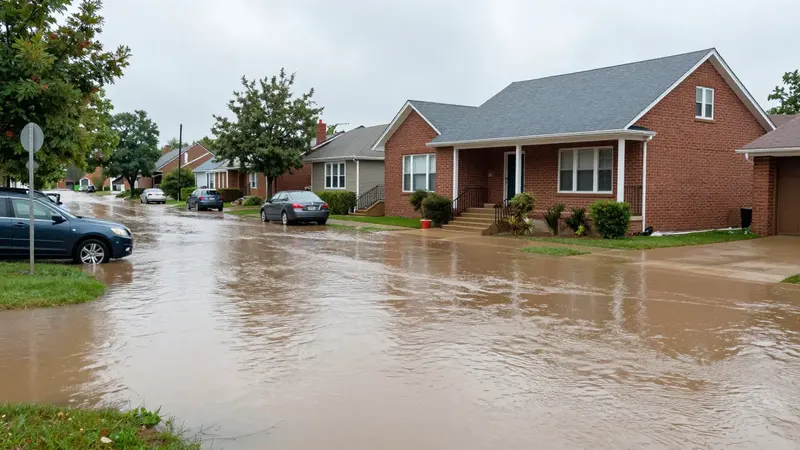
Austin straddles the Balcones Fault on the Colorado River. The city describes itself as sitting in the heart of Flash Flood Alley, and the thin soils over limestone on the west side mean a hard thunderstorm can turn creeks and streets into fast water within minutes. Add the deep freezes of 2021 and 2023, and Central Texas homeowners deal with more water damage than the sunny reputation suggests.
We are not a restoration contractor; Fire & Water Energy runs a referral line. Dial (866) 937-3230 and we will try to put you in touch with an independent restoration company working in Austin and the surrounding parts of Travis County. Whether a provider is available depends on local contractors at the time you call. The steps behind a referral are laid out on how it works, and our referral disclosure covers the business side.
Flash Flood Alley, the Highland Lakes and Central Texas freezes
The Balcones Fault splits the city in two. East of it the ground is flat with heavy clay and loam; west of it are rolling limestone hills with little topsoil, so rain runs off rather than soaking in. Lady Bird Lake and Lake Austin sit on the Colorado River in town, and the dams of the Lower Colorado River Authority's Highland Lakes help hold back runoff. In 2018 Lake Travis climbed to 146% full, four Mansfield Dam floodgates were opened, and a citywide boil-water advisory followed. The remnants of Hurricane Sergio brought flash flooding that same fall.
Cold is the other hazard. Ice storms show up roughly every other year, Winter Storm Uri dropped 6.4 inches of snow in February 2021 alongside rolling blackouts, and a freeze starting January 30, 2023 left about 170,000 Austin Energy customers without power or heat for days. FEMA declarations covering Travis County since 2000 include Hurricane Harvey (2017), flooding in 2013, 2015, 2016 and 2019, the 2011 Wildfires, and Severe Storms, Straight-line Winds, and Flooding in 2025.
What usually causes water damage in Austin homes
Long freezes are hard on plumbing that was never insulated for them. Pipes in attics, exterior walls and garages can split during a multi-day cold snap, and the leak often shows up only once things thaw. In summer the AC runs for months, so clogged condensate lines and rusted drain pans are a steady source of stained ceilings. Water heaters, washing machine hoses and slab leaks round out the list.
If you are looking for water damage restoration in Austin, a reputable company will usually find and stop the source, extract standing water, take moisture readings, remove materials that can't be saved and run drying equipment until readings reach target levels. More detail is on our burst pipe water damage and water damage repair pages.
Federal disaster declarations that included Travis County
FEMA records show Travis County was included in 14 major disaster declarations for weather or fire events from 2000 through 2026 (4 flood, 4 severe storm, 2 hurricane, 2 fire, 1 winter storm, 1 severe ice storm, by FEMA incident type). Declarations are made at the county level, so they do not mean every neighborhood in Austin was affected. The most recent:
- 2025 – Severe Storms, Straight-line Winds, and Flooding (DR-4879)
- 2023 – Severe Winter Storm (DR-4705)
- 2021 – Severe Winter Storms (DR-4586)
- 2019 – Severe Storms and Flooding (DR-4416)
- 2017 – Hurricane Harvey (DR-4332)
- 2016 – Severe Storms and Flooding (DR-4272)
Source: OpenFEMA Disaster Declarations Summaries, retrieved 2026-10-10. Counts include major disaster (DR) declarations with hurricane, flood, severe storm, tropical storm, fire, tornado, coastal storm, winter or ice storm, mudslide and dam/levee incident types.
Water, fire or storm damage in Austin?
Call (866) 937-3230 and tell us what happened at your Austin property.
Smoke, soot and wildfire seasons in Travis County
Drought and extreme heat in 2011 fed wildfires across the region, including the Bastrop County Complex Fire, and FEMA's 2011 Wildfires declaration (DR-4029) covered Travis County. Homes on the wooded western hills face the most exposure, but even distant fires can push smoke into attics and HVAC systems.
Most house fires still start indoors, in kitchens, dryers or wiring. Contractors commonly test soot type, vacuum and dry-sponge loose residue, wash surfaces, clean or replace ductwork and treat lingering odor. Our pages on fire damage restoration and smoke odor removal walk through that work.
Creek flooding and storm cleanup along the Colorado River
Floodwater that crosses the yard or rises through a slab is not the same as a clean supply-line leak. It carries soil, sewage and chemicals, which the industry treats as Category 3 water. Affected drywall, insulation and carpet pad usually have to go, and surfaces need cleaning and disinfecting before drying.
Thunderstorms and tornadoes also damage roofs and drop limbs; the city was struck by deadly twin tornadoes in 1922, and the 1997 Central Texas outbreak hit the metro area. After a storm, tarping and board-up help limit further rain damage. Our flood cleanup and storm damage cleanup pages explain the usual steps.
Keeping mold out of a humid subtropical house
Central Texas has a humid subtropical climate, and wet drywall or carpet left for a day or two in warm weather is enough for mold to start. Attics above an old roof leak and wall cavities behind a frozen pipe are common hiding spots.
EPA guidance says a homeowner can often clean a moldy patch smaller than about 10 square feet, provided the moisture problem is fixed. Larger growth, mold in ductwork, or growth after sewage or floodwater usually calls for professional remediation with containment. Read more on mold remediation.
First steps after damage in Austin
- Call 911 if anyone is hurt, you smell gas, or water is rising around you.
- Never drive into a flooded road or low-water crossing. The city notes that about 75% of flood-related deaths in Texas happen in vehicles.
- Kill the electricity to soaked rooms only when the panel sits somewhere dry and you can get to it without wading.
- Stay off sagging ceilings and floors, and wear gloves and boots around floodwater.
- Photograph every room and damaged item before cleanup, and keep receipts. What gets paid depends on the wording of your policy, so talk to your insurer or agent early.
- Watch for boil-water advisories after big freezes or floods, as happened in 2018 and 2021.
Neighborhoods and nearby communities
Areas in and around Austin that callers often mention include:
- Downtown
- Clarksville
- Wheatville
- Pleasant Hill
- East Austin
- East Riverside
- South Austin
- Circle C Ranch
Nearby communities with their own pages (straight-line distance from Austin):
- Pflugerville · 14 mi
- Cedar Park · 17 mi
- Round Rock · 17 mi
- Kyle · 21 mi
- Leander · 23 mi
- Georgetown · 26 mi
Austin restoration FAQs
Why does Austin flood so fast after heavy rain?
Much of the west side is limestone hill country with thin topsoil, so rainfall runs off instead of soaking in. That runoff reaches creeks and low spots quickly, which is why the city places itself in Flash Flood Alley. Water can rise on roads before the rain even stops.
My pipes burst during a freeze. What should I do first?
Close the main water shutoff, then turn off power to wet areas if it is safe to reach the panel. Take photos before moving anything. Freezes in 2021 and 2023 caused widespread pipe damage in Travis County, so contractors may be busy after a big cold snap.
Do you serve neighboring towns like Round Rock, Pflugerville or Buda?
We take calls from across the area, including Round Rock, Pflugerville, Cedar Park, Lakeway and Buda. We try to connect you with an independent contractor who works in your location, but availability depends on local providers.
Does wildfire smoke from outside the city damage homes?
It can. Fine smoke particles get into attics, air ducts and soft furnishings even when flames are miles away, as during the 2011 fire season. A contractor can assess whether cleaning and odor treatment are needed.
Will my homeowners policy pay for flood damage?
It depends on your policy. Standard homeowners policies often treat rising floodwater differently from a sudden pipe leak, and separate flood insurance may apply. Ask your insurer or agent before work begins.
Restoration guides
- Flood Cleanup
- Burst Pipe Water Damage
- Water Damage Restoration
- Storm Damage Cleanup
- Fire Damage Restoration
- Mold Remediation