
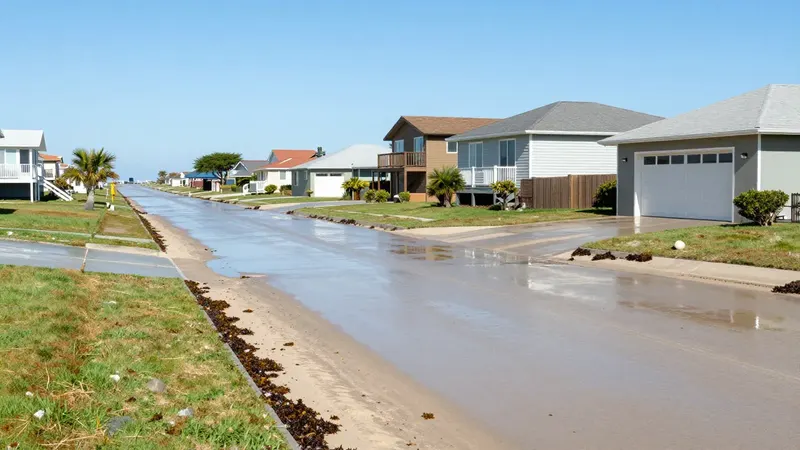
Corpus Christi wraps around Corpus Christi Bay and Nueces Bay, with Padre and Mustang Islands just offshore. The seawall downtown exists because of the 1919 hurricane, which left only three structures standing on North Beach. More recently, Hurricane Harvey made landfall about 30 miles to the northeast in August 2017, and Nueces County was included in FEMA's Hurricane Beryl declaration in 2024.
Fire & Water Energy refers callers; it does not perform any restoration. Call (866) 937-3230 and we will try to link you to an independent restoration contractor serving the Coastal Bend. Availability depends on which local providers are taking work, especially after a widespread storm. Learn about how it works and read our referral disclosure.
Bays, barrier islands and a long hurricane record
Much of the city sits near sea level, with Oso Bay and Oso Creek on the south side, the Nueces River near Calallen, and the Laguna Madre behind Padre Island. Average yearly rain is about 31.74 inches, and relative humidity averages around 76%. September brings both the most rain and the greatest hurricane threat. The wettest single day on record was July 2, 2007, when 9.86 inches fell.
Hurricanes rarely strike the city directly, but the ones that do are destructive: 1919, Celia in 1970 and Allen in 1980 among them. During Harvey, NAS Corpus Christi recorded a gust near 89 mph, roof shingles were lost across town and nearly the whole city was without power for a couple of days. FEMA's list for Nueces County since 2000 also includes Tropical Storm Fay (2002), Hurricane Rita (2005), Hurricanes Dolly and Ike (2008), the 2021 Severe Winter Storms and Hurricane Beryl (2024).
Coastal water damage restoration in Corpus Christi
Wind-driven rain is the leading cause of storm-season leaks: it pushes under shingles, around windows and through damaged soffits. Humid air means air conditioners run most of the year, so clogged condensate lines and overflowing drain pans regularly soak ceilings and closets. Older plumbing in neighborhoods like Southmoreland, a late-1930s addition, can add slow leaks behind walls.
Water damage repair here usually includes stopping the source, extracting water, opening wet cavities and running dehumidifiers longer than inland jobs because the outside air holds so much moisture. Learn more on water damage repair and structural drying.
Federal disaster declarations that included Nueces County
FEMA records show Nueces County was included in 12 major disaster declarations for weather or fire events from 2000 through 2026 (5 hurricane, 3 severe storm, 1 severe ice storm, 1 fire, 1 coastal storm, 1 flood, by FEMA incident type). Declarations are made at the county level, so they do not mean every neighborhood in Corpus Christi was affected. The most recent:
- 2024 – Hurricane Beryl (DR-4798)
- 2021 – Severe Winter Storms (DR-4586)
- 2017 – Hurricane Harvey (DR-4332)
- 2015 – Severe Storms, Tornadoes, Straight-line Winds and Flooding (DR-4223)
- 2008 – Hurricane Ike (DR-1791)
- 2008 – Hurricane Dolly (DR-1780)
Source: OpenFEMA Disaster Declarations Summaries, retrieved 2026-10-10. Counts include major disaster (DR) declarations with hurricane, flood, severe storm, tropical storm, fire, tornado, coastal storm, winter or ice storm, mudslide and dam/levee incident types.
Water, fire or storm damage in Corpus Christi?
Call (866) 937-3230 and tell us what happened at your Corpus Christi property.
Fire and smoke cleanup near the coast
Kitchen and electrical fires are the everyday causes of smoke damage in local homes. Humidity can make soot and odor cling to fabrics and walls, so thorough cleaning matters. Nueces County was also covered by FEMA's 2006 Extreme Wildfire Threat declaration, which affected dry brushland across the region.
A reputable company will usually secure the structure, test soot type, clean from ceilings down, address ducts and treat odors. Our fire damage cleanup and smoke odor removal pages break down the process.
Hurricane, surge and flood cleanup in the Coastal Bend
Storm surge and flooding bring saltwater, sand and sewage into homes, and that water is treated as heavily contaminated. Drywall is usually cut out above the waterline, insulation and flooring removed, and every surface cleaned and disinfected before drying. During Harvey, the surge at Packery Channel reached about 4.73 feet.
After high winds, downed trees, fences and roof damage come first: tarping and board-up help stop more water getting in. See hurricane damage cleanup and flood damage restoration.
Mold in a humid bayfront city
With humidity in the mid-70s on average, damp materials can grow mold quickly, especially after a hurricane knocks out power and air conditioning for days. Attics, wall cavities and closets on exterior walls are common trouble spots.
EPA guidance says a homeowner can often clean mold covering less than about 10 square feet once the moisture is fixed. Bigger areas, mold in HVAC, or growth after floodwater usually call for professional mold removal with containment.
Before and after the storm: safety in Corpus Christi
- Follow evacuation orders from local officials, particularly on Padre and Mustang Islands and low-lying bay areas.
- Call 911 for injuries, fires, gas leaks or downed power lines.
- Run generators outdoors only, well away from doors and windows.
- Avoid wading in floodwater, which may hide debris, sewage or live wires.
- Photograph damage before cleanup and keep receipts for temporary repairs.
- Windstorm, flood and homeowners coverage are often separate; ask your agent which of your policies applies.
Neighborhoods and nearby communities
Areas in and around Corpus Christi that callers often mention include:
- North Beach
- Downtown
- Flour Bluff
- Calallen
- Southside
- Padre Island
- Mustang Island
- Southmoreland
Nearby communities with their own pages (straight-line distance from Corpus Christi):
- Kingsville · 34 mi
- Victoria · 73 mi
- Harlingen · 113 mi
- Edinburg · 114 mi
- San Benito · 116 mi
- Weslaco · 119 mi
Corpus Christi restoration FAQs
When is hurricane risk highest in Corpus Christi?
September is historically the month with the greatest hurricane threat and the highest average rainfall. Hurricane season runs longer than that, though, so it pays to be ready by early summer.
Is surge water handled differently than a pipe leak?
Yes. Surge and floodwater carry saltwater, sediment and sewage, so they are treated as contaminated. Porous materials they touch are usually removed rather than dried in place.
Do you take calls from Portland or Flour Bluff?
Yes. We take calls from Flour Bluff, the islands, Calallen and nearby Portland, and try to find an independent contractor who works there. Availability can be limited after a major storm.
My power was out for days after a storm. Should I check for mold?
It is a good idea. Without air conditioning, humidity inside rises quickly, and wet materials can start growing mold within a day or two. Look in closets, behind furniture and in the attic.
Will my insurance cover hurricane damage?
Coastal Texas policies often split wind, flood and other perils. What your coverage includes depends on your specific policies, so talk to your agent before authorizing major work.
Restoration guides
- Hurricane Damage Cleanup
- Flood Damage Restoration
- Water Damage Repair
- Structural Drying
- Mold Removal
- Fire Damage Cleanup