
Cedar Hill lies about 16 miles southwest of downtown Dallas, mostly in Dallas County with a small southern slice in Ellis County. The city rises along a rugged limestone escarpment and is often described as the highest point on a straight line from the Red River to the Gulf Coast. To the west, the Lake Ridge area spreads around Joe Pool Lake, impounded in 1986, and Cedar Hill State Park.
Fire & Water Energy only makes referrals and has no crews of its own. Ring (866) 937-3230 and we will try to link you with an independent restoration contractor covering Cedar Hill, Duncanville, DeSoto and Midlothian. Whether someone can take your job depends on area providers. You can review how calls are handled and our referral disclosure at any time.
High ground, open exposure and a long tornado record
Elevation helps with flooding in some spots, but it also leaves homes on the escarpment open to strong wind. History bears that out: on April 29, 1856, a tornado killed at least nine people and reportedly left only two buildings standing in the young town.
More recently, FEMA has named Dallas County in disaster declarations for Hurricane Rita (2005), the 2006 Extreme Wildfire Threat, 2015 storms with tornadoes and flooding, the 2016 severe winter storms and tornadoes, Hurricane Harvey (2017), the 2021 Severe Winter Storms, and the 2024 storms with straight-line winds, tornadoes and flooding. Creeks such as Baggett Branch and those around the state park carry runoff off the hills during heavy rain.
Why Cedar Hill homes take on water
The population climbed from a few hundred in 1950 to more than 32,000 by 2000, and about seven in ten homes are owner-occupied. Many of those houses now have original water heaters, supply lines and roofs reaching the end of their service life. Wind-driven rain on exposed hillsides can also push water past flashing and window seals.
Freezes such as February 2021 can rupture pipes in attics and outside walls. A typical water damage repair job begins with shutting off the water, then extraction, moisture mapping and controlled drying. Two related pages are emergency water removal and burst pipe water damage.
Federal disaster declarations that included Dallas County
FEMA records show Dallas County was included in 7 major disaster declarations for weather or fire events from 2000 through 2026 (2 hurricane, 2 severe storm, 1 flood, 1 severe ice storm, 1 fire, by FEMA incident type). Declarations are made at the county level, so they do not mean every neighborhood in Cedar Hill was affected. The most recent:
- 2024 – Severe Storms, Straight-line Winds, Tornadoes, and Flooding (DR-4781)
- 2021 – Severe Winter Storms (DR-4586)
- 2017 – Hurricane Harvey (DR-4332)
- 2016 – Severe Winter Storms, Tornadoes, Straight-line Winds, and Flooding (DR-4255)
- 2015 – Severe Storms, Tornadoes, Straight-line Winds and Flooding (DR-4223)
- 2006 – Extreme Wildfire Threat (DR-1624)
Source: OpenFEMA Disaster Declarations Summaries, retrieved 2026-10-10. Counts include major disaster (DR) declarations with hurricane, flood, severe storm, tropical storm, fire, tornado, coastal storm, winter or ice storm, mudslide and dam/levee incident types.
Water, fire or storm damage in Cedar Hill?
Call (866) 937-3230 and tell us what happened at your Cedar Hill property.
Grass fire smoke and household fire recovery
Cedar Hill borders a large state park with wooded canyons and open prairie, and Dallas County was part of the 2006 Extreme Wildfire Threat declaration. During dry periods, smoke from grass or brush fires nearby can drift into homes through vents and gaps, leaving odor in fabrics and HVAC filters.
Inside the home, cooking, dryers and electrical faults remain the usual ignition sources. A reputable company will usually clean soot from the top down, launder or clean contents, replace filters, clean ducts and deodorize. Our write-ups on smoke odor removal and fire damage restoration walk through each stage.
Tornado, wind and runoff damage cleanup
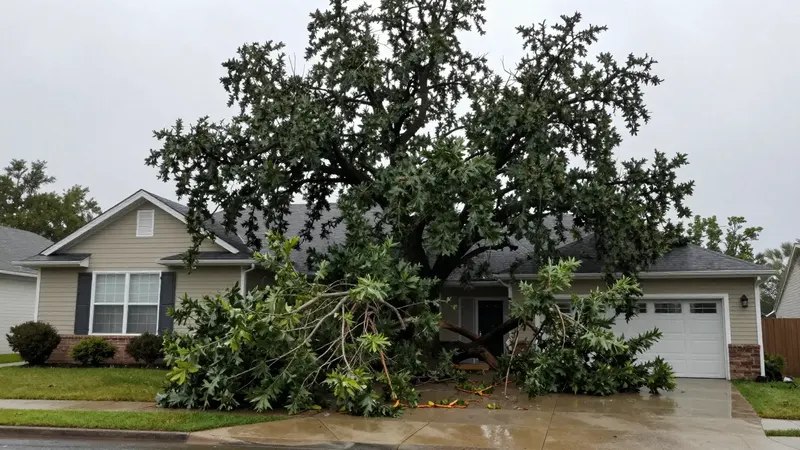
After tornadoes or straight-line winds, the priority is to make the structure safe and weather-tight: tarp roofs, board windows and remove fallen trees. Rain that follows can soak attics and walls within hours. Interior drying starts once the envelope is secure.
Runoff draining off the escarpment can collect in low yards and enter homes downslope. Because it carries soil, debris and possibly sewage, porous materials it soaks are generally removed. Our storm damage cleanup and flood cleanup pages cover these steps.
Stopping mold before it spreads
Mold grows on drywall, wood and insulation that stays wet for a day or two, especially in warm months. Typical spots include attic decking under storm-damaged shingles, cabinets near slow plumbing leaks and carpet in rooms that took in runoff.
The EPA's guidance is that homeowners can often clean less than about 10 square feet of mold once the moisture is fixed. For larger areas or growth after contaminated water, consider mold remediation by a qualified company using containment.
Safety and documentation steps after damage
- Call 911 for fires, injuries, gas odor or fallen lines.
- In a tornado warning, go to an interior room on the lowest floor away from windows.
- Shut off water at the main valve if a pipe bursts; stay clear of wet electrical equipment.
- Keep off damaged roofs and away from leaning trees on slopes.
- Photograph every room and item affected before cleanup.
- Speak with your insurer or agent about what your policy covers before major tear-out.
Neighborhoods and nearby communities
Areas in and around Cedar Hill that callers often mention include:
- Lake Ridge
- Historic Downtown
- Midtown
- Uptown
Nearby communities with their own pages (straight-line distance from Cedar Hill):
- Duncanville · 5 mi
- DeSoto · 6 mi
- Mansfield · 11 mi
- Grand Prairie · 11 mi
- Lancaster · 12 mi
- Arlington · 13 mi
Cedar Hill restoration FAQs
Has Cedar Hill ever been hit by a major tornado?
Yes. A tornado on April 29, 1856 killed at least nine people and reportedly left only two structures standing. Dallas County has also been included in several recent FEMA declarations involving tornadoes.
Does living on high ground mean I don't need to worry about water?
Not entirely. Hillside homes can still get runoff, roof leaks from wind-driven rain and burst pipes in freezes. Homes downslope and near creeks may see more runoff during intense storms.
Can smoke from fires near the state park affect my house?
During dry spells, smoke from grass or brush fires can drift into nearby neighborhoods. Change HVAC filters afterward, and if odor lingers in fabrics or ducts, a restoration contractor can assess deodorization options.
Do you take calls from Midlothian, DeSoto or Grand Prairie?
Yes. We take calls from neighboring cities including Midlothian, DeSoto, Duncanville, Grand Prairie and Mansfield. We'll try to find an independent contractor serving your area, though we can't guarantee availability.
Restoration guides
- Storm Damage Cleanup
- Emergency Water Removal
- Burst Pipe Water Damage
- Smoke Odor Removal
- Fire Damage Restoration
- Mold Remediation