
Grapevine lies mainly in northeast Tarrant County, with small pieces in Dallas and Denton counties, at roughly 630 feet. It holds more of Dallas/Fort Worth International Airport than any other city, and its northern edge borders Grapevine Lake, a U.S. Army Corps of Engineers reservoir finished in 1952. Historic Main Street, with its 1909 calaboose, anchors the older part of town.
Fire & Water Energy is a referral service, so the actual cleanup is handled by separate businesses. If you call (866) 937-3230, we will try to connect you with an independent restoration contractor serving Grapevine, Southlake, Colleyville and nearby communities. Availability depends on the providers in the area and is not assured. Our process page and referral disclosure spell out the arrangement.
A lake built for flood control, plus wide temperature extremes
Grapevine Lake dams Denton Creek, a tributary of the Elm Fork of the Trinity River, and flood control is one of its two main purposes. Even so, high water does reach the shoreline: Murrell Park on the north shore was heavily damaged in a summer 2007 flood and partly closed afterward. That same year Tarrant County received a FEMA declaration for severe storms, tornadoes and flooding.
Annual precipitation averages close to 39 inches, peaking in May and October. Records range from 115°F down to -12°F, so both extreme heat and rare deep cold are part of the local picture. Other FEMA declarations for the county since 2000 include Hurricane Rita (2005), the 2006 Extreme Wildfire Threat, 2015 storms, Hurricane Harvey (2017) and the 2021 Severe Winter Storms.
Sources of indoor water damage in Grapevine
May and October downpours test roofs, gutters, window seals and grading around foundations. During the long cooling season, attic air handlers and condensate drains can overflow into ceilings. When a hard freeze arrives, as in February 2021, unprotected pipes in exterior walls, garages and attics may split and flood rooms once they thaw.
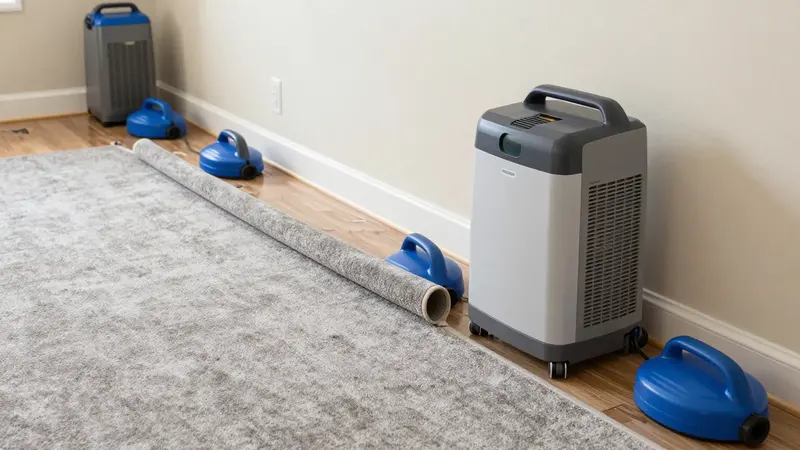
Water damage restoration in Grapevine generally follows a standard path: shut off the source, remove standing water, open up wet cavities if needed, and dry with commercial equipment while tracking moisture readings. Our water extraction and burst pipe pages cover the details.
Federal disaster declarations that included Tarrant County
FEMA records show Tarrant County was included in 7 major disaster declarations for weather or fire events from 2000 through 2026 (2 hurricane, 2 severe storm, 1 severe ice storm, 1 fire, 1 tornado, by FEMA incident type). Declarations are made at the county level, so they do not mean every neighborhood in Grapevine was affected. The most recent:
- 2021 – Severe Winter Storms (DR-4586)
- 2017 – Hurricane Harvey (DR-4332)
- 2015 – Severe Storms, Tornadoes, Straight-line Winds and Flooding (DR-4223)
- 2007 – Severe Storms, Tornadoes, and Flooding (DR-1709)
- 2006 – Extreme Wildfire Threat (DR-1624)
- 2005 – Hurricane Rita (DR-1606)
Source: OpenFEMA Disaster Declarations Summaries, retrieved 2026-10-10. Counts include major disaster (DR) declarations with hurricane, flood, severe storm, tropical storm, fire, tornado, coastal storm, winter or ice storm, mudslide and dam/levee incident types.
Water, fire or storm damage in Grapevine?
Call (866) 937-3230 and tell us what happened at your Grapevine property.
Fire and smoke restoration, from historic downtown to newer homes
Properties along historic Main Street include structures more than a century old, and aged wood and masonry respond differently to soot and water than modern drywall. Restoration on older buildings may involve gentler cleaning methods and careful documentation of original finishes.
In newer houses, synthetic furnishings and electronics can produce heavy, acidic soot and stubborn odor. A typical contractor will remove debris, clean walls and contents, treat the HVAC system and deodorize. Tarrant County was also part of the 2006 Extreme Wildfire Threat declaration. Methods are described under fire damage restoration and smoke odor removal on this site.
Cleaning up after spring storms and rising water
Hail and straight-line wind can strip shingles and shatter skylights, and fallen limbs may puncture roofs. Emergency tarping, board-up and debris removal usually come before any drying inside. Homes in low areas near creeks or drainage channels can take on runoff during intense storms.
Outside water is considered contaminated, so carpet pad, insulation and lower drywall it touches are usually discarded and the structure disinfected. Our guides to flood cleanup and storm water damage restoration explain each step.
Humidity, wet drywall and mold growth
The humid subtropical climate means damp materials do not dry on their own very quickly, particularly in late spring and early fall after heavy rain. Mold can take hold behind baseboards, under flooring and in attic insulation within a couple of days.
Per EPA guidance, an affected area smaller than about 10 square feet is often something a homeowner can clean once the leak is repaired. Larger or hidden growth, or mold linked to floodwater, typically needs mold remediation with containment and air filtration.
Steps to protect your family and your claim
- Call 911 for fire, injuries, gas odor or downed lines.
- Keep children and pets out of standing water and rooms with wet ceilings.
- Locate and shut the main water valve when a pipe or fixture fails.
- Before cold snaps, drip faucets on outside walls and insulate exposed pipes.
- Record damage with photos and video, and save receipts for tarps and emergency supplies.
- Call your insurer or agent to learn what your policy includes before removing large amounts of material.
Neighborhoods and nearby communities
Areas in and around Grapevine that callers often mention include:
- Historic Downtown
Nearby communities with their own pages (straight-line distance from Grapevine):
Grapevine restoration FAQs
Does Grapevine Lake protect homes from flooding?
Flood control is one of the reservoir's main purposes, but it does not remove all risk. Shoreline areas like Murrell Park were damaged in the summer 2007 flood, and local street and creek flooding can happen during intense storms regardless of the lake.
Which months bring Grapevine its heaviest rain?
May and October typically bring the highest monthly rainfall. Before those months, clean gutters, check roof flashing and make sure soil slopes away from the foundation.
Can it really get cold enough to freeze pipes in Grapevine?
Yes. The recorded low is -12°F, and Tarrant County was part of the 2021 Severe Winter Storms declaration. Insulating exposed lines and knowing your shutoff location are simple precautions.
Do you take calls from Southlake, Coppell or Flower Mound?
We accept calls from nearby cities including Southlake, Coppell, Flower Mound, Colleyville and Euless. We will look for an independent contractor serving your address, though availability isn't guaranteed.
Restoration guides
- Water Extraction
- Burst Pipe Water Damage
- Flood Cleanup
- Storm Water Damage Restoration
- Fire Damage Restoration
- Mold Remediation