
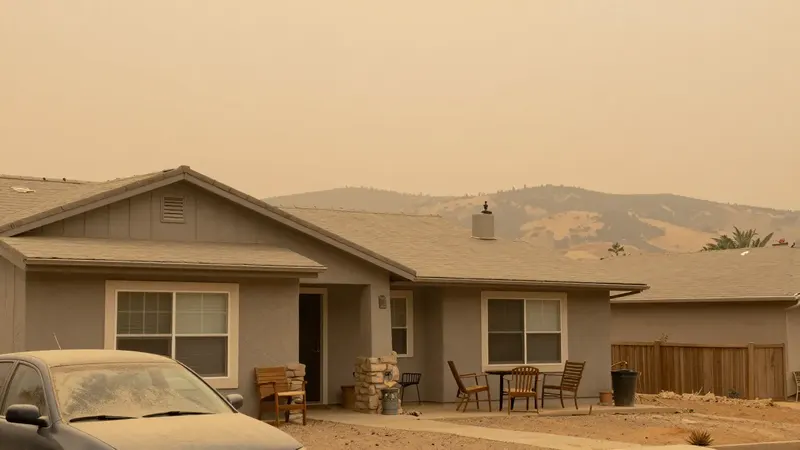
Smoke damage cleanup answers a different question from fire cleanup: the bedroom down the hall did not burn, so why does everything in it look gray and feel gritty? Smoke carries fine particles and residue through doorways, wall cavities, and the HVAC system, settling on surfaces far from the flames. Wildfire smoke can do something similar to a home that never caught fire at all.
Fire & Water Energy is a referral service, not a contractor. Call (866) 937-3230 and we'll try to connect you with an independent restoration contractor in your area who handles smoke residue, depending on availability.
Where Smoke Damage Shows Up
Smoke damage is often spread thin across the whole home rather than concentrated in one spot. Watch for:
- Gray or yellow film on walls and ceilings, especially above doorways and around vents.
- Darkened outlines on carpet edges, where air moved under doors.
- Residue inside cabinets, closets, and drawers.
- Discolored plastics, window blinds, and lampshades.
- Dust that keeps returning after you clean, which can point to contaminated ductwork.
- Ash or haze indoors after a nearby wildfire, even with windows closed.
Because the residue is spread thin, it is easy to miss in a quick walkthrough. Check behind pictures, on top of door frames, and inside light fixtures, where a gray outline often reveals how far smoke traveled. Smell alone is not a reliable guide; a room can look clean and still carry residue on its upper walls.
Safe Steps While You Wait for Help
Smoke residue is easy to make worse. Start with safety: re-enter only after the fire department says it is safe, as both the U.S. Fire Administration and Ready.gov advise, and call 911 for any active hazard.
- Do keep the HVAC system off until it has been inspected, so it does not spread residue further.
- Do wear gloves and an N95 respirator if you must handle affected items.
- Do follow EPA wildfire guidance: choose a MERV 13 filter or the highest rating your system accepts, and replace it more often when smoke is heavy.
- Do not scrub walls with household cleaners; wet wiping can smear residue deeper.
- Do not wash smoky clothing with other laundry until you know how it responds.
- Keep people with asthma or other lung or heart conditions away from affected rooms.
The Smoke Cleanup Process Contractors Usually Follow
Smoke cleanup is mostly careful, repetitive work. Contractors commonly:
- Test surfaces to identify the residue type, since dry, oily, and protein residues respond to different methods.
- Protect clean areas with containment and run air scrubbers with HEPA filtration.
- HEPA-vacuum loose particles from ceilings, walls, and floors, working top to bottom.
- Clean surfaces with methods matched to the residue, moving from gentle to stronger only as needed.
- Clean or pack out contents such as textiles, electronics, and hard goods.
- Inspect and, where justified, clean the HVAC system; EPA notes that ducts should only be cleaned as needed.
- Evaluate whether odor remains and plan smoke odor removal if it does.
Need help with smoke damage cleanup?
Call (866) 937-3230 and tell us what happened and where.
Insurance Notes for Smoke-Only Damage
Smoke damage can be easy to underestimate during a claim because nothing looks burned. Coverage depends on your policy; check with your insurer or agent about how smoke damage is handled.
- Photograph residue up close and in context, including inside closets and on vent covers.
- Ask the adjuster whether they want items held for inspection before cleaning.
- Get written estimates and confirm who will pay before work begins, as the USFA guide recommends.
- Keep receipts for hotel stays if the home is not livable during cleaning.
Questions to Ask a Smoke Cleanup Contractor
- Do you hold any license my state or city requires for this work, and can you show proof of insurance?
- How will you identify the type of smoke residue before cleaning?
- Do your technicians hold IICRC certification, and do you follow IICRC S700 for fire and smoke restoration?
- Will you provide a written, room-by-room scope and estimate?
- How do you decide whether ductwork needs cleaning?
- How will you confirm surfaces are clean before painting or sealing?
See how it works for what happens after you call.
Smoke Cleanup Compared With Soot and Odor Work
These services overlap, so it helps to know which one matches your problem.
- Soot removal is about technique for heavy black deposits on specific surfaces.
- Smoke odor removal addresses smell that persists after surfaces are clean.
- Fire damage cleanup removes burned and soaked materials.
- Fire damage restoration ties all of these into one project.
Frequently asked questions
Can smoke damage a room the fire never reached?
Yes. Smoke moves through open doors, gaps, wall cavities, and HVAC ducts, leaving residue throughout a home. Rooms far from the fire can still need cleaning.
Should I run my air conditioning or furnace after a fire?
Wait until the system and its electrical supply have been checked. Running it can spread residue to clean rooms. When it is cleared, EPA suggests using a high-efficiency filter such as MERV 13 if your system can accommodate it.
Can I wipe smoke residue off walls myself?
Light residue on a small area may come off, but wet wiping heavy residue often smears it into the paint. Testing a hidden spot first is wise, and larger areas usually benefit from professional methods.
Does wildfire smoke count as smoke damage?
Wildfire smoke can leave ash and residue indoors even when a home never burned. EPA recommends misting ash before cleanup, avoiding dry sweeping, and using a HEPA vacuum. Ask your insurer how your policy treats wildfire smoke.
Do I need my air ducts cleaned?
Not automatically. EPA advises cleaning ducts only as needed. Ask the contractor to show evidence of residue in the system before recommending it.
What happens to electronics exposed to smoke?
Smoke residue can settle inside televisions, computers, and other devices. Avoid powering them on until they have been checked, and photograph them for your records. Some contractors send electronics to specialists for cleaning and testing.
Related services
Find smoke damage cleanup help by state
- Florida
- Georgia
- Texas
- Louisiana
- Alabama
- Mississippi
- California
- South Carolina
- North Carolina
- Tennessee
- Arizona
- New Mexico
- Virginia
- Maryland
- Oregon
- Washington