
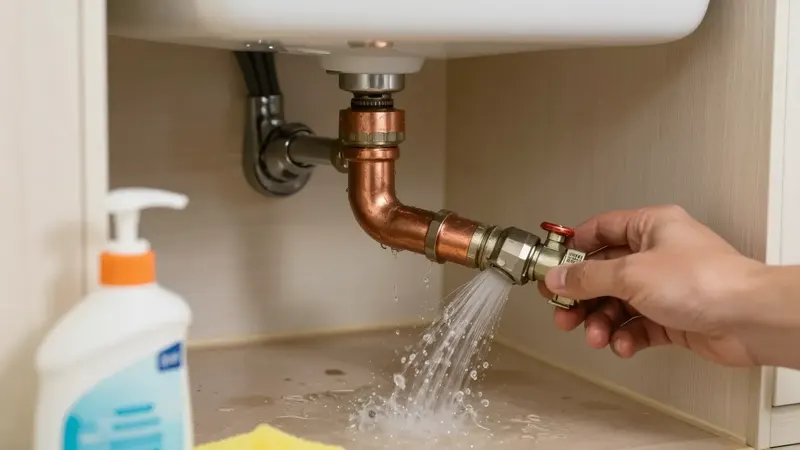
Pipe failures are a specific kind of water loss. The water is usually clean at first, it is under pressure, and it often escapes inside a wall, under a sink, or in a ceiling where it spreads before anyone sees it. Freezing weather is a frequent cause, but corroded fittings, failed connections, and physical damage during renovations can also split a line.
Fire & Water Energy is a referral service, not a plumber or a restoration company. Call (866) 937-3230 and we'll try to connect you with an independent restoration contractor serving your area, based on who is available locally. You will typically also need a licensed plumber to repair the pipe itself.
Common Burst Pipe Scenarios
- A pipe in an exterior wall, attic, crawl space, or garage freezes during a cold snap and splits.
- A frozen section thaws and the crack starts leaking only once water flows again.
- A pipe in a ceiling bursts and water appears through light fixtures or drywall below; see ceiling water damage repair.
- A fitting or connection under a sink or behind a washer gives way.
- A line is punctured by a nail or screw during a home project.
The American Red Cross notes that a mere trickle from a faucet can suggest a frozen pipe, often along exterior walls or where the service line enters through the foundation.
Immediate Steps When a Pipe Bursts
- Shut off the water. Close the main shut-off valve. If you can't find it, your water utility may be able to shut off service at the street.
- Turn off power to wet areas if safe. Do not reach a breaker panel through standing water.
- Open a faucet to relieve pressure and drain remaining water from the lines.
- Document the broken pipe and every wet area with photos and video.
- Call a licensed plumber to repair the line, and a restoration contractor to remove water and begin drying.
- Notify your insurer and keep the failed pipe section if the plumber removes it.
Safety: What Not to Do
- Don't stand under a ceiling that is bulging with water; it can give way.
- Don't touch electrical equipment that is wet or while standing in water, per Ready.gov.
- When thawing a frozen pipe, the Red Cross warns against using a blowtorch, kerosene or propane heater, charcoal stove, or other open flame device. Safer options it lists include an electric heating pad, hair dryer, or towels soaked in hot water.
- If you can't find or reach the frozen section, or can't thaw it, the Red Cross advises calling a licensed plumber.
- Keep children and anyone with breathing problems away from wet areas.
If you smell gas, see sparking, or the structure seems unsafe, leave and call 911 or your utility from outside.
Need help with burst pipe water damage?
Call (866) 937-3230 and tell us what happened and where.
How Contractors Typically Handle Burst Pipe Damage
- The plumber repairs or replaces the failed section and checks for other damage.
- The restoration contractor traces where water traveled using moisture meters, often opening the wall or ceiling near the break.
- Standing water is extracted and wet carpet pad or insulation is removed.
- Air movers and dehumidifiers dry the cavity and surrounding materials; this is structural drying.
- Daily readings confirm progress toward a dry standard.
- Drywall, insulation, and finishes are replaced once dry; see water damage repair.
Because burst-pipe water usually starts clean, prompt drying can sometimes save materials. EPA recommends drying water-damaged areas within 24–48 hours to help prevent mold (EPA mold and moisture guide).
Insurance and Records for Pipe Failures
Coverage depends on your policy, and your insurer or agent is the one to confirm it. Policies often distinguish between sudden pipe bursts and slow, long-term leaks, and some address freezing differently if a home was unoccupied or unheated. Useful records include:
- Photos of the break, the wet areas, and the thermostat setting if freezing was involved.
- The plumber's invoice describing the cause and repair.
- The restoration contractor's moisture logs and itemized estimate.
- Receipts for emergency expenses.
Questions to Ask the Restoration Contractor
- Do you hold the license our state requires, and can you show proof of insurance?
- Will you coordinate with my plumber on access openings so walls aren't cut twice?
- Do the technicians hold IICRC certification and follow the S500 water damage standard?
- Can you dry the wall cavity in place, or does drywall need to come out?
- Will I get a written estimate, daily moisture readings, and final dry readings?
Preventing the Next One, and Related Services
The Red Cross recommends insulating attics, basements, and crawl spaces, along with pipes in garages and under kitchen and bathroom cabinets; opening cabinet doors so warm air reaches plumbing; letting cold water drip from faucets served by exposed pipes in severe cold; and keeping the heat no lower than 55° F if you're away.
For the first hours of any leak, see emergency water removal. For the complete process, see water damage restoration. If water has been leaking unnoticed long enough for growth to appear, mold removal may be needed.
Frequently asked questions
Who do I call first, a plumber or a restoration company?
Shut off the main water valve first. Then a plumber is needed to fix the pipe, and a restoration contractor to remove water and dry the structure. Many people contact both at about the same time so drying isn't delayed.
How do I know a pipe is frozen before it bursts?
The American Red Cross notes that only a trickle coming out of a faucet can suggest a frozen pipe. Pipes along exterior walls or where the service line enters the house are common trouble spots. Keep the faucet open and apply gentle heat, never an open flame.
Can a burst pipe inside a wall be dried without removing drywall?
Sometimes, because the water is usually clean at the start. Contractors may drill small holes or remove baseboards to move air into the cavity. If drywall stayed wet for a long time or is damaged, removal is more likely.
Is burst pipe damage covered by homeowners insurance?
It depends on your policy and the circumstances, such as whether the leak was sudden and whether the home was heated. Check with your insurer or agent and report the damage promptly. Keep the plumber's description of the cause.
What temperature should I keep my house to prevent frozen pipes?
The Red Cross suggests keeping the thermostat at the same temperature day and night during cold weather. If you will be away, it recommends setting the heat no lower than 55° F.
Can a pipe burst again after it is repaired?
A repaired section can be sound while other vulnerable pipes remain. Ask the plumber whether nearby lines are exposed to cold or show corrosion. Insulating pipes and maintaining heat lowers the risk.
Related services
Find burst pipe water damage help by state
- Florida
- Georgia
- Texas
- Louisiana
- Alabama
- Mississippi
- California
- South Carolina
- North Carolina
- Tennessee
- Arizona
- New Mexico
- Virginia
- Maryland
- Oregon
- Washington