
Harrison County's seat was laid out in 1841 across a series of hills, and its older blocks still hold antebellum, Victorian and railroad-era houses. That history is part of the charm, but century-old framing, plaster and plumbing react differently to soaking rain, wind and smoke than newer construction does.
We are a referral service called Fire & Water Energy, not a restoration firm. Dial (866) 937-3230 and we will try to put you in touch with an independent restoration contractor serving Marshall. Openings vary with the local providers on any given day, so we cannot promise a match. For the fine print, read how it works along with the referral disclosure.
Rain, hurricane remnants and tornadoes in Harrison County
At about 341 feet above sea level, the city sees 51.34 inches of precipitation in an average year, distributed fairly evenly by month. Spring severe weather is common enough that an F2 tornado tore through the south side of town in 2000, near US Highway 59. Water draining from the county heads two ways: north and east through Little Cypress Creek, Cypress Bayou and Caddo Lake toward the Red River, and south to the Sabine River along the county line.
Tropical systems reach this far inland too. When Hurricane Ike crossed in 2008 with winds above 60 mph, roughly 82 percent of residents lost electricity for a day or more. FEMA declarations for the county also list Tropical Storm Allison in 2001, Hurricane Rita in 2005, Hurricane Beryl in 2024, and the Severe Winter Storms of 2021.
Why older Marshall houses take on water
Houses near the Ginocchio National Historic District and along Rusk and Houston streets may have pier-and-beam floors, long-run galvanized or cast-iron lines, and roofs with many valleys. Steady East Texas downpours find weak flashing quickly, and a crawlspace that stays wet can soften subfloors. The record low of minus 13 degrees shows that freezes, though uncommon, can still crack exposed pipes.
Requests for water damage restoration in Marshall usually involve stopping the leak, extracting water, opening up wet cavities where needed and drying the structure with air movers and dehumidifiers. Older plaster and wood trim may call for slower, more careful drying. Related pages: water damage restoration, ceiling water damage repair and structural drying.
Federal disaster declarations that included Harrison County
FEMA records show Harrison County was included in 13 major disaster declarations for weather or fire events from 2000 through 2026 (3 hurricane, 3 fire, 2 severe ice storm, 2 flood, 2 severe storm, 1 coastal storm, by FEMA incident type). Declarations are made at the county level, so they do not mean every neighborhood in Marshall was affected. The most recent:
- 2024 – Hurricane Beryl (DR-4798)
- 2021 – Severe Winter Storms (DR-4586)
- 2016 – Severe Storms and Flooding (DR-4269)
- 2016 – Severe Storms, Tornadoes, and Flooding (DR-4266)
- 2016 – Severe Winter Storms, Tornadoes, Straight-line Winds, and Flooding (DR-4255)
- 2015 – Severe Storms, Tornadoes, Straight-line Winds and Flooding (DR-4223)
Source: OpenFEMA Disaster Declarations Summaries, retrieved 2026-10-10. Counts include major disaster (DR) declarations with hurricane, flood, severe storm, tropical storm, fire, tornado, coastal storm, winter or ice storm, mudslide and dam/levee incident types.
Water, fire or storm damage in Marshall?
Call (866) 937-3230 and tell us what happened at your Marshall property.
Cleaning up after fire and smoke
Open wall cavities in older wood-framed houses can let smoke travel far from where a fire started, leaving soot in upstairs rooms and attics. The county's 2011 wildfire declarations show that dry seasons bring outdoor fire risk as well. Firefighting water adds a second layer of damage that has to be dried promptly.
A dependable fire restoration company will generally secure the building, sort salvageable belongings, dry affected areas, remove soot from surfaces and HVAC components, and deodorize before repairs. See fire damage cleanup and smoke odor removal.
Storm and floodwater recovery near the bayous
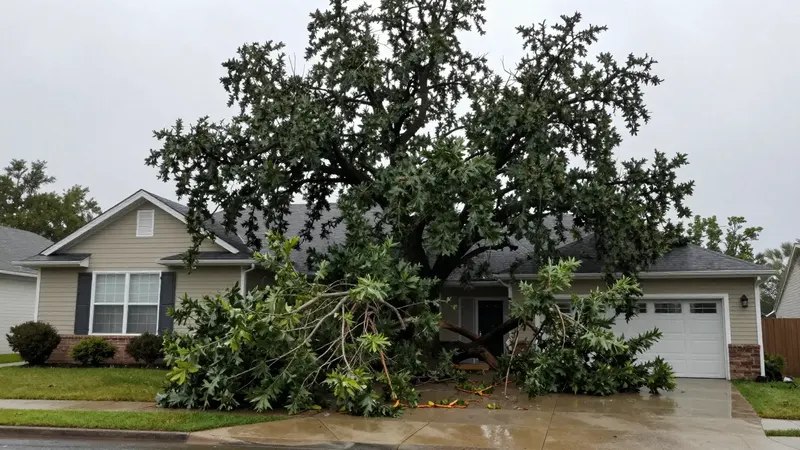
Harrison County's 2016 declarations included two separate rounds of severe storms and flooding within a few months, plus winter storms paired with tornadoes and straight-line winds. Fallen limbs, punctured roofs and water pushed in by wind-driven rain are typical results. Water that has flowed over the ground is considered contaminated, so contractors usually discard soaked carpet and cut wet drywall above the water line.
Work often begins with emergency tarping, then extraction, sanitizing and controlled drying. Learn more about storm damage cleanup and hurricane damage cleanup.
Humidity, crawlspaces and mold growth
Heavy annual rainfall and warm, sticky summers give mold plenty of chances, particularly under raised floors and behind leaking walls. Growth can appear in 24 to 48 hours on wet drywall or wood. EPA guidance suggests that patches under roughly 10 square feet can often be cleaned by a homeowner, while bigger areas, contaminated water or HVAC involvement call for a trained remediator.
Professional remediation normally means containment, HEPA filtration, removal of affected material and correcting the moisture problem. See mold removal.
Staying safe during and after damage in Marshall
- For injuries, gas odors, fire or a sagging ceiling, leave and call 911.
- Keep clear of downed lines; long outages followed Ike, so treat every wire as live.
- Shut off electricity only if you can reach the panel without standing in water.
- Take dated photos and video of damage and keep damaged items until your adjuster says otherwise.
- Let your insurance carrier know about the loss without delay. What is covered depends on your policy, and flood damage typically needs a separate flood policy.
Neighborhoods and nearby communities
Areas in and around Marshall that callers often mention include:
- Ginocchio National Historic District
- Whetstone Square
Nearby communities with their own pages (straight-line distance from Marshall):
- Longview · 22 mi
- Shreveport, LA · 36 mi
- Bossier City, LA · 37 mi
- Tyler · 56 mi
- Minden, LA · 63 mi
- Texarkana · 64 mi
Marshall restoration FAQs
Do historic homes in Marshall need a different approach to drying?
Often, yes. Plaster, old-growth wood trim and pier-and-beam floors can crack or warp if dried too aggressively. Ask a contractor how it monitors moisture and whether it has worked on older houses before.
Can a hurricane really cause damage this far inland?
It has. Ike in 2008 brought winds above 60 mph and left most residents without power, and Rita and Beryl also led to federal declarations for Harrison County. Expect falling trees, roof damage and heavy rain rather than storm surge.
Is wet crawlspace soil a mold risk?
It can be. Trapped moisture beneath a raised floor keeps joists and subflooring damp, which favors mold and rot. Fixing drainage and drying the space promptly helps prevent bigger repairs.
Does Fire & Water Energy do the repair work?
No. We are a referral service only. Calling (866) 937-3230 lets us try to connect you with an independent contractor who serves Marshall, and that company sets its own schedule, terms and pricing.
What should I do with the damaged furniture before the adjuster visits?
Photograph it, list it and move it somewhere it will not cause further harm, such as a garage or porch. Discarding items too early can complicate a claim, so check with your insurer first.
Restoration guides
- Water Damage Restoration
- Structural Drying
- Storm Damage Cleanup
- Hurricane Damage Cleanup
- Fire Damage Cleanup
- Mold Removal
Local resources for Marshall residents
- FEMA: Texas Hurricane Beryl (DR-4798)
- FEMA: Texas Severe Winter Storms (DR-4586)
- EPA: Mold Cleanup in Your Home