
San Angelo, the seat of Tom Green County, sits around 1,844 feet above sea level between the Edwards Plateau and the Chihuahuan Desert. Twin Buttes Reservoir, O.C. Fisher Reservoir and Lake Nasworthy surround the city. Rainfall averages only about 21 inches a year, yet totals swing widely, from 7.41 inches in 1956 to 35.72 inches in 2016.
Fire & Water Energy hands callers off to independent firms and never does the restoration itself. Phone (866) 937-3230 and we will try to find an independent restoration contractor that takes jobs in San Angelo and the Concho Valley. We cannot say ahead of time which providers will be free. Concho Valley callers can read how it works and the referral disclosure to see exactly where our part stops.
Concho Valley hazards: floods, hail, heat and freezes
The National Weather Service office in San Angelo keeps an archive of local events, including a damaging wind event on June 23, 2017, a hailstorm on May 21, 2020, downburst winds on August 22, 2020, a hailstorm on May 23, 2024 and the historic floods of July 4, 2025, which brought flooding to the city. Tom Green County received a federal declaration for severe storms, straight-line winds and flooding in 2025.
Heat and cold both run to extremes. The city logged 100 days of triple-digit heat in 2011, the same year the county was in the Wildfires declaration, and averages about 60 nights below freezing a year, with a record low of 4 below zero. Other declarations since 2000 cover the 2021 winter storms, 2015 severe storms, the 2006 Extreme Wildfire Threat and Hurricane Rita in 2005.
Hail-damaged roofs, frozen pipes and water damage repair
Repeated hailstorms mean many roofs carry damage that is not obvious until a heavy rain finds the weak spot, staining ceilings and soaking attic insulation. In winter, with roughly 60 freezing nights, pipes in exterior walls, garages and attics can burst, as many did across West Central Texas in the February 2021 arctic outbreak.
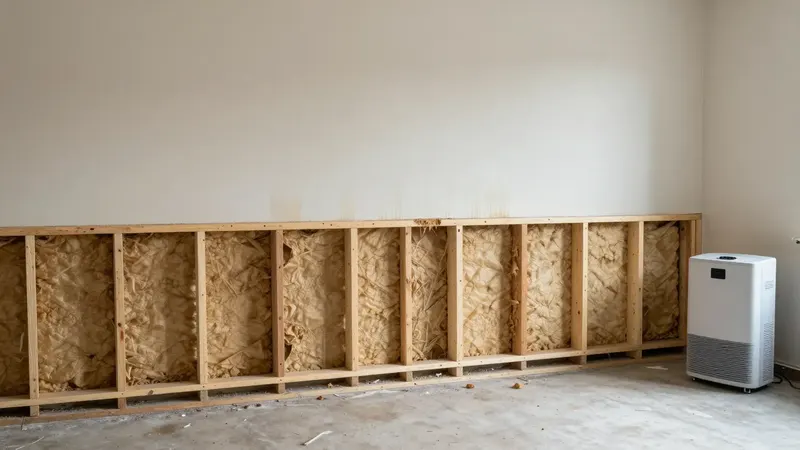
Other common causes include water heaters, appliance supply lines and evaporative or refrigerated cooling equipment. Water damage restoration here typically means stopping the source, removing water, measuring moisture and drying the structure. Two useful references are ceiling water damage repair and burst pipe water damage.
Federal disaster declarations that included Tom Green County
FEMA records show Tom Green County was included in 6 major disaster declarations for weather or fire events from 2000 through 2026 (2 fire, 1 flood, 1 severe ice storm, 1 severe storm, 1 hurricane, by FEMA incident type). Declarations are made at the county level, so they do not mean every neighborhood in San Angelo was affected. The most recent:
- 2025 – Severe Storms, Straight-line Winds, and Flooding (DR-4879)
- 2021 – Severe Winter Storms (DR-4586)
- 2015 – Severe Storms, Tornadoes, Straight-line Winds and Flooding (DR-4223)
- 2011 – Wildfires (DR-1999)
- 2006 – Extreme Wildfire Threat (DR-1624)
- 2005 – Hurricane Rita (DR-1606)
Source: OpenFEMA Disaster Declarations Summaries, retrieved 2026-10-10. Counts include major disaster (DR) declarations with hurricane, flood, severe storm, tropical storm, fire, tornado, coastal storm, winter or ice storm, mudslide and dam/levee incident types.
Water, fire or storm damage in San Angelo?
Call (866) 937-3230 and tell us what happened at your San Angelo property.
Dry-country fire risk and smoke damage
Long dry stretches and heat waves dry out grass and brush around the city, and Tom Green County was included in the 2006 and 2011 wildfire-related declarations. Smoke can infiltrate a home through vents and gaps even when fire never reaches it.
After a structure fire, contractors usually secure the building, remove debris, clean soot appropriate to its type, clean HVAC systems and deodorize. The sequence is described further under fire damage cleanup, while lingering smell is its own topic at smoke odor removal.
Cleaning up after the 2025 floods and summer downbursts
Flash floods like those of July 2025 move fast across dry, hard ground and can push muddy, contaminated water into homes and businesses. That water is classed as Category 3, so soaked carpet, pad and lower drywall generally need to come out before disinfection and drying.
Downburst winds and hail add broken windows, roof damage and fallen limbs, which let more rain inside. Tarping and board-up usually come first. What follows a flash flood is outlined under flood damage restoration, and wind and hail repairs under storm damage cleanup.
Mold after floodwater, even in semiarid country
The usual dry air helps, but after a flood or long leak, wet drywall and insulation can grow mold within days, particularly during humid summer spells. Check closets, behind baseboards and inside cabinets once water recedes.
EPA guidance suggests patches under about 10 square feet can typically be cleaned by the homeowner after fixing the moisture issue. Larger growth or mold following floodwater calls for professional mold removal.
Safe first steps for San Angelo families
- Call 911 for fires, injuries, gas odors or anyone stranded in water.
- Watch National Weather Service San Angelo warnings during storm season.
- Never drive into flooded roads; turn around and find another route.
- Shut off the water main when a pipe breaks, and power to wet rooms only if you can stay dry.
- Take photos and video of damage and keep every receipt.
- Ask your insurer or agent how your policy handles hail, flood and freeze damage; coverage varies.
Neighborhoods and nearby communities
Nearby communities with their own pages (straight-line distance from San Angelo):
San Angelo restoration FAQs
Did San Angelo flood in July 2025?
Yes. The National Weather Service San Angelo archive covers the historic floods of July 4, 2025, including a section on San Angelo flooding, and Tom Green County received a federal disaster declaration for that year's storms and flooding.
How often does San Angelo get damaging hail?
Often enough to plan for. The local NWS office has documented San Angelo hailstorms on May 21, 2020 and May 23, 2024. Hail can crack shingles without obvious signs, so roof checks after storms are wise.
Do pipes really freeze in San Angelo?
Yes. The city averages about 60 nights below freezing a year and has dropped as low as 4 below zero. Wrapping pipes in garages and outer walls before cold fronts arrive is cheap insurance against a soaked floor.
Who will actually do the restoration work?
An independent contractor, not Fire & Water Energy. Call (866) 937-3230 and we will try to connect you with a company serving the Concho Valley, depending on availability.
Restoration guides
- Flood Damage Restoration
- Storm Damage Cleanup
- Ceiling Water Damage Repair
- Burst Pipe Water Damage
- Fire Damage Cleanup
- Mold Removal