
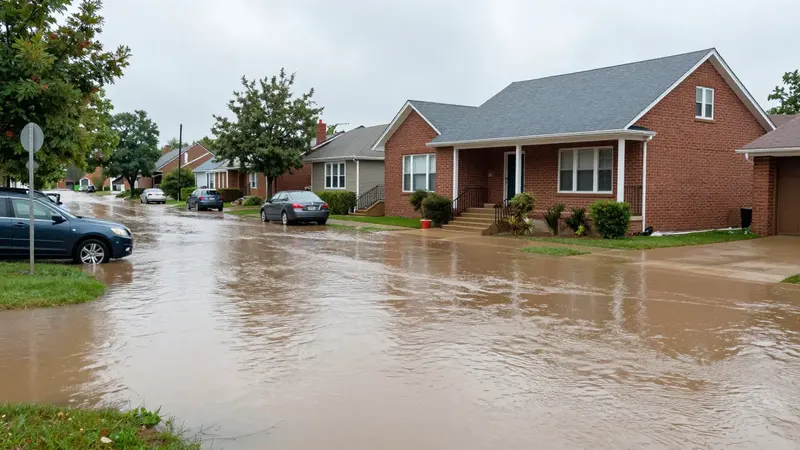
German settlers founded this western Guadalupe County community in the mid-1800s, and it voted to incorporate in 1965. Today Cibolo shares its northern and western border with Schertz, sits at roughly 692 feet of elevation, and reaches a short way into Bexar County where a bend of Cibolo Creek crosses below West Schaefer Road.
When something goes wrong at home, call (866) 937-3230. Fire & Water Energy works only as a referral line: we try to match you with an independent restoration contractor serving Cibolo and nearby towns such as Schertz, Universal City and Converse. We cannot promise one will be free for your job. Read how it works or the referral disclosure to see exactly what we do.
Cibolo Creek and Central Texas storm history
Cibolo Creek starts in the Hill Country near Boerne and runs about 96 miles southeast, past Randolph Air Force Base, before joining the San Antonio River in Karnes County. Its upper watershed is limestone karst that feeds the Edwards-Trinity aquifer system, and the stream has a history of violent floods; the October 1998 Central Texas floods and a July 2002 flood both caused significant destruction along it.
Guadalupe County has appeared in federal disaster declarations for that 2002 flooding, Hurricane Rita in 2005, the 2006 Extreme Wildfire Threat, 2007 storms with tornadoes, two 2015 storm events, Hurricane Harvey in 2017, the 2021 Severe Winter Storms, and severe storm and flooding declarations in both 2024 and 2025.
Plumbing failures, freezes and roof leaks
A house does not need to be old to leak. Fittings on newly installed supply lines can loosen, water heaters fail, and dishwasher or refrigerator connections drip unseen behind cabinets. In February 2021 the statewide freeze cracked pipes in attics and outside walls across the region, and hailstorms can open roofs to the next downpour.
Water damage restoration in Cibolo generally follows a familiar pattern: find and stop the leak, extract what is standing, measure moisture inside walls and under flooring, and dry the structure with air movers and dehumidifiers. Our burst pipe and structural drying guides cover each stage.
Federal disaster declarations that included Guadalupe County
FEMA records show Guadalupe County was included in 10 major disaster declarations for weather or fire events from 2000 through 2026 (3 flood, 3 severe storm, 2 hurricane, 1 severe ice storm, 1 fire, by FEMA incident type). Declarations are made at the county level, so they do not mean every neighborhood in Cibolo was affected. The most recent:
- 2025 – Severe Storms, Straight-line Winds, and Flooding (DR-4879)
- 2024 – Severe Storms, Straight-line Winds, Tornadoes, and Flooding (DR-4781)
- 2021 – Severe Winter Storms (DR-4586)
- 2017 – Hurricane Harvey (DR-4332)
- 2015 – Severe Storms, Tornadoes, Straight-line Winds, and Flooding (DR-4245)
- 2015 – Severe Storms, Tornadoes, Straight-line Winds and Flooding (DR-4223)
Source: OpenFEMA Disaster Declarations Summaries, retrieved 2026-10-10. Counts include major disaster (DR) declarations with hurricane, flood, severe storm, tropical storm, fire, tornado, coastal storm, winter or ice storm, mudslide and dam/levee incident types.
Water, fire or storm damage in Cibolo?
Call (866) 937-3230 and tell us what happened at your Cibolo property.
Smoke, soot and dry-season fire risk
Kitchen fires and electrical faults cause many residential fires, and the smoke they make can travel into closets, ducts and attics far from the flames. Guadalupe County was also part of the 2006 Extreme Wildfire Threat declaration, so grass fires during droughts are a real concern for homes on the city's edge.
Restoration crews hired after a fire typically secure the structure, remove ruined contents and building materials, clean soot with methods suited to the residue, and treat lingering odor. Read about smoke damage cleanup and soot removal.
Flash flooding and severe storm cleanup
Heavy thunderstorms over this part of Texas can push creeks and drainage channels out of their banks quickly. Water that enters from outside is treated as contaminated, so contractors usually remove saturated carpet pad and the lower section of affected drywall before drying.
Straight-line winds and tornadoes, both named in the county's 2024 declaration, add roof and window damage. Temporary tarps and board-up help limit further loss. Our flood cleanup page and the one on storm damage cleanup walk through what to expect.
Keeping mold from taking hold
Mold can begin growing on wet drywall, wood or carpet within a day or two, especially in warm South Texas weather. Hidden spots behind baseboards or under vinyl flooring often stay damp long after surfaces look dry.
The EPA says homeowners can generally clean mold patches under about 10 square feet themselves once the moisture is fixed. Bigger areas, growth inside wall cavities or ducts, or mold following floodwater are usually jobs for professional mold removal.
A short checklist for Cibolo residents
- Dial 911 for fire, injuries, gas odor or lines down.
- Never drive or walk into water crossing a road; low-water crossings near creeks can be deeper and faster than they look.
- Close the main shutoff valve for any plumbing break.
- Switch off electricity to wet areas only if you can do so from a dry spot.
- Photograph damage and save receipts for tarps, pumps or other emergency purchases.
- Coverage depends on your policy; check with your insurer or agent, and ask whether flood damage requires separate coverage.
Neighborhoods and nearby communities
Nearby communities with their own pages (straight-line distance from Cibolo):
Cibolo restoration FAQs
Has Cibolo Creek flooded badly before?
Yes. The October 1998 Central Texas floods and a July 2002 flood both caused major destruction along the creek. Guadalupe County was included in a federal disaster declaration for severe storms and flooding in 2002.
Part of Cibolo is in Bexar County. Does that matter after a disaster?
It can. A small section south of West Schaefer Road lies in Bexar County, so emergency instructions and disaster declarations may come from a different county than for the rest of the city. Check which county your address is in.
My home is fairly new. Can it still have serious water damage?
Yes. Loose fittings, failed appliance hoses, roof leaks after hail and frozen lines can affect any house. Knowing where your main water shutoff is located is one of the most useful things you can do.
Is Fire & Water Energy a local Cibolo company?
No. There is no Fire & Water Energy office in town; we run a phone referral line. Calling (866) 937-3230 lets us try to connect you with an independent contractor who works in your area.
Restoration guides
- Flood Cleanup
- Storm Damage Cleanup
- Burst Pipe Water Damage
- Structural Drying
- Smoke Damage Cleanup
- Mold Removal