
People who search for water damage restoration usually want the complete picture, not one step of it. Restoration covers the entire arc of a water loss: finding and stopping the source, removing water, drying the building, cleaning or discarding affected materials, and then rebuilding walls, floors, and finishes. Other pages on this site zoom in on single phases; this one explains how the phases fit together.
Fire & Water Energy is a referral service, not a contractor. Call (866) 937-3230 and we'll try to connect you with an independent restoration contractor who serves your area; availability depends on local providers. You can read how referrals work on our How It Works page and in our referral disclosure.
When a Full Restoration Project Makes Sense
A small spill on tile that you can mop up in minutes rarely needs a restoration company. A full project becomes worth considering when water has soaked into building materials, spread under flooring, or sat long enough that you can't tell how far it traveled.
- A supply line, water heater, or appliance hose failed and water reached more than one room.
- Water ran inside a wall cavity or dripped through a ceiling from the floor above.
- Carpet and pad, hardwood, or laminate stayed wet for more than a short time.
- Storm or groundwater entered the lower level of the house.
- The water came from a sewer backup or another contaminated source.
EPA's brief guide to mold and moisture recommends drying water-damaged areas and items within 24–48 hours to help prevent mold growth, and suggests professional help when there has been significant water damage. That timing is the main reason homeowners call for help instead of waiting to see what happens.
What a Typical Restoration Contractor Does, Step by Step
Every job is different, but a reputable company will usually work through a sequence like this:
- Inspection and safety check. The contractor looks for electrical hazards, sagging ceilings, and contamination, then maps where the water went.
- Source confirmation. The leak must be stopped. The IICRC S500 page notes that finding and correcting the water source is the property owner's responsibility, so you may also need a plumber or roofer.
- Water removal. Standing water is pumped or vacuumed out; see water extraction for detail.
- Removal of unsalvageable materials. Saturated pad, swollen particleboard, and some drywall are cut out and discarded.
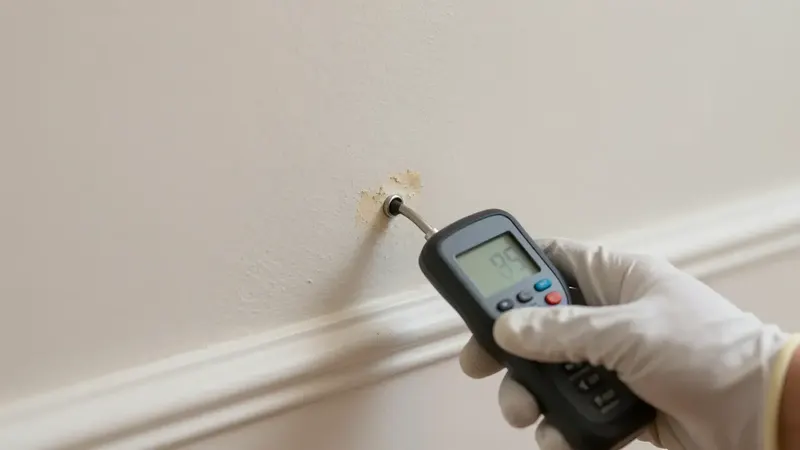
- Drying and dehumidification. Air movers and dehumidifiers run while the crew takes moisture readings; this phase is covered under structural drying.
- Cleaning and antimicrobial treatment where the water source or conditions call for it.
- Verification. Readings are compared against dry reference materials before anything is closed up.
- Repairs and rebuild. New drywall, paint, trim, and flooring go in, sometimes by a separate crew; see water damage repair.
Safety Before Anyone Arrives
Your safety comes before saving belongings. If anything feels unsafe, leave the building and call 911 for emergencies.
- Electricity: Ready.gov advises not to touch electrical equipment if it is wet or if you are standing in water, and to turn off power only if it is safe to do so (Ready.gov: Floods).
- Gas: If you smell gas, get out and call the utility or 911 from outside.
- Structure: Stay out from under bulging or stained ceilings, which can hold heavy pooled water.
- Contaminated water: Treat sewage or outside floodwater as Category 3 (grossly contaminated) and avoid contact; EPA suggests hiring a professional experienced with that kind of damage.
- Health: People with asthma or weakened immune systems, and children, should stay out of cleanup work.
Do not run a central HVAC system that may have taken on water, and never operate a fuel-powered generator indoors. Follow instructions from local emergency management when a wider flood is involved.
Need help with water damage restoration?
Call (866) 937-3230 and tell us what happened and where.
Documentation and Insurance Basics
Coverage depends on your policy; check with your insurer or agent before assuming what is included. Many homeowner policies treat sudden, accidental leaks differently from long-term seepage or flooding, which usually requires separate flood coverage.
- Photograph and video every affected room before anything is moved or torn out.
- Record make, model, and serial numbers of damaged appliances and electronics.
- Keep small samples of removed carpet or flooring, a practice FEMA's FloodSmart claim guidance suggests for flood claims.
- Ask the contractor for written moisture logs and photos as the job progresses.
- Save receipts for emergency purchases such as fans, tarps, or a hotel stay.
How to Vet an Independent Restoration Contractor
You hire the contractor directly, so ask questions before signing anything:
- Do you hold the contractor or specialty license our state requires for this work?
- Can you provide proof of general liability and workers' compensation insurance?
- Do the technicians assigned to my job hold IICRC certification, and do you follow the ANSI/IICRC S500 standard?
- Will I get a written, itemized estimate and a written scope before work starts?
- How will you document moisture readings, and what target tells you the materials are dry?
- Do you handle rebuilding yourselves, or will a separate company do the repairs?
- If mold is found, who performs clearance testing, and is that person independent of the remediation crew?
Be cautious with anyone who pressures you to sign an assignment of benefits on the spot or quotes a price without seeing the damage.
Restoration Versus Related Services
Restoration is the umbrella term. Emergency water removal describes the first-hours triage, water extraction is the equipment-driven removal of standing water, and structural drying is the monitored drying that follows. Water damage repair is the rebuild once everything tests dry.
If the cause is a specific event, the dedicated pages may fit better: burst pipe water damage, ceiling water damage repair, flood damage restoration for rising outside water, or sewage cleanup for backups. If mold has already appeared, see mold remediation.
Frequently asked questions
How long does water damage restoration usually take?
It varies with how much water was involved, the materials affected, and whether rebuilding is needed. EPA notes that drying after flooding usually takes several days to weeks. Repairs can add more time, so ask your contractor for a written schedule with milestones.
Is restoration different from mitigation?
Mitigation is the part that limits further harm: stopping the water, extracting it, and drying the structure. Restoration usually includes mitigation plus the repairs that return the space to its prior condition. Some companies do both; others hand off the rebuild to a general contractor.
Can I just run fans and skip a professional?
For a small, clean-water spill caught quickly, fans and a dehumidifier may be enough. When water has soaked into walls, subfloors, or insulation, it can stay wet where fans don't reach. EPA recommends professional help for significant water damage or contaminated water.
Will my insurance pay for restoration?
Coverage depends on your policy and the cause of the loss; check with your insurer or agent. Report the damage promptly, document it thoroughly, and keep copies of every estimate and invoice.
What should I ask before signing a restoration contract?
Ask for proof of any state-required license and insurance, a written itemized estimate, and how dryness will be verified. Ask whether the technicians hold IICRC certification and follow the S500 standard. Read the contract for payment terms and any assignment-of-benefits language before you sign.
Do you send the restoration crew?
No. Fire & Water Energy is a referral service and does not perform restoration work. When you call, we try to connect you with an independent contractor in your area, and that contractor is responsible for its own estimates, work, and scheduling.
Related services
Find water damage restoration help by state
- Florida
- Georgia
- Texas
- Louisiana
- Alabama
- Mississippi
- California
- South Carolina
- North Carolina
- Tennessee
- Arizona
- New Mexico
- Virginia
- Maryland
- Oregon
- Washington