
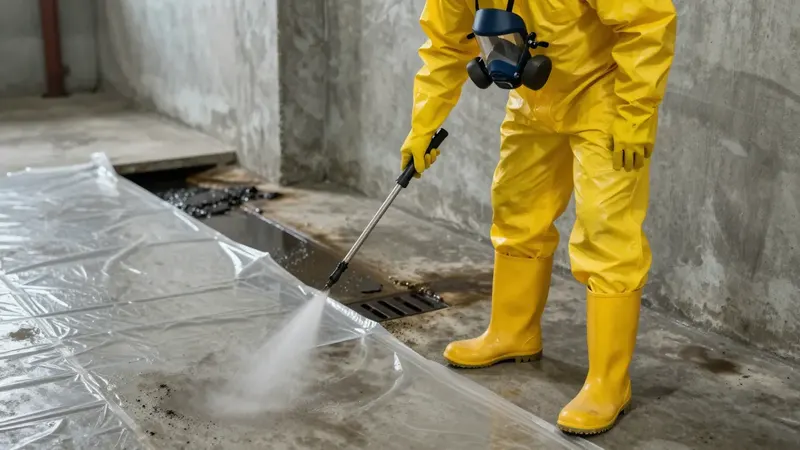
Haltom City covers a little over 12 square miles of Tarrant County at about 594 feet, roughly six miles from downtown Fort Worth. It is almost entirely bordered by Fort Worth, North Richland Hills, Watauga and Richland Hills. The population soared from about 5,800 in 1950 to more than 23,000 in 1960, so much of the housing dates from the postwar years.
Keep in mind that Fire & Water Energy only provides referrals and does not employ restoration workers. Phone (866) 937-3230 and we will try to connect you with an independent restoration contractor serving Haltom City and the surrounding Mid-Cities. Availability hinges on local providers and is not promised. Our explanation of the process and referral disclosure cover the details.
Big Fossil Creek and the county's disaster history
Big Fossil Creek starts in northwest Fort Worth and runs southeast through Haltom City, North Richland Hills and Richland Hills before joining the West Fork of the Trinity River. During heavy thunderstorms, that corridor and the smaller drainageways feeding it carry a lot of runoff in a short time.
FEMA has included Tarrant County in seven major disaster declarations since 2000, covering severe storms with tornadoes and flooding in 2000, 2007 and 2015, Hurricane Rita (2005), the 2006 Extreme Wildfire Threat, Hurricane Harvey (2017) and the Severe Winter Storms of February 2021.
Postwar plumbing and the leaks it causes
Homes built in the 1950s and 1960s may still have galvanized steel water lines, cast-iron drains and older fixtures. Galvanized pipe corrodes from the inside, so pinhole leaks and failed joints are common, and cast-iron drains can crack and back up. The city has also posted information about EPA lead and copper drinking-water rule revisions, a reminder that older service lines are getting more attention.
Water damage restoration in Haltom City usually begins with locating and stopping the leak, then extracting water, checking for moisture in subfloors and walls, and drying. Pier-and-beam crawlspaces, where present, need their own inspection. Our guides to water damage restoration and sewage cleanup go further.
Federal disaster declarations that included Tarrant County
FEMA records show Tarrant County was included in 7 major disaster declarations for weather or fire events from 2000 through 2026 (2 hurricane, 2 severe storm, 1 severe ice storm, 1 fire, 1 tornado, by FEMA incident type). Declarations are made at the county level, so they do not mean every neighborhood in Haltom City was affected. The most recent:
- 2021 – Severe Winter Storms (DR-4586)
- 2017 – Hurricane Harvey (DR-4332)
- 2015 – Severe Storms, Tornadoes, Straight-line Winds and Flooding (DR-4223)
- 2007 – Severe Storms, Tornadoes, and Flooding (DR-1709)
- 2006 – Extreme Wildfire Threat (DR-1624)
- 2005 – Hurricane Rita (DR-1606)
Source: OpenFEMA Disaster Declarations Summaries, retrieved 2026-10-10. Counts include major disaster (DR) declarations with hurricane, flood, severe storm, tropical storm, fire, tornado, coastal storm, winter or ice storm, mudslide and dam/levee incident types.
Water, fire or storm damage in Haltom City?
Call (866) 937-3230 and tell us what happened at your Haltom City property.
Fire recovery in older houses
Older homes can have outdated wiring, limited outlets and heavy reliance on extension cords or space heaters, all of which raise fire risk. Original plaster, wood trim and hardwood floors can often be cleaned rather than replaced if soot is handled correctly.
Restoration firms commonly board up openings, remove debris, test residues to choose cleaning methods, clean structure and contents, and deodorize. Before demolition in older homes, ask whether materials should be tested for asbestos or lead paint. Our fire damage cleanup and soot removal pages break down each stage of that work.
Storm and runoff damage cleanup
Hail and straight-line winds can tear shingles off older roofs and drop trees on houses, opening the way for rain. Emergency tarping and debris removal typically come first, then wet insulation and ceiling drywall are removed and the structure dried.
Runoff from intense storms can pond in yards and enter low doorways or crawlspaces, especially near creek corridors. Because it carries soil and possible sewage, porous materials it saturates are generally discarded. Read our storm damage cleanup and flood cleanup pages for the process.
Mold in crawlspaces, walls and bathrooms
Slow leaks from aging pipes, poor bathroom ventilation and damp crawlspaces give mold steady moisture. Musty smells, warped flooring and peeling paint near plumbing walls are early warning signs.
The EPA's rule of thumb is that homeowners can generally clean mold covering less than about 10 square feet after stopping the moisture source. Larger or hidden growth, or mold after sewage backups, typically needs mold remediation with containment.
What Haltom City residents should do first
- Call 911 for fire, injuries, gas smells or downed lines.
- Sign up for the city's emergency alerts, delivered through the Wireless Emergency Notification System (WENS).
- Close the main water valve if a pipe bursts, and stop using drains if sewage backs up.
- Keep children and pets away from sewage, soot and wet electrical areas.
- Photograph all damage and belongings before cleanup.
- Ask your insurer or agent what your policy covers; sewer backup coverage may require a separate endorsement.
Neighborhoods and nearby communities
Nearby communities with their own pages (straight-line distance from Haltom City):
- North Richland Hills · 3 mi
- Watauga · 4 mi
- Fort Worth · 6 mi
- Hurst · 6 mi
- Bedford · 8 mi
- Colleyville · 9 mi
Haltom City restoration FAQs
My house in Haltom City was built in the 1950s. Are leaks more likely?
Often, yes. Galvanized supply lines and cast-iron drains from that era corrode over time. A plumber can assess what you have and recommend replacements before a failure causes water damage.
Which creek runs through Haltom City?
Big Fossil Creek flows southeast through the city on its way to the West Fork of the Trinity River. Heavy storms can raise it quickly, so avoid low crossings when it is running high.
How does the city send emergency alerts?
Haltom City uses the Wireless Emergency Notification System (WENS) for emergency alerts and community updates. You can find sign-up information on the city's official website.
Do you take calls from North Richland Hills, Watauga or Fort Worth?
Yes. We take calls from nearby communities including North Richland Hills, Watauga, Fort Worth, Hurst and Saginaw. We'll try to locate an independent contractor serving you, though availability isn't guaranteed.
Restoration guides
- Water Damage Restoration
- Sewage Cleanup
- Storm Damage Cleanup
- Fire Damage Cleanup
- Soot Removal
- Mold Remediation