
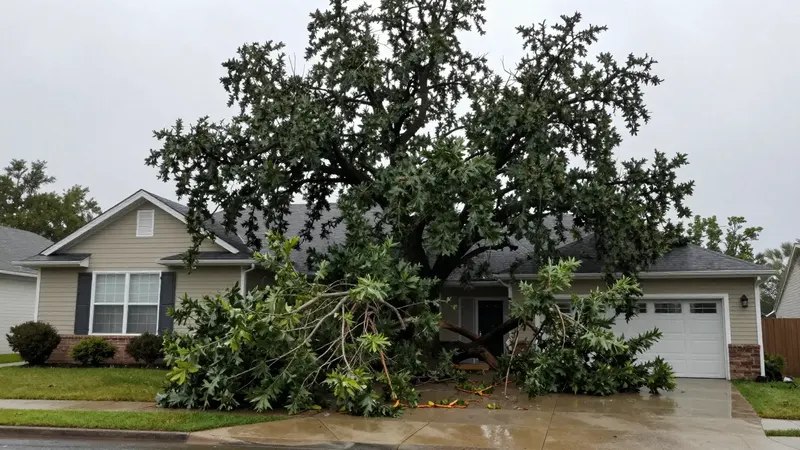
Storm damage cleanup is about the aftermath of wind and hail: limbs on the roof, shattered windows, torn shingles, siding in the yard, and debris scattered across the property. Homeowners searching for emergency storm cleanup usually want two things quickly, the hazards cleared and the house closed up against the next round of weather.
Fire & Water Energy is a referral service, not a contractor, and does not send crews. Call (866) 937-3230 and we'll try to put you in touch with an independent restoration contractor serving your area; whether one is available depends on providers near you.
What severe storms typically leave behind
The National Weather Service classifies a thunderstorm as severe when it produces hail at least 1 inch in diameter or wind gusts above 58 mph. The NWS notes hail can damage roofs and vehicles, and wind can snap large branches and knock over trees. Common cleanup situations include:
- A tree or large limb resting on the roof, a porch, or a vehicle.
- Missing shingles, punctured roofing, or damaged flashing after hail.
- Broken windows and doors that leave the interior exposed.
- Fences, siding, gutters, and outdoor furniture scattered across the yard.
If rain has already soaked the interior through those openings, see storm water damage restoration for the drying side of the job.
Stay safe before help arrives
Wind damage creates hazards that are easy to underestimate. Call 911 for injuries or immediate danger, and follow local emergency management guidance.
- Stay away from downed power lines and anything touching them, including trees, fences, and puddles. Report them to the utility.
- Do not climb onto a damaged or wet roof, or try to cut a tree that is under tension or resting on the house.
- Do not enter rooms where a tree has come through the ceiling or where walls or floors look unstable.
- Do shut off power to areas where water is coming in, but only if you can reach the panel without standing in water.
- Do run generators outdoors only; the EPA warns that carbon monoxide from generators and fuel-burning equipment can kill in minutes.
How a contractor usually approaches storm cleanup
Emergency storm cleanup tends to follow a protect-first order:
- Site safety review. Identify power line contact, gas odors, and structural hazards, and coordinate with the utility when needed.
- Tree and debris removal from the structure. Heavy limbs on a roof are often removed by tree specialists using rigging or cranes before roof work starts.
- Emergency covering. Tarp damaged roof areas and board up broken windows and doors. The EPA notes that roof, window, and door tarps must be secured before cleanup starts so weather cannot get in during the work.
- Interior check. Look for water in the attic, ceilings, and walls, and take moisture readings.
- Debris cleanup. Clear broken glass, shingles, and branches, and separate debris as your local collection rules require.
- Repair planning. Document the damage and prepare a written scope for permanent roofing, window, and siding repairs.
Need help with storm damage cleanup?
Call (866) 937-3230 and tell us what happened and where.
Documenting storm damage for insurance
Wind and hail claims usually go through a homeowners policy, but terms, deductibles, and exclusions vary. Coverage depends on your policy; check with your insurer or agent.
- Photograph damage from several angles before anything is moved, including trees on the roof and hail marks on siding or vehicles.
- Keep receipts for tarps, board-up materials, and emergency work, since insurers often expect reasonable steps to prevent further damage.
- Write down the date and time of the storm and when you discovered each problem.
- Ask your insurer whether they want to see the damage before a tree is removed or a roof is tarped.
How to vet a storm cleanup company
After a widespread storm, unfamiliar contractors often appear in affected neighborhoods. Take a moment to check before signing anything:
- Does the company hold any contractor or roofing license your state or city requires?
- Can it show proof of liability and workers' compensation insurance, especially for tree and roof work?
- Will it provide a written estimate for emergency work separate from permanent repairs?
- If interior water is involved, does it follow IICRC S500 water damage practices and take moisture readings?
- Does it have a verifiable local address and references you can call?
- Be wary of large cash deposits or pressure to sign over insurance benefits on the spot.
Storm cleanup versus related services
Storm damage cleanup covers the outside-in hazards of wind and hail. Damage from a named tropical system, with surge and widespread flooding, is addressed on hurricane damage cleanup. Rising water from rivers or flash floods belongs on flood cleanup. Once the house is secured and dry, permanent rebuilding falls under property damage reconstruction. You can read how it works for the referral process.
Frequently asked questions
What counts as emergency storm cleanup?
It usually means the first round of work after a storm: removing trees or limbs from the house, tarping the roof, boarding windows, and clearing dangerous debris. Permanent repairs come later once the home is protected.
Should I remove a tree from my roof myself?
It is generally safer not to. Trees resting on a structure can be under tension and shift unexpectedly, and power lines may be involved, so this work is usually left to experienced tree and restoration professionals.
How big does hail have to be to cause roof damage?
The National Weather Service considers a storm severe when hail reaches at least 1 inch in diameter, and notes hail can damage roofs and vehicles. Whether your roof was damaged depends on its age and materials, so an inspection is the way to know.
Should I tarp the roof before the adjuster comes?
Insurers generally expect you to take reasonable steps to prevent further damage, and tarping is a common one. Photograph the damage first and check with your insurer or agent about their requirements.
Is storm cleanup covered by homeowners insurance?
Wind and hail damage is often handled through homeowners policies, but deductibles and exclusions vary. Coverage depends on your policy, so check with your insurer or agent before work begins.
What if water got inside during the storm?
Interior water from a damaged roof or broken window should be dried promptly to reduce the risk of mold. Our storm water damage restoration page explains that side of the process.
Related services
- Storm Water Damage Restoration
- Hurricane Damage Cleanup
- Property Damage Reconstruction
- Ceiling Water Damage Repair
Find storm damage cleanup help by state
- Florida
- Georgia
- Texas
- Louisiana
- Alabama
- Mississippi
- California
- South Carolina
- North Carolina
- Tennessee
- Arizona
- New Mexico
- Virginia
- Maryland
- Oregon
- Washington