
Fire & Water Energy is a referral service that connects callers with independent restoration contractors. We do not perform cleanup or repairs ourselves. Call (866) 937-3230 and we'll try to connect you with a contractor serving your Tennessee community; whether one is available depends on providers in your area.
Below is an overview of the hazards behind most water, storm and fire damage in the state, how they vary across West, Middle and East Tennessee, and where to find official insurance, licensing and alert information.
Flooding: the state's most damaging recurring hazard
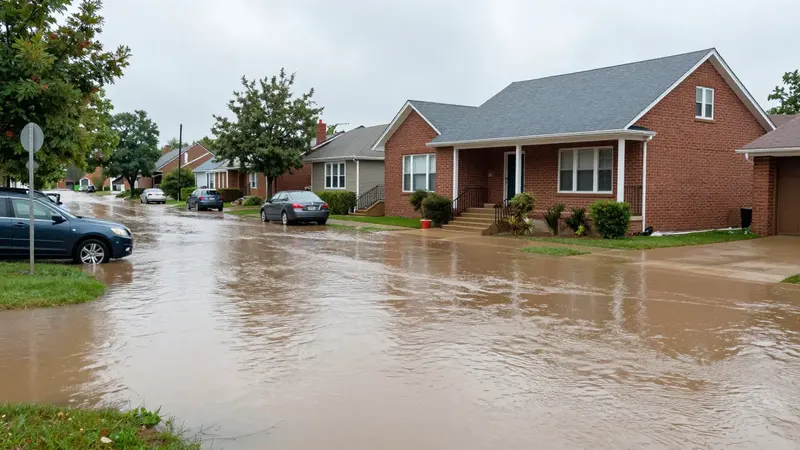
Tennessee averages about 50 inches of precipitation a year, with the wettest months running from December through April. Heavy, repeated rain can overwhelm creeks and rivers quickly. On May 1 and 2, 2010, Nashville received about 13.57 inches of rain, roughly double its previous two-day record. The Cumberland River crested at 51.86 feet in Nashville, the highest level since 1937, and 21 people died in Tennessee. Damage was estimated at $2.3 billion.
On August 21, 2021, a gauge near McEwen recorded 20.73 inches of rain in a single day, a state record. The resulting flash flood struck Waverly in Humphreys County, where 19 people died. In September 2024, the remnants of Helene sent the Nolichucky River through Erwin in Unicoi County, nearly submerging the town's hospital and washing out part of the I-26 bridge. Tennessee recorded 19 deaths from Helene.
Floodwater that comes in from outside is treated as contaminated. Our flood damage restoration and basement flood cleanup guides cover the typical steps.
Tornadoes, hail and severe thunderstorms
Tennessee averages about 15 tornadoes a year and leads the nation in the percentage of tornadoes that cause fatalities. West and Middle Tennessee are the most vulnerable. The state also averages about 50 days of thunderstorms a year, which can bring large hail and damaging winds.
Overnight on March 3, 2020, a high-end EF3 tornado tracked about 60 miles through Davidson, Wilson and Smith counties, hitting the Germantown area, East Nashville, Donelson, Hermitage, Mount Juliet and Lebanon. Damage was about $1.5 billion. Less than two hours later, an EF4 tornado struck the Baxter and western Cookeville area in Putnam County, killing 19 people.
Storm damage often becomes water damage when rain enters through a broken roof or window. Contractors commonly tarp openings, extract water and start drying while repairs are planned. See storm damage cleanup.
Restoration help in Tennessee
Call (866) 937-3230 and tell us what happened and where in Tennessee.
Ice, winter storms and frozen pipes
Ice storms are fairly common in Tennessee, and major winter storms in 1993 and 2021 caused widespread problems. Snowfall ranges from about 5 inches a year in West Tennessee to more than 80 inches on the highest East Tennessee peaks.
Hard freezes can split pipes in exterior walls, crawl spaces and attics, and the leak often shows up only when the water thaws. If a pipe bursts, shut off the main water valve and turn off power to wet areas. Our burst pipe water damage guide explains what to expect.
Wildfire in the Smokies and smoke damage
East Tennessee's forested mountains carry a wildfire risk that the rest of the state rarely sees. In late November 2016, the Chimney Tops 2 Fire and related fires in and around Great Smoky Mountains National Park were driven by wind gusts up to 87 mph into Gatlinburg and Pigeon Forge. At least 14 people died, about 2,460 structures were destroyed, and roughly 14,000 residents and visitors evacuated.
Homes that survive a nearby fire can still need cleaning for soot and odor in HVAC systems, insulation and soft furnishings. Read more about fire damage restoration and smoke damage cleanup.
How damage patterns differ by region
- West Tennessee (Memphis, Jackson, Dyersburg): tornadoes and severe storms, and low-lying flooding near the Mississippi River and its tributaries.
- Middle Tennessee (Nashville, Murfreesboro, Clarksville, Franklin): river and flash flooding on the Cumberland and its tributaries, plus tornadoes like the 2020 outbreak.
- Cumberland Plateau and Upper Cumberland (Cookeville, Crossville): tornadoes, ice and winter weather at higher elevation.
- East Tennessee (Knoxville, Chattanooga, the Tri-Cities, Sevier County): mountain flash flooding like Helene's on the Nolichucky, heavier snow at elevation and wildfire near the national park.
Insurance, licensing and official alerts
The Tennessee Department of Commerce & Insurance advises that standard homeowners and renters policies generally don't pay for flood damage, and that NFIP policies usually have a 30-day waiting period. In 2020 the department reported that only 1.14% of Tennessee residents had active flood policies. Coverage depends on your policy; check with your insurer or agent.
The Tennessee Board for Licensing Contractors licenses general contractors and home improvement contractors. Before hiring anyone for structural repairs, check that their license is current with the board. For mold work, ask whether technicians hold IICRC certification; see our mold remediation guide.
For alerts and disaster updates, follow the Tennessee Emergency Management Agency, your county EMA and your local National Weather Service office. Never drive into floodwater: 12 inches of rushing water can carry away most cars. Call 911 in an emergency.
Restoration guides
- Flood Damage Restoration
- Storm Damage Cleanup
- Water Damage Restoration
- Basement Flood Cleanup
- Burst Pipe Water Damage
- Fire Damage Restoration
- Smoke Damage Cleanup
- Mold Remediation
Tennessee restoration FAQs
Is Fire & Water Energy a restoration company?
No. Fire & Water Energy is a referral service. Call (866) 937-3230 and we'll try to connect you with an independent restoration contractor in your part of Tennessee. Availability depends on local providers.
Does homeowners insurance cover flood damage in Tennessee?
According to the Tennessee Department of Commerce & Insurance, standard homeowners and renters policies generally don't cover flood. NFIP flood policies usually have a 30-day waiting period. Check your own policy with your insurer or agent.
What were Tennessee's worst recent floods?
Major events include the May 2010 Nashville flood, the August 2021 Waverly flash flood in Humphreys County, and flooding from Helene in September 2024 in Unicoi County and other parts of northeast Tennessee.
What should I do if a pipe bursts during a freeze?
Shut off the main water valve, turn off electricity to wet areas if you can do so safely, move belongings out of the water, and take photos. A restoration contractor can then extract water and dry the structure.
How do I verify a contractor's license in Tennessee?
Check the contractor's license with the Tennessee Board for Licensing Contractors, which licenses general contractors and home improvement contractors.
Where do I get emergency alerts?
Follow the Tennessee Emergency Management Agency, your county emergency management agency and your local National Weather Service office.
Sources
- Climate of Tennessee (Wikipedia)
- 2010 Tennessee floods (Wikipedia)
- 2021 Tennessee floods (Wikipedia)
- Tornado outbreak of March 2-3, 2020 (Wikipedia)
- 2016 Great Smoky Mountains wildfires (Wikipedia)
- Hurricane Helene (Wikipedia)
- TN Dept. of Commerce & Insurance: Flood insurance information
- TDCI: Flood insurance on the 10th anniversary of the Nashville flood
- Tennessee Board for Licensing Contractors
- Tennessee Emergency Management Agency
- National Weather Service: Turn Around Don't Drown