
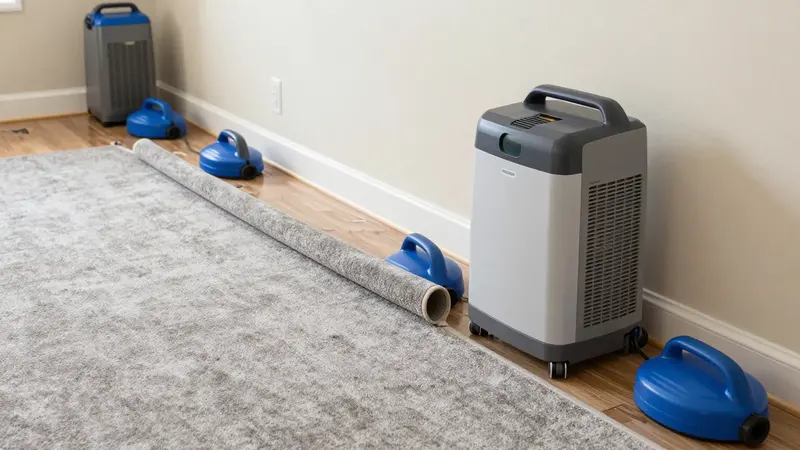
A floor can look dry within a day while the plywood beneath it and the studs inside the wall are still damp. Structural drying addresses that hidden moisture. It's the stage where equipment runs for days, readings are taken repeatedly, and decisions are made about which materials can be dried in place and which need to come out. Homeowners searching this term often have fans already running and want to know what is happening and when it will end.
Fire & Water Energy connects callers with independent contractors; we don't own drying equipment or perform the work. Call (866) 937-3230 and we'll try to connect you with a restoration contractor serving your area, depending on local availability. Learn more on our How It Works page.
When Structural Drying Is Needed
- Water ran under baseboards and was absorbed by drywall from the bottom up.
- A leak soaked a subfloor or the underside of hardwood.
- Insulation in an exterior wall or attic got wet.
- Water collected in a ceiling cavity from a leak above.
- A basement's concrete, framing, or finished walls took on water.
EPA's Mold Course, Chapter 2 states that wet buildings and furnishings should be dried within 24–48 hours to avoid mold growth, and lists the back side of drywall and the underside of carpets and pads among places hidden mold can grow. Those concealed areas are what structural drying targets.
The Principles Behind the Equipment
Drying depends on moving moisture out of materials and into the air, then out of the air. EPA notes that increasing air circulation and temperature will increase the speed of drying, and that commercial firms often use large fans and dehumidifiers. In practice, contractors balance three things:
- Airflow: air movers aimed across wet surfaces speed evaporation.
- Dehumidification: refrigerant or desiccant dehumidifiers pull the evaporated water from the air so it doesn't settle elsewhere.
- Temperature: warmer conditions help, within limits that protect the building and contents.
For everyday humidity, EPA recommends keeping indoor relative humidity below 60 percent, ideally between 30 and 50 percent. Drying crews typically push humidity in the work area well below normal levels while equipment runs.
What a Drying Contractor Typically Does
- Moisture mapping. Meters and thermal imaging show how far water traveled inside walls and floors.
- Dry standard set. Readings are taken on unaffected materials of the same type to set a target.
- Access openings. Baseboards may be pulled, small holes drilled, or drywall cut to let air reach cavities.
- Equipment placement. Air movers, dehumidifiers, and sometimes specialty floor or wall systems are positioned.
- Daily monitoring. Moisture, temperature, and humidity are logged, and equipment is adjusted.
- Removal of what won't dry. Materials that stay wet or show damage are taken out.
- Final readings. Equipment comes out only after materials reach the dry standard.
EPA's flood cleanup guidance says drying usually takes several days to weeks and that a moisture meter reading of 15% or less indicates materials are ready for refinishing.
Need help with structural drying?
Call (866) 937-3230 and tell us what happened and where.
Living With Drying Equipment Safely
- Keep cords out of walkways and don't unplug or move equipment without checking with the contractor.
- Don't overload circuits by plugging in extra devices on the same outlets as dehumidifiers.
- EPA advises against using a flood-affected HVAC system to dry the house; ask before running your heating or cooling.
- If the water was contaminated, cleaning should come before drying so contaminants aren't spread.
- People with asthma or weakened immune systems should avoid areas with water damage or visible mold, per Ready.gov.
If you notice burning smells, tripped breakers, or new sagging in a ceiling, turn off equipment if safe, leave the area, and contact the contractor; call 911 in an emergency.
Drying Logs and Insurance
Coverage depends on your policy, so check with your insurer or agent about drying charges. Drying records often matter to adjusters because they show why equipment ran for a given number of days. Ask for copies of the daily moisture log, the equipment list with dates, and photos of meter readings. Keep your own notes of when equipment arrived and left.
Vetting a Contractor for Drying Work
- Is the company licensed where your state requires it, and can it show proof of insurance?
- Do the people running the job hold IICRC certification, and does the company follow the ANSI/IICRC S500 standard, which covers drying technology and procedures?
- How will you set the dry standard, and will I see daily readings?
- Will you open walls or use specialty systems to dry cavities in place?
- How is equipment billed, and will you remove it as soon as readings reach the goal?
- If mold is found, will you stop and recommend an assessment or clearance testing?
How Drying Fits With Related Services
Drying follows water extraction, which removes liquid water first, and comes before water damage repair, which rebuilds what was removed. For the overall sequence, see water damage restoration. If mold has started growing, the job may shift to mold remediation. Storm-driven water is covered on storm water damage restoration.
Frequently asked questions
How long does structural drying take?
It depends on the materials, how long they were wet, and the conditions in the home. EPA's flood guidance puts typical drying time at several days to weeks. Your contractor's daily readings are the clearest indication of progress.
Why is the equipment so loud and warm?
Air movers push large volumes of air, and dehumidifiers release heat as they remove water from the air. Warmer, drier air helps materials give up moisture faster. Ask the contractor before turning anything off, since interruptions can slow drying.
Can walls be dried without tearing them out?
Often, if the water was clean and drying started quickly. Contractors may remove baseboards or drill small holes to move air into the cavity. Drywall that soaked up contaminated water or has stayed wet too long is usually removed instead.
How will I know the house is actually dry?
Ask for final moisture readings compared against the dry standard taken on unaffected materials. A surface feeling dry is not proof. EPA's guidance cites a moisture meter reading of 15% or less as a sign materials are ready for refinishing.
Should I run my own fans and air conditioning too?
Ask your contractor first, because extra airflow or cooling can work against a planned setup. EPA says not to use an HVAC system that was affected by flooding. If no contractor is involved yet, fans and a dehumidifier can help with small clean-water areas.
Related services
Find structural drying help by state
- Florida
- Georgia
- Texas
- Louisiana
- Alabama
- Mississippi
- California
- South Carolina
- North Carolina
- Tennessee
- Arizona
- New Mexico
- Virginia
- Maryland
- Oregon
- Washington