
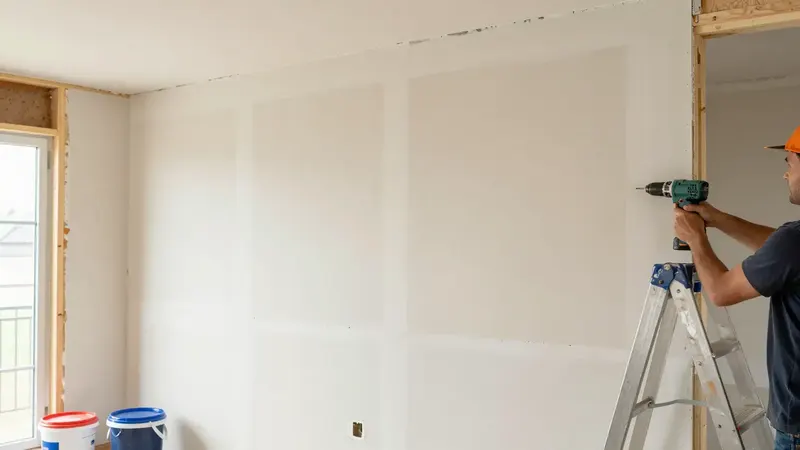
Searches for water damage repair usually come from homeowners who are past the emergency. The leak is fixed, the fans are gone or about to be, and now there are cut-open walls, missing baseboards, or a subfloor with no finished floor on it. Repair is the reconstruction work that turns a dried-out shell back into a usable room.
Fire & Water Energy is a referral service, not a contractor, and we do no repair work ourselves. If you call (866) 937-3230, we'll try to connect you with an independent contractor in your area who handles post-water rebuilding, subject to local availability. Details are on our How It Works page.
Typical Situations That Call for Repair Work
Repair applies when materials have been removed or permanently changed by water. Common examples include:
- Drywall cut out two or four feet above the floor during mitigation, leaving open stud bays.
- Laminate or engineered flooring that swelled at the seams and had to be pulled up.
- Base cabinets with particleboard boxes that delaminated after sitting in water.
- Stained or sagging ceiling panels that were taken down (see ceiling water damage repair).
- Baseboard, door casing, and paint that bubbled, warped, or peeled.
- Insulation removed from an exterior wall that now needs to be replaced before new board goes up.
If the house is still wet, repair is premature. Start with emergency water removal or structural drying instead.
Why Dry Comes Before Rebuild
Closing up damp framing is one of the most common and costly mistakes after a leak. EPA's flood cleanup guidance warns against sealing wet wall cavities or applying paint or sealants until materials are dry inside, and notes that a moisture meter reading of 15% or less indicates materials are ready for refinishing.
EPA also points out that mold can grow on the back side of drywall and other hidden surfaces (EPA Mold Course, Chapter 2). New board installed over damp studs can hide exactly that kind of growth. Ask your repair contractor to take and record readings on framing and subfloor before any material goes back in, even if a different company did the drying.
How a Repair Contractor Usually Approaches the Job
Contractors commonly work through the rebuild in an order like this:
- Walkthrough and scope. They review the mitigation company's notes, photos, and moisture logs, then list every item to replace.
- Moisture confirmation. Framing, sheathing, and subfloor are checked again with a meter.
- Written estimate. Line items for materials and labor, often matching the format your insurer uses.
- Permits where your local building department requires them, for example when electrical or plumbing work is involved.
- Insulation and drywall. New insulation, board, tape, and finish coats.
- Flooring and cabinetry. Underlayment and finished floor, then cabinets and countertops if affected.
- Trim, paint, and fixtures. Baseboards, casing, primer, paint, and reinstalled outlets or vents.
- Final walkthrough with a punch list you sign off on.
Need help with water damage repair?
Call (866) 937-3230 and tell us what happened and where.
Safety While the House Is Under Repair
Even after the water is gone, a home under repair has hazards. Keep people away from open walls with exposed wiring until an electrician has checked any circuits that got wet. Ready.gov advises against touching electrical equipment that is wet (Ready.gov: Floods).
- Do not reinstall or plug in appliances that were submerged until a qualified person inspects them.
- If you notice a musty smell or visible spots behind removed drywall, pause repairs and have it evaluated; see mold remediation.
- If the original water was sewage or floodwater, confirm that cleaning and disinfection were completed before rebuild begins.
- Keep children and anyone with respiratory conditions away from sanding dust and demolition areas.
If a ceiling sags or you smell gas at any stage, leave the house and call 911 or your utility from outside.
Paperwork, Estimates, and Insurance
Coverage depends on your policy; check with your insurer or agent about what repair work is included and whether matching undamaged materials is addressed. Keep the paper trail organized:
- The mitigation company's final moisture log showing materials reached a dry standard.
- Before, during, and after photos of every repaired area.
- Itemized repair estimates, change orders, and final invoices.
- Permits and inspection sign-offs, if any were required.
- Product names and colors for flooring, paint, and cabinets, in case of future repairs.
Choosing a Contractor for the Rebuild
Repair work is general construction, so vet the company the way you would for a remodel, plus a few water-specific questions:
- Is the company licensed as a general or residential contractor where your state requires it?
- Can it show certificates of liability and workers' compensation insurance?
- Will it verify moisture levels itself before installing drywall or flooring?
- Do any staff hold IICRC certification, and are they familiar with the S500 water damage standard?
- Will it pull permits where needed, and who schedules inspections?
- What warranty, if any, does it offer on workmanship, in writing?
Repair Compared With Restoration and Reconstruction
Water damage restoration describes the full sequence from the first call to the final coat of paint; repair is the back half of that sequence. If damage goes beyond finishes into framing, roofing, or major structural elements, the work starts to overlap with property damage reconstruction. For the drying phase that must come first, see structural drying.
Frequently asked questions
How do I know my walls are dry enough to repair?
Ask for moisture meter readings on studs, sheathing, and subfloor, and compare them with the contractor's dry target. EPA's flood cleanup guidance cites a reading of 15% or less as a sign that materials are ready for refinishing. Don't close walls based on how they feel to the touch.
Do I need to replace all the drywall that got wet?
Not always. Drywall exposed briefly to clean water can sometimes be dried in place, while board that soaked up contaminated water or stayed wet is usually removed. CDC guidance lists drywall among porous items to discard when it cannot be disinfected.
Can the same company do drying and repairs?
Some restoration companies handle both, and others focus only on mitigation and refer rebuild work to a general contractor. Either can work. Make sure the repair contractor receives the drying records so nothing is closed up while still wet.
Will new paint match the rest of the room?
Exact matches can be difficult on older paint or discontinued flooring. Ask the contractor how it handles transitions and whether repainting a full wall or room is part of the estimate. Whether insurance addresses matching depends on your policy, so check with your insurer.
Does water damage repair require a permit?
It depends on your local building department and the scope of work. Drywall patching often does not, while electrical, plumbing, or structural changes frequently do. Ask your contractor which permits apply and who will obtain them.
Related services
Find water damage repair help by state
- Florida
- Georgia
- Texas
- Louisiana
- Alabama
- Mississippi
- California
- South Carolina
- North Carolina
- Tennessee
- Arizona
- New Mexico
- Virginia
- Maryland
- Oregon
- Washington