
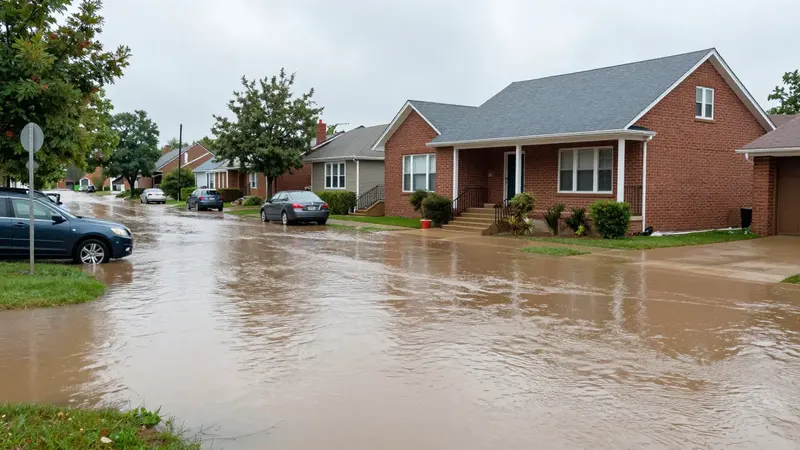
Fire & Water Energy is a referral service, not a restoration company. Call (866) 937-3230 and we'll try to connect you with an independent contractor who serves your county, whether the problem is a frozen pipe in Dalton, a flooded basement in metro Atlanta or wind damage after a tropical system in Valdosta.
We can't promise that a provider is free at a given moment; that depends on the independent companies working near you. Below is an overview of Georgia's weather risks, how they vary by region, and practical steps for insurance, hiring and safety.
The weather behind most Georgia damage
Georgia's short coastline means direct hurricane landfalls are uncommon. The last hurricane to directly affect the coast was David in 1979, and the last major hurricane to hit the coast directly was in 1898, according to the Wikipedia article on Georgia climate. Storms that come ashore in Florida, however, often cross the state still carrying heavy rain and damaging wind.
That is what happened with Hurricane Helene in September 2024. An extreme wind warning was issued for areas including Valdosta, tens of thousands of homes and buildings had wind damage as far north as Augusta, and floodwater entered at least 200 structures in the Atlanta area. Thirty-seven people died in Georgia during the storm (Wikipedia).
- Tropical rain: Tropical Storm Alberto looped across central Georgia in July 1994 and dropped more than 20 inches in 24 hours in places, the wettest tropical cyclone on record for the state.
- Tornadoes: Georgia sees many tornadoes, mostly weak. An EF2 tornado struck downtown Atlanta on March 14, 2008, shattering more than 1,600 windows at the CNN Center and letting water into the atrium through a damaged roof (Wikipedia).
- Ice and snow: Freezing rain is the biggest winter threat in the northern Piedmont. The January 2014 storm known as “Snowmageddon” gridlocked metro Atlanta roads (Wikipedia).
- Drought: Severe drought in 2007 was part of the 2006–2008 Southeastern drought, a reminder that dry spells can follow wet years.
Urban flash flooding: the September 2009 floods
Metro Atlanta's creeks rise quickly. During the September 2009 floods, the Chattahoochee River reached a 500-year flood level at its gauge, Sweetwater Creek set a record high, and Nancy Creek washed out a bridge on Peachtree-Dunwoody Road. About 20,000 buildings had major damage, and 17 Georgia counties received federal disaster declarations, including Cobb, DeKalb, Fulton, Gwinnett and Douglas (Wikipedia).
Most of the deaths in that event involved vehicles driven into water crossing roads. Basements, finished lower levels and crawl spaces near creeks are the parts of a Georgia home most likely to take on water in a cloudburst.
Restoration help in Georgia
Call (866) 937-3230 and tell us what happened and where in Georgia.
How damage differs by region
North Georgia and the mountains are the coolest part of the state. Snowfall averages roughly 4 to 18 inches a year in the mountains, and annual rainfall reaches about 75 inches in the northeast. Frozen and burst pipes, ice-laden trees on roofs and runoff from steep lots are common problems.
Metro Atlanta and the Piedmont deal with flash flooding of urban creeks, severe thunderstorms and the occasional ice storm. Southern Piedmont areas see snow about every other year.
Middle, South and Southwest Georgia are warmer and more humid, with frequent afternoon thunderstorms. Hurricanes that strike the Florida Panhandle often weaken over land but still bring tropical storm or hurricane-force wind and heavy rain to the southwest. Tornadoes have historically been most frequent in southwestern and northern sections.
Coastal Georgia sees surge and wind when a storm tracks nearby. Hurricane Matthew in 2016 prompted a mandatory evacuation east of Interstate 95, cut off access to St. Simons Island and left more than 250,000 Georgia customers without power ({a(W_MAT, 'Wikipedia')}).
What a restoration contractor typically handles
Contractors commonly begin with an inspection and moisture readings, then extract water, pull out wet carpet pad or drywall that can't be saved, and set drying equipment. A reputable company will usually document readings each day until materials are dry and explain what needs to be rebuilt afterward.
Fire and smoke work involves securing the structure, soot cleanup and odor control. After an ice storm or tornado, the job may start with tarping the roof and removing debris. Our guides to basement flood cleanup, burst pipe water damage and storm damage cleanup go into more detail.
Insurance and contractor checks in Georgia
Most homeowners insurance does not cover flood damage, so water that rises from creeks, rivers or surge usually requires a separate flood policy (FloodSmart.gov). NFIP coverage generally starts 30 days after purchase, with limited exceptions (NFIP policy terms). Coverage depends on your policy; check with your insurer or agent. If you have a dispute with an insurer, the Office of the Commissioner of Insurance and Safety Fire has a Consumer Services Division that takes complaints.
Georgia's State Licensing Board for Residential and Commercial General Contractors, created in 2004, regulates construction contracting and offers an online licensee search (Georgia Secretary of State). If a restoration job includes rebuilding, ask the contractor which license applies and look it up. You can also ask whether technicians hold IICRC certification and request proof of insurance and a written scope before work begins.
Staying safe and getting alerts
Keep out of standing water if it may reach outlets or the electrical panel, and leave the house if you smell gas or the ceiling is sagging. Treat creek or sewage water as contaminated. Call 911 in an emergency.
The National Weather Service warns that 6 inches of fast-moving water can knock over an adult and 12 inches can carry away most cars (NWS). After a flood, the CDC recommends drying the home out within 24–48 hours to limit mold, and notes that people with asthma or mold allergies can have severe reactions (CDC).
The Georgia Emergency Management and Homeland Security Agency runs the Ready Georgia program and posts alerts and hurricane guidance. Pair it with your county emergency management agency and local NWS forecasts.
Restoration guides
- Water Damage Restoration
- Flood Cleanup
- Basement Flood Cleanup
- Burst Pipe Water Damage
- Storm Damage Cleanup
- Fire Damage Restoration
- Mold Removal
- Structural Drying
Georgia restoration FAQs
Is Fire & Water Energy a restoration company?
No. Fire & Water Energy is a referral service that tries to connect callers with independent restoration contractors. The contractor you hire sets the scope, schedule and price.
Does homeowners insurance cover flooding from a creek in Georgia?
Usually not. Most homeowners policies exclude flood, which is why separate flood insurance exists. Coverage depends on your policy; check with your insurer or agent.
What should I do if pipes burst during a freeze?
Shut off the main water valve, turn off power to wet areas if you can do so safely, and photograph the damage. Then call a plumber for the pipe and a restoration contractor for drying.
How do I check a contractor's license in Georgia?
The Georgia Secretary of State's licensing division has a licensee search for the State Licensing Board for Residential and Commercial General Contractors. Ask which license the contractor holds and verify it there.
Can you find someone after a hurricane or tornado?
Call (866) 937-3230 and we'll try. After widespread storms, availability depends on the independent providers serving your area.
Where do I get emergency alerts in Georgia?
GEMA/HS and Ready Georgia, your county emergency management agency and National Weather Service forecasts are the official sources for watches, warnings and evacuation information.
Sources
- Climate of Georgia (Wikipedia)
- Hurricane Helene (Wikipedia)
- 2009 Southeastern United States floods (Wikipedia)
- 2008 Atlanta tornado outbreak (Wikipedia)
- January 2014 Gulf Coast winter storm (Wikipedia)
- Hurricane Matthew (Wikipedia)
- Georgia Emergency Management and Homeland Security Agency
- Georgia Office of the Commissioner of Insurance and Safety Fire
- Georgia State Licensing Board for Residential and Commercial General Contractors
- FloodSmart.gov (NFIP)
- FloodSmart.gov: Buy a Flood Insurance Policy (waiting period)
- National Weather Service: Turn Around Don't Drown
- CDC: About Mold