
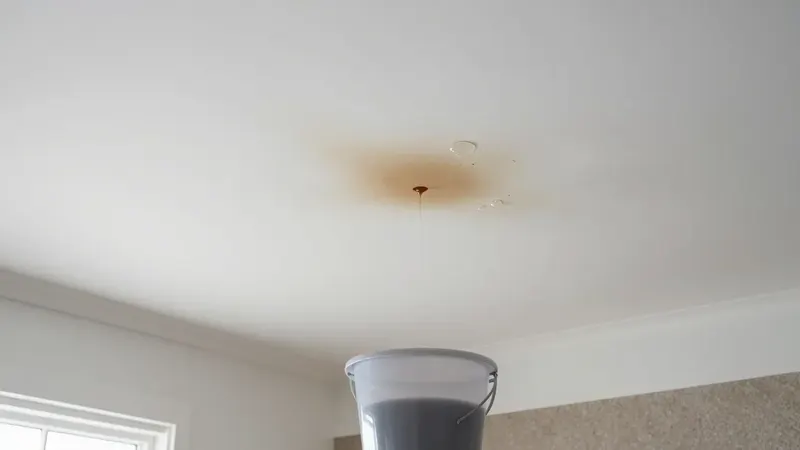
Ceilings show water damage in recognizable ways: a brown ring that slowly grows, paint that bubbles, a seam that opens, or drywall that bows downward. The visible damage is often modest compared with what is happening above it, where insulation, joists, or roof decking may be wet. Repair is only lasting when the leak is stopped and the space above is dry.
Fire & Water Energy doesn't repair ceilings; we're a referral service. Call (866) 937-3230 and we'll try to connect you with an independent restoration contractor serving your area who handles ceiling leaks; availability depends on local providers. Read our referral disclosure to learn how referrals work.
Where Ceiling Water Usually Comes From
- Roof leaks from damaged shingles, flashing, or ice dams, often showing up in top-floor rooms or near exterior walls.
- Bathrooms above, including failed tub or shower seals, toilet wax rings, and supply lines.
- Plumbing in the ceiling, such as a split pipe; see burst pipe water damage.
- HVAC condensate from an attic air handler with a clogged drain line or overflowing pan.
- Condensation in attics or on cold ducts.
EPA's Mold Course, Chapter 2 explains that condensation can form when warm, humid air contacts a cold surface, and lists roof materials above ceiling tiles as a place where hidden moisture and mold can occur.
Safety Under a Wet Ceiling
Water collecting above drywall is heavy, and a saturated ceiling can collapse. Take these precautions:
- Keep everyone out from under a sagging or bulging section.
- If water is dripping from a light fixture or near wiring, turn off that circuit at the breaker if you can do so safely, and don't touch wet electrical equipment, as Ready.gov advises.
- Move furniture and electronics out from beneath the leak and set out buckets.
- Do not climb onto a roof during a storm or onto wet attic joists where you could step through the ceiling.
- If the ceiling material is old and you don't know what it contains, avoid scraping or sanding it until it has been evaluated.
If a ceiling falls, a gas smell is present, or someone is hurt, leave and call 911.
How Contractors Commonly Repair Ceiling Water Damage
- Source tracing. Contractors check the roof, attic, or floor above with moisture meters and thermal imaging. A plumber or roofer may be needed to fix the cause.
- Controlled release. If water is pooled, a crew may drain it through a small, deliberate opening to prevent collapse.
- Removal of damaged materials. Sagging drywall, wet insulation, and stained ceiling tiles are taken out.
- Drying the cavity. Air movers and dehumidifiers dry joists and subfloor; see structural drying.
- Verification. Readings confirm framing is dry before new material goes up.
- Rebuild. New insulation and drywall, tape, texture matching, stain-blocking primer, and paint.
EPA notes that porous materials such as ceiling tiles may have to be thrown away if they become moldy (EPA: Mold Cleanup in Your Home), and that painting over moldy surfaces is likely to fail.
Need help with ceiling water damage repair?
Call (866) 937-3230 and tell us what happened and where.
Small Stain or Bigger Problem?
A dry, old stain from a leak that was fixed long ago may only need stain-blocking primer and paint. Signs that point to a larger repair include a stain that keeps growing, soft or crumbling drywall, a musty smell, visible spots, or a ceiling that sounds hollow or feels damp. EPA recommends professional help when mold covers more than about 10 square feet (EPA mold and moisture guide). If growth is present, see mold remediation before the ceiling is closed.
Documentation and Insurance
Coverage depends on your policy; check with your insurer or agent. Roof leaks from storm damage, sudden plumbing failures, and gradual leaks are often treated differently. Photograph the stain, the source, and the attic or room above. Note the date you first saw the damage, and keep invoices from the roofer or plumber along with the restoration contractor's moisture readings and estimate.
Questions to Ask Before Hiring
- Do you hold the contractor license our state requires, and can I see proof of insurance?
- How will you confirm the source is fixed before repairing the ceiling?
- Will you check the attic or floor cavity for wet insulation and framing, and share readings?
- Does anyone on the job hold IICRC certification, and do you follow the S500 standard for water damage?
- How will you match the existing ceiling texture and paint?
- If mold is found, will you recommend independent clearance testing after remediation?
How Ceiling Repair Relates to Other Services
This page focuses on damage overhead. Water damage repair covers rebuilding walls, floors, and finishes in general, while water damage restoration covers a whole-home loss from start to finish. If the leak came through the roof after high winds or hail, see storm damage cleanup or storm water damage restoration.
Frequently asked questions
Should I poke a hole in a bulging ceiling?
A contractor may release trapped water through a small opening to reduce the risk of collapse, but it carries risk if there is wiring nearby or the ceiling is about to fail. If you consider it, turn off power to that area, stand to the side with a bucket underneath, and keep others away. If the ceiling looks close to failing, leave the room and get professional help.
Can I just paint over a water stain?
Only if the leak is fixed and the ceiling and space above are fully dry. A stain-blocking primer is normally used before paint. EPA advises against painting over moldy surfaces, so check for growth first.
How do I find where a ceiling leak is coming from?
Look directly above the stain first: the attic, roof, or the bathroom or plumbing on the floor above. Water can travel along joists, so the source may be some distance away. A contractor with moisture meters or thermal imaging can help trace it.
Does wet ceiling insulation need to be replaced?
Often, yes. Insulation that soaked up water can compress, lose effectiveness, and hold moisture against framing. Your contractor can assess whether any can be dried, but replacement is common.
Is a ceiling leak covered by insurance?
It depends on your policy and the cause, such as sudden plumbing failure, storm damage to the roof, or a slow leak. Check with your insurer or agent, report the damage promptly, and keep photos and repair invoices.
Related services
Find ceiling water damage repair help by state
- Florida
- Georgia
- Texas
- Louisiana
- Alabama
- Mississippi
- California
- South Carolina
- North Carolina
- Tennessee
- Arizona
- New Mexico
- Virginia
- Maryland
- Oregon
- Washington