
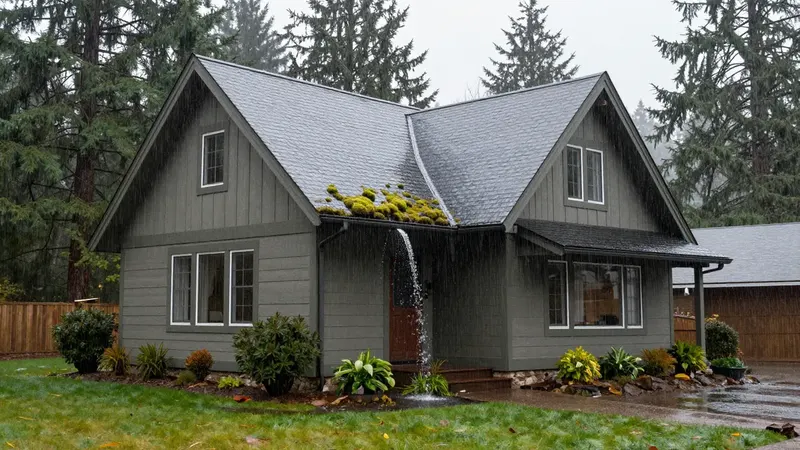
West of the Cascades, Washington's problems are mostly about water: long rainy seasons, atmospheric rivers, river flooding and windstorms. East of the mountains the climate is far drier, and wildfire, smoke and hard freezes take over. Plumbing failures and roof leaks happen everywhere.
Fire & Water Energy is a referral service, not a contractor. Call (866) 937-3230 and we will try to connect you with an independent restoration contractor serving your area. Availability depends on local providers.
Atmospheric rivers and river flooding
Washington's worst floods usually come from atmospheric rivers, often called the Pineapple Express. In November 2021, back-to-back atmospheric rivers flooded the Nooksack River in Whatcom County, damaging an estimated 85 percent of homes in Sumas, while the Skagit River crested just below its 1990 record. More than 158,000 people were affected by power outages and service disruptions.
Older events show the same pattern. The December 1964 flood threatened Centralia and Longview–Kelso and closed Interstate 5 at Kalama for over a week. When rivers leave their banks, a contractor will typically focus on flood cleanup, sanitation and drying.
Windstorms, snow and freezes
The Columbus Day storm of 1962 brought a 160 mph gust at Naselle and caused 9 deaths in Washington, with the worst tree losses in the Willapa Hills and southern Olympic Peninsula. The Hanukkah Eve windstorm of 2006 cut power to about 1.2 million customers in the state and killed 14 people in Western Washington, eight of them from carbon monoxide poisoning linked mostly to generators or grills used indoors.
The climate record also notes historic Big Snow winters when Western Washington saw up to 6 feet of snow, and Arctic cold fronts that regularly reach Eastern Washington. Freezes can split pipes and leave ceiling water damage once things thaw.
Restoration help in Washington
Call (866) 937-3230 and tell us what happened and where in Washington.
Wildfire, smoke and heat
The 2020 wildfire season burned about 842,000 acres in Washington. The Cold Springs Canyon and Pearl Hill fires together passed 337,000 acres by September 8, fires mostly destroyed the Palouse towns of Malden and Pine City, and smoke blanketed the Seattle area.
Heat adds to the risk. Hanford reached 120 °F on June 29, 2021, the state record, and Maple Valley hit 118 °F in the same heat wave. Smoke and ash can enter homes far from any fire, so many cases call for smoke and soot cleanup rather than rebuilding.
How damage differs by region
- Puget Sound (King, Snohomish, Pierce, Thurston): heavy rain, urban drainage overflows, windstorm tree damage and occasional snow and ice.
- North Sound and Skagit/Whatcom: river flooding on the Nooksack and Skagit and landslides on saturated slopes.
- Coast and Olympic Peninsula: the western Olympics can receive as much as 160 inches of precipitation a year, so roof leaks and moisture problems are common.
- Southwest Washington: river flooding near the Columbia and Cowlitz corridors.
- Central and Eastern Washington: some areas get as little as 6 inches of precipitation a year, but wildfire, smoke and deep freezes cause damage.
Because western Washington has so many rainy days, slow leaks can go unnoticed for months behind siding or under flooring. East of the Cascades, a vacant cabin or a home with a failed furnace during an Arctic cold front can develop a burst supply line that runs until someone visits. In both cases, look for warped floors, peeling paint, musty odors or a water bill that jumps without explanation.
Insurance and contractor checks
Ready.gov notes that homeowner's insurance policies do not cover flooding and that a new flood policy typically takes up to 30 days to take effect. For questions or problems with a home insurance claim, the Office of the Insurance Commissioner offers consumer advocacy help. Coverage depends on your policy; check with your insurer or agent.
The Department of Labor & Industries recommends hiring a registered construction contractor that is bonded and insured, and offers a contractor verification tool to check license status and history. You can also ask whether a contractor holds IICRC certification.
What a typical restoration job involves
A reputable company will usually trace the water to its source, take moisture readings and photograph affected areas before removing anything. Contractors commonly extract standing water, remove wet carpet pad and drywall below the waterline, and run air movers and dehumidifiers until readings show the structure is dry.
Damp western Washington weather can slow drying, so equipment may stay longer than you expect. River floodwater is treated as contaminated, which usually means more material is removed and surfaces are cleaned and sanitized. After a fire or heavy smoke, expect soot cleaning and odor treatment. Ask for written estimates and keep all records for your claim.
Safety and official alerts
Do not walk or drive through floodwater; six inches of moving water can knock you down. Stay away from downed lines, do not touch wet electrical equipment, and never run a generator, grill or camp stove indoors. If you smell gas or the structure looks unsafe, leave and call 911.
The Washington Emergency Management Division explains the state's public alert system and wildfire resources, and its recovery guidance is to document damage, contact your insurer and report damage to local emergency management. Follow NWS Seattle/Tacoma or the NWS forecast page for your area for warnings, and dry wet materials within 24 to 48 hours as the EPA advises.
Restoration guides
- Water Damage Restoration
- Flood Cleanup
- Storm Water Damage Restoration
- Ceiling Water Damage Repair
- Burst Pipe Water Damage
- Mold Removal
- Smoke Damage Cleanup
- Fire Damage Cleanup
Washington restoration FAQs
Is Fire & Water Energy a Washington restoration contractor?
No. We are a referral service. Call (866) 937-3230 and we will try to connect you with an independent restoration contractor serving your area.
How do I verify a contractor in Washington State?
Use the Department of Labor & Industries contractor verification tool to confirm registration, bonding, insurance and license history.
Does homeowners insurance cover atmospheric river flooding?
Generally not. Ready.gov notes homeowner's policies do not cover flooding, and new flood policies typically take up to 30 days to start. Check with your insurer or agent.
Who can help with a home insurance problem in Washington?
The Office of the Insurance Commissioner offers consumer advocacy for insurance questions; its contact options are listed on insurance.wa.gov.
What should I do after wildfire smoke gets into my home?
Wait until officials say the area is safe, then ventilate, replace HVAC filters and avoid stirring up ash. A restoration contractor commonly cleans soot and treats odors; ask for a written scope first.
Is generator use during outages dangerous?
It can be. During the 2006 Hanukkah Eve windstorm, eight Western Washington deaths came from carbon monoxide poisoning, mostly tied to generators or grills used indoors. Run generators outside, away from windows.
Sources
- Climate of Washington (Wikipedia)
- November 2021 Pacific Northwest floods (Wikipedia)
- Christmas flood of 1964 (Wikipedia)
- Columbus Day storm of 1962 (Wikipedia)
- Hanukkah Eve windstorm of 2006 (Wikipedia)
- 2020 Washington wildfires (Wikipedia)
- Washington OIC: Home insurance
- Washington L&I: Hiring a contractor
- Washington Emergency Management Division
- Ready.gov: Floods
- EPA: A Brief Guide to Mold, Moisture and Your Home
- NWS Seattle/Tacoma