
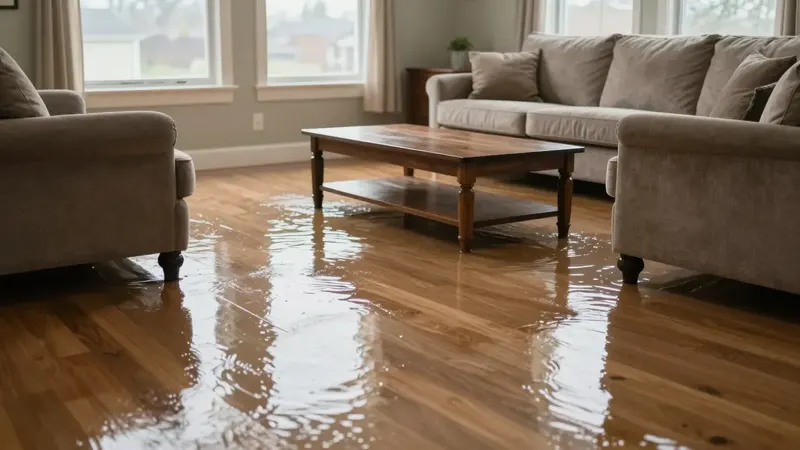
This page is for the moment water is on the floor and still moving. Emergency water removal is about triage: stopping more water from coming in, keeping people safe, protecting what you can, and getting the bulk of the water out before it wicks deeper into walls and subfloors. Longer-term drying and rebuilding come later and are covered elsewhere.
Fire & Water Energy is a referral service. We don't send crews. Call (866) 937-3230 and we'll try to connect you with an independent restoration contractor who serves your area; whether one is available and when they can come depends on local providers. If anyone is in danger, call 911 first.
Is This an Emergency?
Treat the situation as urgent when any of these are true:
- Water is still flowing and you cannot find or close the shut-off valve.
- Water is near outlets, a breaker panel, or appliances that are plugged in.
- A ceiling is bulging, dripping in several spots, or has started to sag.
- Water is coming up through floor drains or toilets, which can signal a sewer backup.
- Several rooms or a finished basement are affected.
Speed matters because, according to EPA's flood cleanup guidance, mold can grow on wood, drywall, carpet, and furniture that remain wet for more than a day. EPA's mold guide sets 24–48 hours as the window for drying water-damaged areas.
Your First Moves, in Order
- Get people and pets to a safe area. Leave the house if there are electrical, gas, or structural concerns.
- Stop the water. Close the fixture valve, or the main water shut-off if you can reach it safely. For roof or storm leaks, catch drips in buckets.
- Cut power to wet areas only if safe. Never stand in water to reach a breaker panel.
- Take photos and video of the water, the source, and affected rooms before cleanup changes anything.
- Call for help. A plumber stops pipe leaks; a restoration contractor removes water and starts drying. Notify your insurer.
- Protect belongings. Move electronics, documents, and rugs off wet floors. Put foil or blocks under furniture legs.
What Not to Do Before Help Arrives
- Don't use a household vacuum on water; it isn't built for it and creates a shock risk.
- Don't touch electrical equipment while it is wet or while you are standing in water, as Ready.gov warns.
- Don't walk into a room under a sagging ceiling.
- Don't wade into water from a sewer backup or outside flooding; treat it as Category 3 (grossly contaminated).
- Don't turn on a central HVAC system that took on water. EPA advises against using flood-affected HVAC to dry the house.
- Don't run a fuel-powered generator indoors or in a garage. EPA says to keep portable generators outside, at least 20 feet from buildings, because of carbon monoxide.
CDC suggests unplugging appliances so they don't shock anyone when power returns (CDC: Flood Safety). If local authorities have issued instructions for a wider flood, follow them before returning.
Need help with emergency water removal?
Call (866) 937-3230 and tell us what happened and where.
What an Emergency Contractor Typically Does on Arrival
A reputable company will usually focus on stabilizing the situation during the first visit:
- Checks for hazards and confirms the water source has been stopped.
- Identifies the likely water category so the crew uses appropriate protective gear.
- Extracts standing water with pumps or truck-mounted or portable vacuums.
- Pulls up saturated carpet pad and moves contents out of the wet zone.
- Takes initial moisture readings and photographs to set a baseline.
- Sets up air movers and dehumidifiers to begin drying.
- Explains next steps and provides a written scope or authorization form.
After the emergency visit, the job usually transitions into structural drying and, later, repairs.
Insurance Calls and Records in the First Day
What's covered depends on your specific policy, so confirm with your insurer or agent. Many policies expect you to take reasonable steps to prevent further damage, so keeping records of what you did is useful.
- Write down the time you discovered the water and when you shut it off.
- Keep the failed part, such as a burst hose or cracked fitting, if a plumber removes it.
- Save receipts for emergency supplies or temporary lodging.
- Get the claim number and adjuster contact before authorizing large work, if you can.
Quick Vetting When You're Under Pressure
Even in an emergency, take a few minutes to check who you're letting in:
- Ask for the company's full legal name and confirm any license your state requires.
- Ask for proof of liability insurance.
- Ask whether the crew holds IICRC certification and works to the ANSI/IICRC S500 water damage standard.
- Request a written estimate or rate sheet before equipment is set.
- Read any authorization or assignment-of-benefits form before signing; you can ask for time to review it.
How This Differs From Related Services
Emergency water removal is the opening phase. Water extraction focuses specifically on the equipment used to pull standing water out of floors and carpet. Water damage restoration describes the full project from this first visit through rebuild. If outside water entered the home, see flood cleanup; if it came from a drain, see sewage cleanup; for a basement full of water, see basement flood cleanup.
Frequently asked questions
Where is my main water shut-off valve?
It is often where the water line enters the house, such as a basement wall, crawl space, utility room, or near the water heater. In warmer climates it may be outside near the foundation or in a box near the street. Find and label it before you need it.
Should I start removing water myself while I wait?
If the water is clean, the power to the area is off, and you can do it safely, mopping or using a wet/dry vacuum designed for water can help. Stay out of sewage or floodwater and away from wet outlets. Stop if anything feels unsafe.
How quickly does someone need to start drying?
EPA recommends drying water-damaged areas and items within 24–48 hours to help prevent mold. The sooner water is removed and drying begins, the less it soaks into walls and subfloors. When a contractor can arrive depends on local availability.
Do I need to call my insurance company before calling a contractor?
Policies differ, so check yours. Many people notify their insurer promptly while also arranging emergency mitigation to limit further damage. Document everything and keep receipts either way.
Is the water from my washing machine considered contaminated?
Appliance discharge can carry soap, lint, and other contaminants, so it is usually not treated like clean supply-line water. A contractor following the IICRC S500 approach will assess the water category on site. Wear gloves and wash your hands after contact.
Related services
Find emergency water removal help by state
- Florida
- Georgia
- Texas
- Louisiana
- Alabama
- Mississippi
- California
- South Carolina
- North Carolina
- Tennessee
- Arizona
- New Mexico
- Virginia
- Maryland
- Oregon
- Washington