
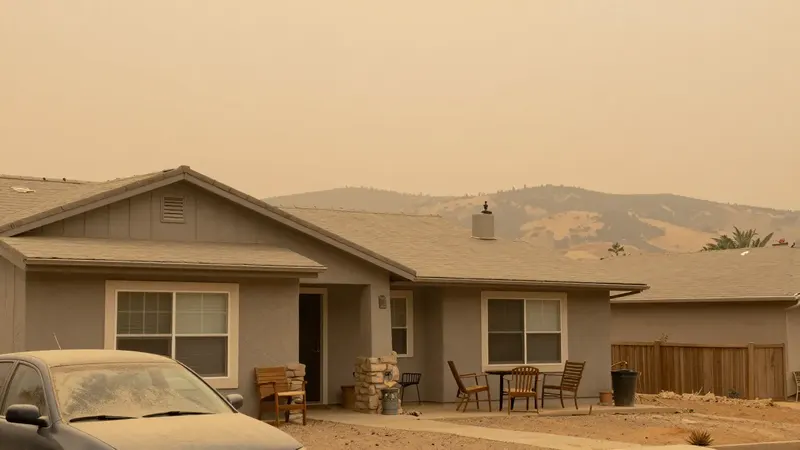
In much of California, the year splits into a dry season that feeds wildfires and a wet season that can bring flooding rain in a matter of days. Add Santa Ana winds in the south, summer monsoon storms in the deserts and everyday plumbing failures, and property owners can face fire, smoke and water damage within the same year.
Fire & Water Energy is a referral service, not a contractor. Call (866) 937-3230 and we'll try to connect you with an independent restoration contractor serving your area of California. Whether one is available depends on the independent companies working near you.
California's Climate and What It Means for Damage
The coast, the Sierra Nevada foothills and much of the Central Valley have a Mediterranean climate: warm, dry summers and cool, wet winters. Inland areas that dry out each summer are prone to wildfires. Coastal fires are less common but can happen in autumn, when the marine layer thins.
Rain arrives in bursts. Northwestern California averages roughly 15 to 50 inches a year, and some redwood areas top 100 inches, while the southern Central Valley is close to desert. El Niño winters tend to bring heavier rain to Southern California, and La Niña winters tend to favor the far north. East of the Sierra, the deserts stay dry most of the year but can flood quickly during summer storms.
Wildfire, Smoke and Ash
Santa Ana winds blow hot, dry air from the eastern mountains and deserts toward the Southern California coast, mostly in spring and fall, and can drop humidity below 15 percent. In January 2025, wind-driven fires including the Palisades Fire and the Eaton Fire burned through Pacific Palisades, Altadena and parts of Pasadena, damaging or destroying thousands of structures. Farther north, the Camp Fire of November 2018 destroyed about 18,800 structures in Butte County, most of the town of Paradise, and its smoke caused severe air pollution across the Bay Area and Central Valley.
Homes outside a burn area can still need work. Smoke and fine soot settle into HVAC systems, insulation, carpets and fabrics, and ash from burned buildings can contain metals such as lead and arsenic. Contractors commonly clean or replace affected materials, filter the air and treat lingering odor. See smoke damage cleanup, soot removal and fire damage restoration.
Restoration help in California
Call (866) 937-3230 and tell us what happened and where in California.
Atmospheric Rivers and Winter Flooding
California's largest floods often come from a chain of moisture-laden storms. The Great Flood of 1862, likely caused by a series of atmospheric rivers, turned much of the Central Valley into an inland sea and left much of Sacramento under water for about three months. In January 2005, a Pineapple Express storm dropped nearly 25 inches of rain in Santa Barbara County.
From late December 2022 into March 2023, repeated atmospheric rivers caused flooding across the state. A Cosumnes River levee break flooded State Route 99 near Wilton, Bear Creek overflowed in Merced, and on March 10 the Pajaro River levee failed, forcing nearly 2,000 residents to evacuate. Mud and silt from this kind of flooding usually have to be removed before drying can work. Read about flood cleanup and water damage restoration.
Desert Monsoon and Tropical Storms
From July through early September, monsoon moisture moves into California's deserts and sets off brief but often torrential thunderstorms, particularly over mountains. Dry washes and streets can flood within minutes.
In August 2023, Hurricane Hilary prompted the first tropical storm warning ever issued for Southern California. Palm Springs recorded 3.18 inches of rain in a day, a summer daily record. In Cathedral City, floodwater entered a nursing home and 14 people were rescued, and residents in Palm Desert were displaced. Desert homes often have slab floors and little drainage, so water can spread under flooring and into wall bottoms before anyone notices.
How Damage Differs by Region
- Los Angeles, Orange County and San Diego: Santa Ana wind fires, smoke drift and intense winter storms that can trigger mudslides.
- Inland Empire and the deserts: Wildfire in foothill areas plus monsoon and tropical flash flooding.
- Bay Area and Central Coast: Atmospheric river flooding, creek washouts and smoke from inland fires.
- Sacramento and the San Joaquin Valley: River and levee flooding during wet winters and heavy smoke during fire season.
- Far north and the foothills: Some of the state's largest wildfires and heavy winter rain and snow.
Anywhere in the state, slow leaks and burst pipes remain a common source of water damage, and moisture left behind can lead to mold.
Insurance and Contractor Rules in California
Coverage depends on your policy; check with your insurer or agent. If you cannot get property insurance on the regular market, the California FAIR Plan is an insurer of last resort that provides basic fire insurance for high-risk properties. It is meant as a temporary option, and the plan notes that a broker may pair it with a separate difference in conditions policy for broader protection. Most homeowners policies do not cover flood damage, and NFIP flood policies typically carry a 30-day waiting period. The California Department of Insurance has consumer information on wildfire, earthquake and flood.
The Contractors State License Board offers a license check tool. For disaster rebuilding, CSLB says contractors must use a fixed-price contract and that down payments should not exceed $1,000 or 10 percent of the contract, whichever is less. You can also ask whether a restoration company holds IICRC certification.
Safety and Official Alerts
- Do not return to a burned or flooded home until officials say the area is safe.
- Wear gloves, long sleeves and a well-fitted respirator when handling ash or soot, and keep children and pets away from it.
- Leave right away if you smell gas, and keep the power off in wet areas.
- Treat floodwater as contaminated and avoid skin contact.
The California Governor's Office of Emergency Services links to CalAlerts sign-up, Listos California and a tool for finding hazards where you live. Follow your local National Weather Service forecast for red flag, flood and storm warnings, and call 911 in an emergency.
Restoration guides
- Fire Damage Restoration
- Smoke Damage Cleanup
- Soot Removal
- Smoke Odor Removal
- Flood Cleanup
- Water Damage Restoration
- Burst Pipe Water Damage
- Mold Remediation
California restoration FAQs
Does Fire & Water Energy perform fire or water cleanup in California?
No. Fire & Water Energy is a referral service, not a contractor. Call (866) 937-3230 and we will try to connect you with an independent restoration contractor serving your area.
My home did not burn, but it smells like smoke. Is cleanup needed?
Often, yes. Smoke and fine soot can work into HVAC systems, fabrics and porous surfaces far from the fire line. A restoration contractor can inspect and explain cleaning options. Check with your insurer about how your policy treats smoke damage.
What is the California FAIR Plan?
It is an insurer of last resort that offers basic fire insurance for high-risk properties when traditional insurers will not provide coverage. Talk with a licensed broker about whether it fits your situation.
How do I verify a contractor in California?
Use the license check on the Contractors State License Board website. For disaster rebuilding, CSLB advises a fixed-price contract and limits on down payments.
Does homeowners insurance cover flooding from atmospheric rivers?
Most homeowners policies do not cover flood damage, according to FloodSmart. Flood coverage usually requires a separate policy, and NFIP policies typically have a 30-day waiting period. Ask your agent about your options.
Can a contractor help with mold after a winter leak?
Many restoration contractors handle mold remediation. A reputable company will usually find and fix the moisture source first, contain the affected area and then remove damaged materials.
Sources
- Climate of California (Wikipedia)
- January 2025 Southern California wildfires (Wikipedia)
- Camp Fire (2018) (Wikipedia)
- Great Flood of 1862 (Wikipedia)
- 2022-2023 California floods (Wikipedia)
- Hurricane Hilary (2023) (Wikipedia)
- California FAIR Plan
- California Department of Insurance: Catastrophes
- Contractors State License Board
- California Governor's Office of Emergency Services
- FloodSmart (NFIP)
- NFIP Flood Insurance 101