
Everett occupies the Port Gardner Peninsula, with saltwater along Port Gardner Bay to the west and the Snohomish River delta wrapping around the north and east. It is the Snohomish County seat, and its neighborhoods run from older blocks near downtown and the waterfront to postwar suburbs that grew along Evergreen Way in the 1950s and 1960s.
Fire & Water Energy handles calls as a referral service; it is not the business that shows up to clean. Reach us at (866) 937-3230 and we'll try to pair you with an independent restoration contractor serving Everett, subject to which independent providers are available. If you want the fine print first, the how it works page and our referral disclosure cover it plainly.
Convergence-zone weather, bluffs and a fault line
Wikipedia places annual rainfall somewhere between about 36 and 40 inches, most of it between October and March and peaking in December. Because the city marks the north end of the Puget Sound Convergence Zone, storms here can carry heavier rain and stronger winds than elsewhere in the region. Big snow is rare, though 26.6 inches fell in 1965.
Ground hazards matter too. Mudslides periodically block the rail line along the bay, ravines in the southwest neighborhoods channel runoff toward the water, and the Southern Whidbey Island Fault runs near the city's western edge. Snohomish County has been included in sixteen FEMA major disaster declarations since 2000, among them the 2014 flooding and mudslides declaration (DR-4168), the 2015 severe windstorm (DR-4242) and DR-4906 in 2026.
Leaks and burst lines: water damage restoration in Everett
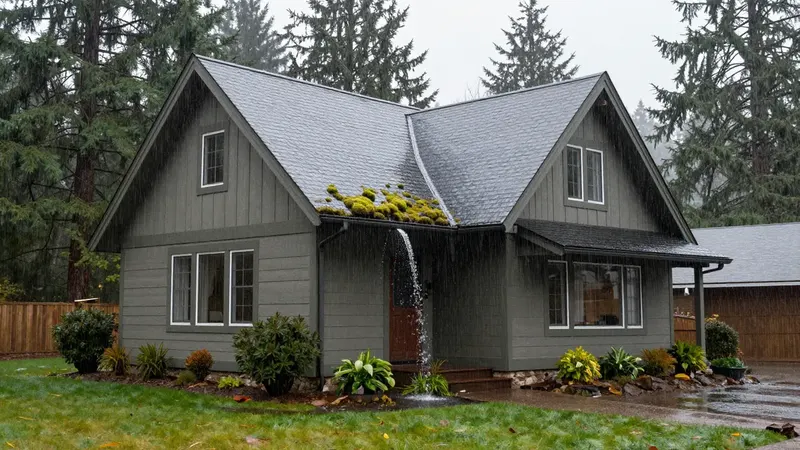
December downpours driven by convergence-zone winds push water under shingles, around chimneys and through older window frames. Midcentury houses can still carry original drain lines and water heaters past their service life, and apartment buildings let a single failed fitting reach several units. When temperatures do drop near freezing, pipes in crawlspaces and garages are the first to crack.
Restoration contractors commonly locate the source, extract water, check readings in framing and subfloor, then dry with dehumidifiers and air movers. Read about water damage repair and emergency water removal to see where each fits.
Federal disaster declarations that included Snohomish County
FEMA records show Snohomish County was included in 16 major disaster declarations for weather or fire events from 2000 through 2026 (12 severe storm, 3 flood, 1 mudslide/landslide, by FEMA incident type). Declarations are made at the county level, so they do not mean every neighborhood in Everett was affected. The most recent:
- 2026 – Severe Storms, Straight-line Winds, Flooding, Landslides, and Mudslides (DR-4906)
- 2023 – Severe Winter Storm, Straight-line Winds, Flooding, Landslides, and Mudslides (DR-4682)
- 2021 – Severe Winter Storm, Straight-line Winds, Flooding, Landslides, and Mudslides (DR-4593)
- 2020 – Severe Storms, Flooding, Landslides, and Mudslides (DR-4539)
- 2019 – Severe Winter Storms, Straight-line Winds, Flooding, Landslides, Mudslides, Tornado (DR-4418)
- 2016 – Severe Storms, Straight-line Winds, Flooding, Landslides, and Mudslides (DR-4249)
Source: OpenFEMA Disaster Declarations Summaries, retrieved 2026-10-10. Counts include major disaster (DR) declarations with hurricane, flood, severe storm, tropical storm, fire, tornado, coastal storm, winter or ice storm, mudslide and dam/levee incident types.
Water, fire or storm damage in Everett?
Call (866) 937-3230 and tell us what happened at your Everett property.
Everett's fire history and smoke cleanup today
The city knows how damaging fire can be: an August 1909 blaze destroyed a dozen commercial buildings and the county courthouse, a 1984 tire-yard fire smoldered for seven months, and a July 2020 fire leveled an apartment building under construction. Snohomish County also lists wildfire among its planning hazards.
For a home, the work after a fire usually means securing openings, hauling debris, cleaning soot from surfaces and HVAC, and removing odor from what can be saved. Our smoke odor removal and fire damage restoration pages outline the process.
Runoff, gusty fronts and slide-prone slopes
The county's hazard plan covers flooding, landslides and storms. Heavy rain on bluffs and in ravines can loosen soil, while gusty fronts break limbs onto roofs. Homes near the delta or low ground by the bay may take on water when drains back up during long storms.
Water that entered from the street, yard or a backed-up drain should be handled as dirty, Category 3 water. Storm damage cleanup and flood damage restoration explain what tarping, extraction, sanitizing and rebuilding typically involve.
Mold risk in a marine climate
Mild, wet winters mean high humidity in attics, crawlspaces and bathrooms for months at a time. Any material that stays wet more than a day or two can start growing mold.
Per EPA guidance, small areas under roughly 10 square feet may be cleaned by the homeowner with proper precautions; larger or hidden growth warrants professional mold remediation with containment and moisture correction.
Safety and paperwork for Everett residents
- Call 911 for fire, injuries, a gas smell or a slope moving near your house.
- Stay off wet floors near live electrical outlets or appliances.
- Review Snohomish County's emergency management hazard planning information.
- Photograph and list damaged items before throwing anything out.
- Contact your insurer soon; your policy determines what is covered, and earthquake or flood losses often need separate coverage.
Before signing, check whether Washington or the city requires a license for the work, and get the scope and estimate in writing.
Neighborhoods and nearby communities
Areas in and around Everett that callers often mention include:
- Bayside
- Boulevard Bluffs
- Cascade View
- Delta
- Evergreen
- Glacier View
- Harborview–Seahurst–Glenhaven
- Holly
- Lowell
- Northwest Everett
- Pinehurst–Beverly Park
- Port Gardner
- Riverside
- Silver Lake
- South Forest Park
- Twin Creeks
- Valley View–Sylvan Crest–Larimer Ridge
- View Ridge–Madison
- Westmont
Nearby communities with their own pages (straight-line distance from Everett):
- Marysville · 5 mi
- Mukilteo · 5 mi
- Eastmont · 6 mi
- Lake Stevens · 7 mi
- Silver Firs · 8 mi
- Mill Creek · 8 mi
Everett restoration FAQs
What is the Puget Sound Convergence Zone, and why does it matter in Everett?
Everett marks the northern end of this zone, which Wikipedia describes as bringing heavier rain and stronger winds than the rest of the region. In practice that can mean harder downpours on roofs and more wind-thrown limbs than nearby areas see.
My home is on a bluff. What signs of slide risk should I watch for?
New cracks in walls or foundations, doors that suddenly stick, tilting trees or fences, and water seeping from slopes can all be warnings. If you notice ground moving, leave and call 911. Mudslides already affect the bay rail line during wet periods.
Is earthquake damage a concern for homes here?
The Southern Whidbey Island Fault runs near the west side of the city, and researchers found evidence of past liquefaction under the river delta. Earthquake damage is usually excluded from standard home policies, so ask your agent about separate coverage.
When is the rainiest stretch of the year?
Rain is heaviest from October through March and peaks in December. Clean gutters and downspouts before then and check the roof after major windstorms.
Which neighborhoods are in Everett?
The city has 19 neighborhood associations, including Bayside, Delta, Lowell, Riverside, Silver Lake and Westmont. Independent contractors that work in the city typically serve all of them, though availability varies.
Restoration guides
- Water Damage Repair
- Emergency Water Removal
- Storm Damage Cleanup
- Flood Damage Restoration
- Mold Remediation
- Fire Damage Restoration