
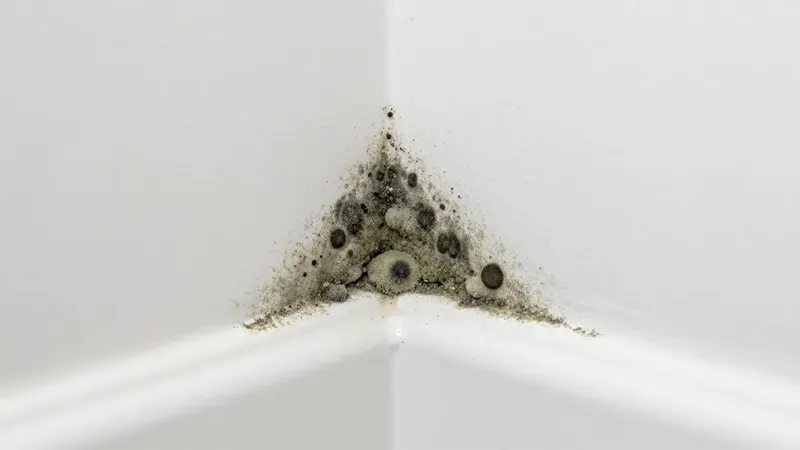
Most people searching for mold removal or mold cleanup have just found something fuzzy, spotted, or musty-smelling in a bathroom, closet, basement, or behind furniture. The first questions are practical: is this something I can scrub off myself, how do I keep it from coming back, and at what point does it become a job for someone with containment gear? This page is written for that moment.
Fire & Water Energy is a referral service, not a contractor. If the growth is larger than you want to handle, call (866) 937-3230 and we will try to connect you with an independent mold contractor in your area; availability depends on local providers. For a closer look at how professionals isolate and clear larger jobs, see our mold remediation page.
Where household mold usually shows up
Mold needs moisture. The EPA puts it simply: the key to mold control is moisture control. That is why growth tends to cluster where water lingers.
- Bathroom ceilings, grout, and caulk in rooms without a working exhaust fan
- Under kitchen and vanity sinks with a slow drip from a supply line or drain
- Window sills and frames where condensation collects in cold weather
- Basement walls, stored cardboard boxes, and carpet over concrete
- Drywall and ceilings after a roof leak or a burst pipe that was not dried quickly
- Closets on exterior walls and behind furniture pushed tight against cold walls
A musty odor with no visible growth can mean mold is hiding inside a wall cavity, under flooring, or above a ceiling. That is usually a signal to get a professional opinion rather than start opening walls yourself.
Small patch or bigger problem? The 10-square-foot rule of thumb
EPA guidance says a homeowner can usually handle mold covering less than about 10 square feet, roughly a 3-foot by 3-foot patch. Beyond that size, or when there has been a lot of water damage, EPA suggests hiring help and making sure the contractor has experience cleaning up mold.
Size is not the only factor. Consider getting professional help even for a smaller area when:
- The moisture came from sewage or other contaminated water (see sewage cleanup)
- Someone in the home has asthma, mold allergies, a weakened immune system, or chronic lung disease; CDC notes these groups can react more severely
- You suspect the heating and cooling system is contaminated; EPA advises not running the HVAC system if you know or suspect mold in it
- The growth is in insulation, inside walls, or on materials you cannot easily remove
If you have health concerns, EPA recommends talking with a health professional before starting any cleanup.
Safety before you scrub
Cleaning mold stirs up spores. A few precautions drawn from EPA and CDC guidance help limit exposure:
- Wear a properly fitted N-95 respirator, long gloves, and goggles without ventilation holes.
- Ventilate the room and keep other people, especially children and anyone with breathing problems, out of the area.
- Never mix bleach with ammonia or other household cleaners; CDC warns this creates a poisonous gas.
- Do not dry-brush or sand moldy surfaces, which sends spores into the air.
- If the mold followed flooding, turn off electricity to wet areas only if you can do so without standing in water, and call 911 for any emergency.
Need help with mold removal?
Call (866) 937-3230 and tell us what happened and where.
How to clean a small area yourself
For a modest patch on a hard surface, the EPA and CDC approach is straightforward:
- Stop the water. Fix the leak, drip, or condensation problem first. CDC notes that mold will likely return if the moisture source is not fixed.
- Scrub hard surfaces such as tile, sealed wood, or plastic with detergent and water. CDC also lists a bleach solution of no more than 1 cup of laundry bleach per gallon of water as an option; EPA notes biocides are not routinely needed.
- Remove, don't just kill. EPA points out that dead mold can still cause allergic reactions, so physically wipe it away.
- Bag and discard porous items like soaked carpet padding or ceiling tiles that are moldy; mold can grow into them and they may not come clean.
- Dry everything completely with fans or a dehumidifier.
- Don't paint over it. EPA advises against painting or caulking moldy surfaces until they are cleaned and dry.
CDC does not recommend routine mold testing in homes, since there are no set standards for acceptable levels. If you can see or smell it, the advice is to remove it and fix the moisture.
Keeping mold from coming back
Prevention is mostly humidity and water management. EPA recommends keeping indoor humidity below 60 percent, ideally between 30 and 50 percent, and drying wet materials within 24 to 48 hours.
- Run bathroom and kitchen exhaust fans that vent outdoors, and make sure the dryer vents outside.
- Use a dehumidifier in damp basements.
- Repair roof, wall, and plumbing leaks promptly and keep gutters and AC drain pans clear.
- Avoid carpet in bathrooms and basements, which CDC identifies as moisture-prone areas.
After a larger leak, professional structural drying can confirm materials are actually dry before they are closed up.
Insurance, documentation, and hiring help
Before cleaning, take dated photos of the growth and the water source, and keep receipts for anything you buy or throw away. Whether mold is covered often depends on what caused it and how quickly it was addressed; coverage depends on your policy, so check with your insurer or agent.
If you decide to hire, questions worth asking an independent contractor include:
- Do you hold any license your state requires for mold work, and do you carry liability insurance?
- Will you provide a written estimate and scope of work before starting?
- Do you follow the IICRC S520 mold standard, and does the person leading the job hold IICRC certification?
- How will you find and fix the moisture source, and will you take moisture readings?
- Can you provide references from similar jobs?
Our how it works page explains what happens when you call, and our referral disclosure covers how referrals are arranged.
Mold removal versus related services
This page focuses on finding and cleaning household mold, including small do-it-yourself jobs. Mold remediation covers the professional process for larger or hidden growth: containment, HEPA filtration, controlled removal, and post-work verification. If the mold traces back to recent flooding, water damage restoration handles the drying side, and damaged drywall or flooring may later need reconstruction.
Frequently asked questions
Can I remove mold myself?
Often, yes, if the patch is smaller than about 10 square feet and the water did not come from sewage. EPA suggests scrubbing hard surfaces with detergent and water, wearing an N-95 respirator, gloves, and goggles, and drying the area fully. Larger areas, hidden growth, or health concerns are reasons to consider a contractor.
Does bleach kill mold?
Bleach can be used on hard surfaces, and CDC lists a solution of no more than 1 cup of laundry bleach per gallon of water. EPA notes that biocides are not routinely necessary, and dead mold still needs to be physically removed because it can trigger allergies. Never mix bleach with ammonia or other cleaners.
Should I test the mold to find out what kind it is?
CDC does not recommend routine mold testing in homes. There are no set standards for acceptable levels, and the guidance is to remove visible mold and fix the moisture regardless of type. Testing can make sense in specific situations, such as verifying a professional job, which a contractor or independent assessor can discuss with you.
Can I just paint over mold?
No. EPA advises against painting or caulking over moldy surfaces. Clean the mold off, let the surface dry completely, and fix the moisture source first, or the growth is likely to show through again.
What should I throw away?
Porous materials that are moldy, such as ceiling tiles, carpet, and padding, may need to be discarded because mold can grow into them. Hard, non-porous items can usually be cleaned. Photograph items before disposal in case you file an insurance claim.
How do I find someone to handle a larger mold problem?
Call (866) 937-3230 and we will try to connect you with an independent contractor in your area, depending on availability. Fire & Water Energy is a referral service and does not do the work itself. Ask any contractor about licensing your state requires, insurance, and a written estimate.
Related services
Find mold removal help by state
- Florida
- Georgia
- Texas
- Louisiana
- Alabama
- Mississippi
- California
- South Carolina
- North Carolina
- Tennessee
- Arizona
- New Mexico
- Virginia
- Maryland
- Oregon
- Washington