
Pasco is the county seat of Franklin County, sitting about 390 feet above sea level across the Columbia River from Richland and Kennewick. The older East side and Downtown sit beside the rail line, while West Pasco along the Road 68 corridor is mostly recent construction, so a leak in one part of town can look quite different from a leak in another.
Because Fire & Water Energy only makes referrals, we never send our own workers. Dial (866) 937-3230 and we'll try to connect you with an independent restoration contractor working in the Tri-Cities; availability depends on which firms are taking jobs that day. Details live on our how it works and referral disclosure pages.
Desert heat, deep freezes and a windswept rain shadow
Per Wikipedia, Pasco lies in a windswept desert in the rain shadow of the Cascade Range. Average precipitation is around 7.1 inches a year with about 6.1 inches of snow. Temperature records span from 115°F down to -19°F, and the article notes the figures come from a nearby station rather than one inside the city.
Franklin County appears in four FEMA major disaster declarations since 2000: the 2009 severe winter storm with record and near-record snow (DR-1825), severe winter storms with flooding in 2017 (DR-4309), wildfires and straight-line winds in 2021 (DR-4584), and severe winter storms, snowstorms, straight-line winds and flooding in 2022 (DR-4650). Three of the four involve winter weather, which matches what local plumbing tends to struggle with.
Why so much Pasco water damage starts with a cold snap
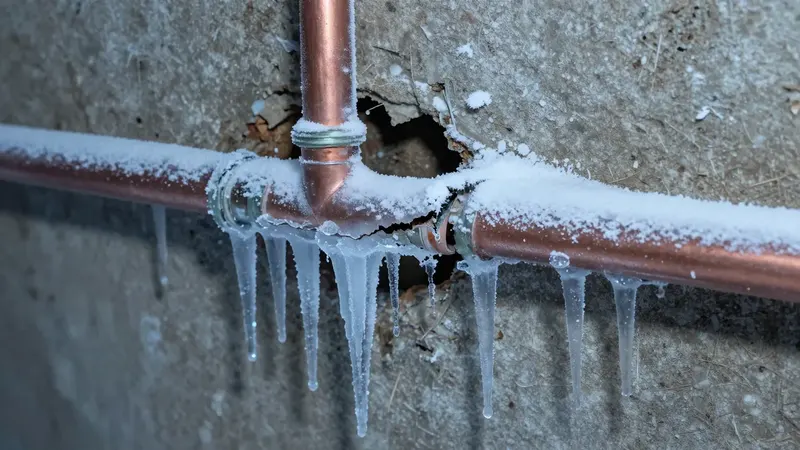
Rain is rarely the culprit in a city this dry. Far more often, a hard freeze splits a hose bib, a pipe in an unheated garage or crawlspace, or a line run along an outside wall. The damage usually shows up when the ice thaws and the pipe starts spraying. Water heaters, washing machine hoses, toilet supply lines and refrigerator lines are year-round sources, and roof leaks tend to appear when snow melts against an ice dam.
Water damage restoration in Pasco follows the usual sequence: shut off the supply, extract standing water, map moisture behind walls and under flooring, then dry with dehumidifiers and air movers. The low humidity outdoors helps, but closed-up homes still need monitored drying. Water damage repair, such as new drywall or flooring, comes after the readings are back to normal. Freeze-related guides: burst pipe water damage and water damage repair.
Federal disaster declarations that included Franklin County
FEMA records show Franklin County was included in 4 major disaster declarations for weather or fire events from 2000 through 2026 (2 flood, 1 fire, 1 severe storm, by FEMA incident type). Declarations are made at the county level, so they do not mean every neighborhood in Pasco was affected. The most recent:
- 2022 – Severe Winter Storms, Snowstorms, Straight-line Winds, Flooding (DR-4650)
- 2021 – Wildfires and Straight-line Winds (DR-4584)
- 2017 – Severe Winter Storms, Flooding, Landslides, Mudslides (DR-4309)
- 2009 – Severe Winter Storm and Record and Near Record Snow (DR-1825)
Source: OpenFEMA Disaster Declarations Summaries, retrieved 2026-10-10. Counts include major disaster (DR) declarations with hurricane, flood, severe storm, tropical storm, fire, tornado, coastal storm, winter or ice storm, mudslide and dam/levee incident types.
Water, fire or storm damage in Pasco?
Call (866) 937-3230 and tell us what happened at your Pasco property.
Wildfire smoke, house fires and soot
The 2021 FEMA declaration for wildfires and straight-line winds shows that fire is a county-level hazard here, not just a mountain problem. Wind-driven smoke and ash can get through attic vents, window gaps and HVAC intakes, leaving odor in fabrics and a fine film on surfaces. Indoor fires from cooking, heaters or electrical faults bring heavier soot plus water from firefighting.
A typical contractor will remove debris, clean soot with methods suited to each surface, replace HVAC filters, and run air scrubbers or other odor treatment. Ask whether they clean ductwork after heavy smoke. More reading: smoke odor removal and fire damage cleanup.
Snowmelt flooding and wind damage on the Columbia's north bank
The 2017 and 2022 declarations both paired winter storms with flooding, the kind of event where fast snowmelt or rain on frozen ground has nowhere to soak in. Water entering a home from outside is generally treated as contaminated, so contractors commonly remove soaked drywall and carpet, disinfect, and dry before rebuilding. Straight-line winds, named in two of the county's declarations, can lift roofing and drop limbs on homes and fences.
When meltwater or wind is the trigger, start with flood cleanup and storm damage cleanup.
Mold can still grow in a dry climate
Dry outdoor air does not stop mold behind a wall where a slow leak keeps the cavity damp, or under a floor after a washer overflow. Bathrooms, laundry rooms and areas near the water heater deserve a look after any leak. The EPA suggests that patches under about 10 square feet can usually be cleaned by a homeowner once the moisture is fixed. Larger growth, or mold after contaminated water, calls for containment and HEPA filtration. Read about mold removal.
A short safety list for Franklin County residents
- For fire, injury, a gas odor or other danger, get out and call 911.
- Do not touch breakers or appliances while standing in water; contact your electric utility if you cannot cut power safely.
- Sign up for Code Red Community Notification and watch National Weather Service alerts, both listed on the City of Pasco emergency preparedness page, which also points to Franklin County Emergency Management.
- Take photos and video before cleanup and save every receipt.
- Coverage depends on your policy; talk with your insurer or agent about what applies to freeze, fire or flood losses.
Vetting a restoration company in the Tri-Cities
Request the contractor's Washington registration, insurance certificate, a written estimate and whether its staff hold IICRC certification. Check whether your state or city requires a license or permit for the repair work. Browse more Washington locations.
Neighborhoods and nearby communities
Areas in and around Pasco that callers often mention include:
- Downtown Pasco
- East side
- West Pasco
- Broadmoor
- Road 68 corridor
Nearby communities with their own pages (straight-line distance from Pasco):
- Kennewick · 3 mi
- Richland · 9 mi
- West Richland · 13 mi
- Hermiston, OR · 29 mi
- Walla Walla · 38 mi
- Pendleton, OR · 42 mi
Pasco restoration FAQs
How do I keep pipes from freezing in a Pasco winter?
Insulate lines in garages and crawlspaces, disconnect garden hoses and cover outdoor faucets before the first hard freeze. Temperatures here have reached -19 degrees, so keep the heat on if you travel. If a pipe does burst, close the main shutoff right away.
Does wildfire smoke from the 2021 season still matter for my home?
Smoke residue that was never cleaned can linger in carpets, upholstery and ducts. If you still notice odor when the furnace or AC runs, a contractor can inspect the system and recommend cleaning. Future fire seasons are worth planning for too.
Where do I get emergency alerts in Pasco?
The city's emergency preparedness page lists Code Red Community Notification for local alerts and links to National Weather Service warnings. It also points to Franklin County Emergency Management for preparedness guides.
Is water damage less serious in a dry climate?
Drying can be easier outdoors, but water trapped under flooring or inside walls still causes swelling, rot and mold if it is ignored. Moisture meters are the only reliable way to know a wall is dry. Call (866) 937-3230 if you want help finding a contractor.
Restoration guides
- Burst Pipe Water Damage
- Water Damage Restoration
- Smoke Odor Removal
- Fire Damage Cleanup
- Flood Cleanup
- Mold Removal