
Bellevue spreads across the hills between Lake Washington on the west and Lake Sammamish on the east, with Cougar Mountain rising south of I-90. The Kelsey Creek system, fed from the Larsen Lake and Phantom Lake greenbelt, drains much of the city before reaching Lake Washington, and Mercer Slough sits just south of downtown.
Fire & Water Energy is a phone-based referral line for the Eastside and does no restoration work itself. Phone (866) 937-3230 and we'll try to match you with an independent restoration contractor serving Bellevue and the surrounding Eastside; whether one is free depends on providers in the area. Our how it works page and the referral disclosure describe the Eastside call process.
Eastside rain, faults and slopes: the local risk picture
Showers arrive often from October through May. Wikipedia gives a long-term average of roughly 32 to 36 inches a year, yet the city logged 47.14 inches in 2016 and more than 47 inches over the 2017 wet season, a reminder that some winters run far wetter than normal. Temperatures have dipped as low as -5°F.
The city's emergency management office maps several active faults, unstable soils, old mineshafts and liquefaction zones, along with lakes and creeks that can flood. It also lists windstorms with power outages, snow and ice, and landslides. King County appears in twelve FEMA major disaster declarations since 2000, including DR-4906 (2026), DR-4775 (2024), DR-4539 (2020) and DR-4309 (2017), several of them involving flooding, landslides and mudslides.
Water damage restoration in Bellevue homes and condos
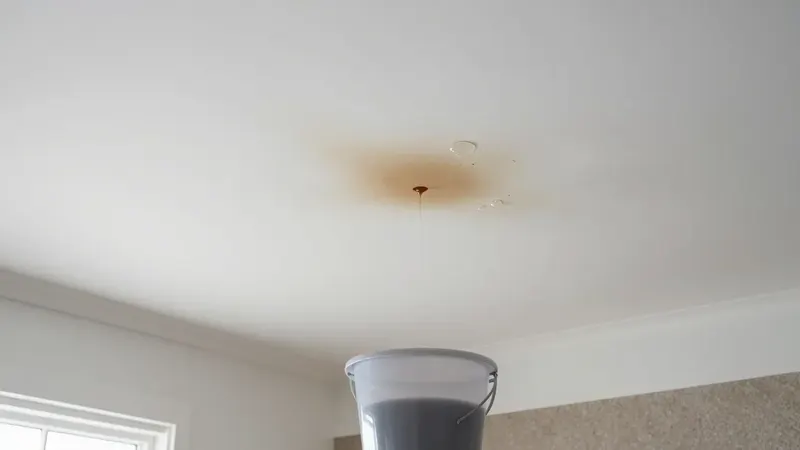
Many leaks here come from wind-driven rain working past roof edges, skylights and window frames, or from gutters packed with needles and leaves. Hillside lots can push groundwater toward foundations and daylight basements. In the high-rise and condo buildings around downtown, a failed supply line or appliance hose on one floor can spread to units below, which adds HOA and neighbor coordination to the job.
A reputable contractor will usually find and stop the source, extract water, use moisture meters to map how far it traveled, and dry with air movers and dehumidifiers before rebuilding. Our water damage restoration and ceiling water damage repair pages go deeper.
Federal disaster declarations that included King County
FEMA records show King County was included in 12 major disaster declarations for weather or fire events from 2000 through 2026 (8 severe storm, 4 flood, by FEMA incident type). Declarations are made at the county level, so they do not mean every neighborhood in Bellevue was affected. The most recent:
- 2026 – Severe Storms, Straight-line Winds, Flooding, Landslides, and Mudslides (DR-4906)
- 2024 – Severe Winter Storms, Straight-line Winds, Flooding, Landslides, and Mudslides (DR-4775)
- 2020 – Severe Storms, Flooding, Landslides, and Mudslides (DR-4539)
- 2017 – Severe Winter Storms, Flooding, Landslides, Mudslides (DR-4309)
- 2012 – Severe Winter Storm, Flooding, Landslides, and Mudslides (DR-4056)
- 2011 – Severe Winter Storm, Flooding, Landslides, and Mudslides (DR-1963)
Source: OpenFEMA Disaster Declarations Summaries, retrieved 2026-10-10. Counts include major disaster (DR) declarations with hurricane, flood, severe storm, tropical storm, fire, tornado, coastal storm, winter or ice storm, mudslide and dam/levee incident types.
Water, fire or storm damage in Bellevue?
Call (866) 937-3230 and tell us what happened at your Bellevue property.
Smoke, soot and fire recovery
The city's hazard list includes fires, and winter windstorm outages bring more generators, candles and space heaters into use. Keep any portable generator outdoors and well away from garage doors and windows during an Eastside outage. In multistory buildings, smoke moves through hallways and shafts, so units far from the flames may still need cleaning.
Contractors typically secure the structure, clear debris, clean soot from walls, contents and ductwork, and deodorize. For the step-by-step view, read fire damage cleanup and our soot removal overview.
Creek flooding, landslides and windstorm cleanup
Low ground along creeks and near Mercer Slough is the most obvious place for water to collect, and the city's mention of unstable soils matters when saturated slopes start to move. Windstorms bring down firs and cedars onto roofs, and the resulting openings let rain into attics fast.
Storm damage cleanup covers tarping, debris removal and drying. If outside water entered the house, treat it as contaminated and see flood cleanup for what proper extraction and disinfection involve.
Keeping mold out of a damp Eastside house
Eight months of showers keep crawlspaces, basements and north-facing walls damp, and mold can start on wet drywall or carpet pad within a couple of days. Watch for musty odors, peeling paint and dark spotting near windows.
EPA guidance says patches under about 10 square feet can often be cleaned by a homeowner, while larger growth, mold in ductwork, or occupants with health concerns point toward a professional. See mold removal for how containment and HEPA cleanup work.
What Bellevue residents should do first
- Call 911 for fire, injuries, gas smells or anyone in danger.
- Stay away from water near electrical panels and outlets; cut power only if it is safe.
- Sign up through the city's emergency management alerts and notifications page, and check the hazards map before storms.
- Document damage with photos and video before cleanup, and save receipts for anything you buy.
- Notify your insurer promptly; whether a loss is covered depends on your policy terms.
When comparing companies, check whether Washington or the city requires a license for the work, request written estimates, and ask about insurance and IICRC-style training.
Neighborhoods and nearby communities
Areas in and around Bellevue that callers often mention include:
- Bridle Trails
- Cougar Mountain/Lakemont
- Crossroads
- Downtown
- Eastgate/Factoria
- Lake Hills
- Newport
- Northeast Bellevue
- Northwest Bellevue
- Somerset
- West Bellevue
- West Lake Sammamish
- Wilburton/BelRed
- Woodridge
Nearby communities with their own pages (straight-line distance from Bellevue):
- Mercer Island · 3 mi
- Kirkland · 5 mi
- Redmond · 6 mi
- Sammamish · 6 mi
- Seattle · 6 mi
- Bryn Mawr-Skyway · 8 mi
Bellevue restoration FAQs
Which parts of Bellevue are more exposed to flooding or soil movement?
The city publishes a critical hazards map showing faults, liquefaction zones, unstable soils, mineshafts, lakes and creeks. Checking your address on it is a good first step. It shows hazard areas, not a guarantee that any particular home will flood.
Why does a condo leak in Bellevue get complicated?
Water from one unit often travels into ceilings and walls of units below. That means the building's association, its insurer and your own insurer may all be involved. Document everything and notify building management quickly.
How wet can a Bellevue winter get?
Normal years bring roughly 32 to 36 inches, but the city recorded over 47 inches in 2016. A wet stretch like that overwhelms gutters and pushes groundwater against foundations, so check drainage before the season starts.
What should I do after a windstorm drops a tree on my roof?
Get everyone out of the affected rooms and call 911 if there are injuries, sparking lines or gas smells. Once it is safe, photograph the damage, then arrange tarping and tree removal to keep rain out.
Does homeowners insurance cover mold here?
Many policies limit mold coverage or tie it to a covered sudden water event. Long-term seepage is often excluded. Read your policy and ask your agent for specifics.
Restoration guides
- Water Damage Restoration
- Ceiling Water Damage Repair
- Storm Damage Cleanup
- Flood Cleanup
- Mold Removal
- Fire Damage Cleanup