
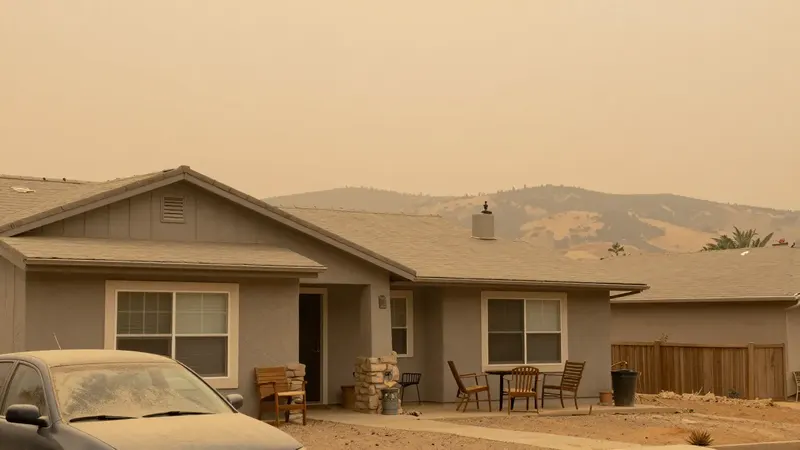
West Valley spreads across about 7.2 square miles of land at roughly 1,194 feet, on the western edge of greater Yakima in Yakima County. Wikipedia notes that the city of Yakima has annexed the former census-designated place, and the area is known locally for the West Valley School District and its 4A high school.
Fire & Water Energy offers a referral line and is not itself a contractor. Ring (866) 937-3230 and we'll try to link you with an independent restoration contractor that covers the Yakima Valley. Who can help, and when, depends on the independent companies working the area at the time. Details of that setup appear on the how it works page and in the referral disclosure we publish.
Rain shadow climate, extreme temperatures and fire seasons
Greater Yakima sits in the rain shadow of the Cascades and averages only about 8 inches of precipitation a year, with roughly 21 inches of snow. Temperatures swing hard: the area recorded 113°F on June 29, 2021, during the Western North America heat wave, and fell to -25°F in February 1950. Freezes typically run from late September into mid-May.
Yakima County's FEMA record reflects that mix. Since 2000 the county has been part of declarations for wildfires and mudslides in 2015 (DR-4243), wildfires with straight-line winds in 2021 (DR-4584), a 2009 winter storm with record and near-record snow (DR-1825), a 2009 flooding event (DR-1817), and storms with flooding and landslides in 2026 (DR-4906). The Yakima area has also dealt with the unusual: the 1980 Mount St. Helens eruption blanketed it in ash.
Frozen lines, irrigation leaks and water damage repair
With winter lows that can drop well below zero, frozen and split pipes are the classic West Valley water loss. Hose bibs, pipes in unheated garages or crawlspaces, and lines along exterior walls are the usual culprits, and the break often isn't noticed until the ice melts. Summer brings its own sources: failed supply hoses, water heaters and evaporative or AC equipment working hard through 90-degree stretches.
Water damage restoration in West Valley tends to follow a familiar sequence. A typical contractor stops the leak, extracts water, measures moisture in framing and subfloor, and runs drying equipment until readings stabilize, followed by water damage repair to replace what was removed. Freeze-related breaks are covered on our burst pipe water damage page, and drying methods on the structural drying page.
Federal disaster declarations that included Yakima County
FEMA records show Yakima County was included in 5 major disaster declarations for weather or fire events from 2000 through 2026 (2 flood, 2 fire, 1 severe storm, by FEMA incident type). Declarations are made at the county level, so they do not mean every neighborhood in West Valley was affected. The most recent:
- 2026 – Severe Storms, Straight-line Winds, Flooding, Landslides, and Mudslides (DR-4906)
- 2021 – Wildfires and Straight-line Winds (DR-4584)
- 2015 – Wildfires and Mudslides (DR-4243)
- 2009 – Severe Winter Storm and Record and Near Record Snow (DR-1825)
- 2009 – Severe Winter Storm, Landslides, Mudslides, and Flooding (DR-1817)
Source: OpenFEMA Disaster Declarations Summaries, retrieved 2026-10-10. Counts include major disaster (DR) declarations with hurricane, flood, severe storm, tropical storm, fire, tornado, coastal storm, winter or ice storm, mudslide and dam/levee incident types.
Water, fire or storm damage in West Valley?
Call (866) 937-3230 and tell us what happened at your West Valley property.
Wildfire smoke, embers and house fire cleanup in the Yakima Valley
Two of Yakima County's federal declarations in the past decade were for wildfires, and dry summers in a semi-arid valley mean smoke can drift in even when flames are far away. Fine particles settle on window sills, HVAC filters and soft furnishings, and the odor can linger long after the sky clears.
For a house fire or heavy smoke intrusion, a reputable cleanup firm will usually remove debris, HEPA-vacuum and wipe soot from each surface type, clean or replace HVAC filters, and use filtration or sealing to tackle odor. Our smoke damage cleanup and soot removal pages go deeper.
Flash runoff, snowmelt and storm debris
A dry place can still flood. Burned slopes shed water and mud quickly, which is why the 2015 wildfire declaration also listed mudslides, and the 2009 and 2026 events both included flooding. Rapid snowmelt and heavy rain on frozen ground can push water toward foundations and into basements, while windstorms like those in 2021 drop limbs onto roofs.
Outside water is generally treated as contaminated, so contractors commonly remove soaked drywall and insulation, sanitize, then dry. See flood damage restoration and storm damage cleanup for the process.
Mold after a hidden leak in a dry climate
Low humidity doesn't make a home mold-proof. A slow leak inside a wall, a crawlspace that stays wet after a pipe burst, or carpet left damp after a cleanup can still grow mold within a couple of days, because the moisture is trapped where dry air can't reach it.
EPA guidance says a homeowner can usually clean mold covering less than about 10 square feet once the water problem is fixed. Larger patches, growth in ducts or wall cavities, or mold after sewage call for a professional using containment and HEPA equipment. Read about mold removal.
What to do first after damage in West Valley
- Call 911 for fire, smoke inside, gas odor, injuries or downed power lines, and get out if the structure is unsafe.
- Know where your main shutoff is before the first hard freeze, and close it immediately if a pipe bursts.
- During wildfire season, keep windows closed when smoke moves in and follow Yakima County and Washington state emergency notices.
- Snap photos of every damaged room before cleanup starts, and hang on to receipts for fans, tarps or hotel nights. Whether a claim is paid hinges on the wording of your own policy, so ask your agent or insurer.
Browse other communities on our Washington service area page.
Neighborhoods and nearby communities
Nearby communities with their own pages (straight-line distance from West Valley):
- Yakima · 5 mi
- Ellensburg · 28 mi
- Sunnyside · 34 mi
- East Wenatchee · 59 mi
- Wenatchee · 59 mi
- West Richland · 62 mi
West Valley restoration FAQs
Is West Valley inside Yakima city limits?
Wikipedia says the city of Yakima has annexed the former West Valley census-designated place, though the area is still often described as part of greater Yakima rather than a separate town. Check your property records to see whether the city or Yakima County handles permits and services for your address.
How cold does it get, and when should I protect my pipes?
Greater Yakima's average first freeze is around the end of September and the last is in mid-May, and the record low is -25 degrees. Disconnect hoses and insulate exposed lines before the first freeze rather than waiting for a deep cold snap.
Wildfire smoke got into my house. Does it need professional cleaning?
Light haze often clears with ventilation once outdoor air improves and a fresh HVAC filter. If you see soot on surfaces, smell smoke in fabrics days later, or a fire burned nearby, a smoke cleanup contractor can test and clean more thoroughly.
If I phone from West Valley, who actually answers and what follows?
Fire & Water Energy doesn't send workers. When you call (866) 937-3230, we try to connect you with an independent contractor serving the Yakima area, and availability depends on local firms.
Restoration guides
- Burst Pipe Water Damage
- Water Damage Repair
- Smoke Damage Cleanup
- Soot Removal
- Flood Damage Restoration
- Mold Removal