
Puyallup grew up in the farm country of the Puyallup Valley, known for berries and daffodils, between Sumner, Fife, Edgewood and the unincorporated suburbs of South Hill. The river that shares its name runs 45 miles from glaciers on Mount Rainier to Commencement Bay, and the valley floor itself rests on thick deposits left by a prehistoric volcanic mudflow.
Fire & Water Energy connects callers with contractors; it does not do restoration work itself. Reach us at (866) 937-3230 and we'll try to link you with an independent restoration contractor serving Puyallup and the rest of the valley, depending on which local companies can take the job. If you want to know what happens after you dial, the how it works page lays it out, and the referral disclosure describes how we are paid.
A valley shaped by glaciers, a river and an active volcano
Wikipedia describes an oceanic climate here: winters are cool and wet with lows near freezing, most precipitation falls from October through March, and snow is uncommon. Summers are warm and dry, with a record high of 105°F. The heavier hazard is geologic. The valley sits on Osceola Mudflow deposits up to 98 feet thick, and downtown and nearby neighborhoods lie within the lahar hazard zone for Mount Rainier.
FEMA has included Pierce County in seven major disaster declarations since 2000, among them severe storms and flooding in 2003 (DR-1499) and 2006 (DR-1671), a 2007 winter storm with landslides (DR-1682), record and near-record snow in 2009 (DR-1825), a 2012 winter storm with flooding (DR-4056) and the 2026 storms, winds and flooding (DR-4906).
Why Puyallup basements, crawlspaces and kitchens get wet
On low valley ground, soil that stays saturated through months of steady rain means crawlspaces and lower levels see seepage, while homes on the surrounding hillsides deal more with runoff and gutter overflow. Inside, supply lines, water heaters and appliance hoses wear out on schedule, and the occasional freeze can crack pipes in uninsulated spaces. The city has a long building history too; the Ezra Meeker Mansion dates to around 1890.
Water damage restoration in Puyallup generally means finding the source, extracting water, mapping moisture and running dehumidifiers and air movers until materials test dry, followed by water damage repair. Valley homeowners dealing with a soaked crawlspace may find our water extraction and structural drying pages useful.
Federal disaster declarations that included Pierce County
FEMA records show Pierce County was included in 7 major disaster declarations for weather or fire events from 2000 through 2026 (5 severe storm, 2 flood, by FEMA incident type). Declarations are made at the county level, so they do not mean every neighborhood in Puyallup was affected. The most recent:
- 2026 – Severe Storms, Straight-line Winds, Flooding, Landslides, and Mudslides (DR-4906)
- 2012 – Severe Winter Storm, Flooding, Landslides, and Mudslides (DR-4056)
- 2009 – Severe Winter Storm and Record and Near Record Snow (DR-1825)
- 2009 – Severe Winter Storm, Landslides, Mudslides, and Flooding (DR-1817)
- 2007 – Severe Winter Storm, Landslides, and Mudslides (DR-1682)
- 2006 – Severe Storms, Flooding, Landslides, and Mudslides (DR-1671)
Source: OpenFEMA Disaster Declarations Summaries, retrieved 2026-10-10. Counts include major disaster (DR) declarations with hurricane, flood, severe storm, tropical storm, fire, tornado, coastal storm, winter or ice storm, mudslide and dam/levee incident types.
Water, fire or storm damage in Puyallup?
Call (866) 937-3230 and tell us what happened at your Puyallup property.
Cleaning up after a kitchen fire or chimney fire
Even a small fire can leave a whole house smelling of smoke, because soot rides air currents into closets, ducts and attic insulation. Water from hoses or sprinklers then adds a second problem, soaking subfloors and drywall that need drying before rebuilding can begin.
Contractors in this line of work usually board up openings, haul away burned materials, test surfaces before choosing a cleaning method and use filtration or sealers for odor. For a closer look at each stage, read about fire damage cleanup and how contractors approach smoke odor removal in a sealed-up winter house.
Creek flooding, river warnings and lahar planning
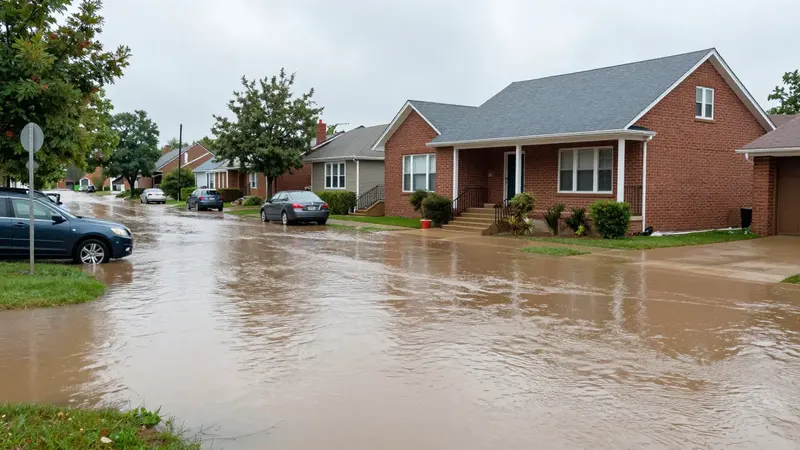
Flooding here is not hypothetical. The 1941 House of Tomorrow, which stood beside Clarks Creek, was torn down in April 2024 after repeated flood damage from the creek. Pierce County lists river, flash and lahar-related flooding among its hazards and regulates about 48,000 acres of floodway countywide.
Lahar preparedness is part of local life: the USGS warning system has been in place since 1998, a 2014 drill cleared Puyallup High School in four minutes, and a March 2024 regional drill involved 45,000 people. After any flood, contaminated water calls for removing soaked porous materials, disinfecting and drying. Read about flood damage restoration.
Damp winters and the mold that follows
From fall through early spring, materials that get wet stay wet unless someone dries them on purpose. Crawlspaces on valley ground, bathrooms with weak ventilation and drywall behind slow leaks are where growth usually appears first.
Per EPA guidance, an area smaller than about 10 square feet is often manageable for a homeowner once the moisture is corrected. Anything larger, hidden inside walls or HVAC, or linked to floodwater or sewage should be handled by a professional using containment and HEPA filtration. See mold removal.
Safety checklist for Puyallup residents
- Call 911 for fire, injuries, gas odor or downed lines. If a lahar warning sounds, move to high ground on foot or by vehicle as instructed rather than waiting.
- Shut the main water valve for a leak, and stay clear of standing water near electrical outlets.
- Register for Pierce County ALERT through Pierce County Emergency Management, which also covers flooding and Mount Rainier preparedness.
- Document the damage on camera before cleanup. Your policy's terms decide what is covered; your insurer or agent can explain them, and flood or earth movement may need separate coverage.
Neighborhoods and nearby communities
Areas in and around Puyallup that callers often mention include:
- Downtown Puyallup
Nearby communities with their own pages (straight-line distance from Puyallup):
- South Hill · 3 mi
- Bonney Lake · 5 mi
- Lakeland South · 6 mi
- Frederickson · 7 mi
- Parkland · 7 mi
- Prairie Ridge · 8 mi
Puyallup restoration FAQs
Is downtown Puyallup really in a lahar zone?
Yes. Wikipedia and Pierce County both note that lahars from Mount Rainier could travel down the Puyallup valley, and downtown and nearby neighborhoods lie within the hazard zone. Know your evacuation route to higher ground and take part in drills when offered.
When is flooding most likely in the valley?
Most of the year's precipitation falls between October and March, so that is when creeks and low ground are most likely to overflow. Pierce County posts flood warnings and preparedness guidance on its Ready page.
How do I get emergency alerts in Pierce County?
Pierce County ALERT is free and can send messages by phone, text or email for up to 10 locations, such as home, work and school. You can register through the county's emergency management site, and extreme weather alerts have a separate sign-up.
Can an earthquake cause water damage?
It can. The county plans for deep, crustal and Cascadia Subduction Zone quakes, which can cause liquefaction on soft valley soils and break pipes or water heaters. Strapping your water heater and knowing where your main shutoff is are simple precautions.
Do you refer contractors in Sumner, Edgewood or Fife?
We try to connect callers throughout the area, including Sumner, Edgewood, Fife, Milton and South Hill, with independent restoration contractors. Availability is never guaranteed, so call (866) 937-3230 to check.
Restoration guides
- Water Damage Restoration
- Water Extraction
- Structural Drying
- Flood Damage Restoration
- Fire Damage Cleanup
- Mold Removal