
Lynden is Whatcom County's second-largest city, about 15 miles north of Bellingham, in a wide valley shaped by the Nooksack River, which runs along a short stretch of its southern edge. Phoebe and Holden Judson founded the town in 1870 and it was incorporated in 1891; Dutch immigrants arriving through the twentieth century gave it the heritage still celebrated at Holland Days and the December Sinterklaas event.
Fire & Water Energy refers callers to outside companies and doesn't perform restoration itself. Dial (866) 937-3230 and we'll try to connect you with an independent restoration contractor serving north Whatcom County, as long as one is available nearby. The how it works page and our referral disclosure describe the service plainly.
Nooksack valley weather and the 2021 floods
The local climate averages about 41.5 inches of precipitation spread across roughly 172 days a year, with wet winters and dry summers. Snow is light, around 9 inches a year, but the record low of 7°F shows that hard freezes do happen. Summers can surprise too: the record high is 106°F, set in June.
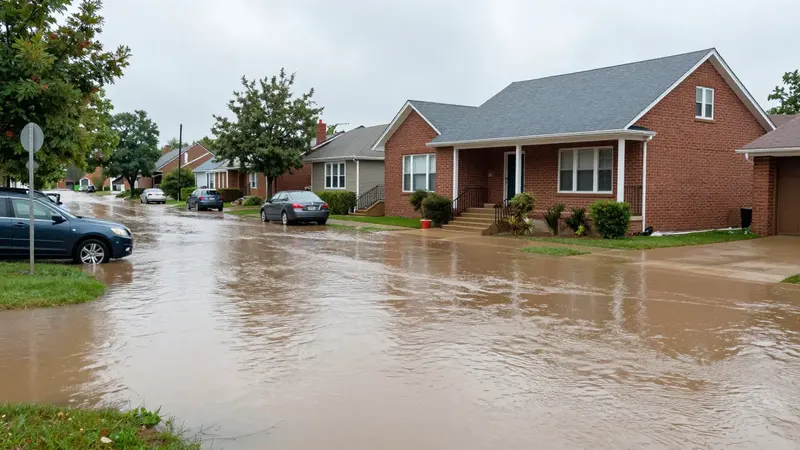
In mid-November 2021, back-to-back atmospheric rivers flooded the Nooksack River basin. Hundreds of Whatcom County residents were evacuated, nearby Sumas saw an estimated 85 percent of its homes damaged, and the governor declared a state of emergency on November 15. Whatcom County has been in ten FEMA major disaster declarations since 2000, including flooding declarations in 2003 (DR-1499), 2009 (DR-1817), 2017 (DR-4309), 2020 (DR-4539), 2022 (DR-4635) and 2026 (DR-4906). These are county-wide and don't confirm flooding on any particular Lynden street.
Wet-season leaks around houses and outbuildings
With precipitation on nearly half the days of the year, the most common problems start overhead and below grade: roof and flashing leaks, overflowing gutters, groundwater seeping into crawlspaces, and sump pumps that fail during long storms. Cold snaps can split pipes in garages, sheds and shops as well as in the house.
When you need water damage restoration in Lynden, a typical contractor stops the leak, extracts water, maps moisture in walls and floors, and dries with dehumidifiers and air movers until readings are normal. Repairs come next under water damage repair. Find more on emergency water removal and structural drying.
Federal disaster declarations that included Whatcom County
FEMA records show Whatcom County was included in 10 major disaster declarations for weather or fire events from 2000 through 2026 (5 flood, 4 severe storm, 1 fire, by FEMA incident type). Declarations are made at the county level, so they do not mean every neighborhood in Lynden was affected. The most recent:
- 2026 – Severe Storms, Straight-line Winds, Flooding, Landslides, and Mudslides (DR-4906)
- 2022 – Severe Storms, Straight-line Winds, Flooding, Landslides, and Mudslides (DR-4635)
- 2020 – Severe Storms, Flooding, Landslides, and Mudslides (DR-4539)
- 2019 – Severe Winter Storms, Straight-line Winds, Flooding, Landslides, Mudslides, Tornado (DR-4418)
- 2017 – Severe Winter Storms, Flooding, Landslides, Mudslides (DR-4309)
- 2015 – Wildfires and Mudslides (DR-4243)
Source: OpenFEMA Disaster Declarations Summaries, retrieved 2026-10-10. Counts include major disaster (DR) declarations with hurricane, flood, severe storm, tropical storm, fire, tornado, coastal storm, winter or ice storm, mudslide and dam/levee incident types.
Water, fire or storm damage in Lynden?
Call (866) 937-3230 and tell us what happened at your Lynden property.
Rebuilding after a house or barn fire
Dry summers that can reach triple digits, along with woodstoves and space heaters in winter, are both worth keeping in mind. Whatcom County was also included in a 2015 FEMA declaration for wildfires and mudslides (DR-4243). A fire in an attached garage or shop can push smoke and soot throughout a house even if the flames never reach the living space.
Restoration companies commonly secure the property, sort out salvageable items, clean soot by material, deal with water left by firefighting, and treat odor with filtration and sealing. Read our fire damage restoration and smoke odor removal guides for the details.
River flooding, windstorms and storm debris
The Nooksack shaped this valley, and river flooding is a recurring theme in the county's disaster record. County declarations have also covered a 2015 severe windstorm (DR-4242) and 2019 winter storms with straight-line winds and a tornado (DR-4418), which means roofs, trees and outbuildings face real wind loads, not just water.
Treat river or surface water as contaminated: saturated drywall, insulation, flooring and furniture usually have to go, and well water may need testing afterward. Our flood cleanup and basement flood cleanup pages walk through typical steps.
Mold in a wet, mild climate
Mild, damp winters let mold get started quickly in crawlspaces, around windows and behind furniture against cold exterior walls. After any flood or leak, materials that stay wet longer than a couple of days are prime candidates.
EPA guidance considers mold under about 10 square feet generally manageable by a homeowner once the water problem is solved. Larger patches, growth in walls or ductwork, or anything following floodwater should be handled by a professional with containment and HEPA filtration. Learn about mold remediation.
Lynden residents: first things to do
- Call 911 for fire, injury, gas odor or downed power lines, and follow evacuation orders during river flooding.
- Close the main water valve for any burst pipe, and avoid entering flooded rooms where water may touch outlets or appliances.
- Don't drive through water over roads; during the 2021 floods, a man's truck was swept away by floodwater in Everson.
- Document damage with photos and video and keep receipts for emergency purchases. Talk with your insurer or agent about your policy, since flood is often covered separately.
Neighborhoods and nearby communities
Nearby communities with their own pages (straight-line distance from Lynden):
- Ferndale · 9 mi
- Bellingham · 13 mi
- Anacortes · 31 mi
- Mount Vernon · 37 mi
- Oak Harbor · 46 mi
- Arlington · 54 mi
Lynden restoration FAQs
When is flood season in the Nooksack valley?
Winter is the wet season here, and the November 2021 atmospheric rivers show how heavy rain can push the Nooksack out of its banks. Keep an eye on National Weather Service flood warnings for Whatcom County through late fall and winter.
Did the 2021 floods reach Lynden?
The sources we reviewed describe major flooding in the Nooksack River basin, including Sumas, Everson and parts of Ferndale, but they don't specifically describe flooding in Lynden. If your property took on water, document it and contact your insurer.
My well flooded. Is my water safe?
Floodwater can contaminate private wells. Don't drink well water after a flood until it has been disinfected and tested, and check county or state health guidance for how to do that.
Can I call from Ferndale, Bellingham or Birch Bay?
Yes. Ferndale is about 9 miles away and Bellingham about 13. You can call (866) 937-3230 from anywhere in Whatcom County, and we'll try to connect you with an independent contractor nearby, though availability varies.
Restoration guides
- Flood Cleanup
- Water Damage Restoration
- Emergency Water Removal
- Basement Flood Cleanup
- Mold Remediation
- Fire Damage Restoration