
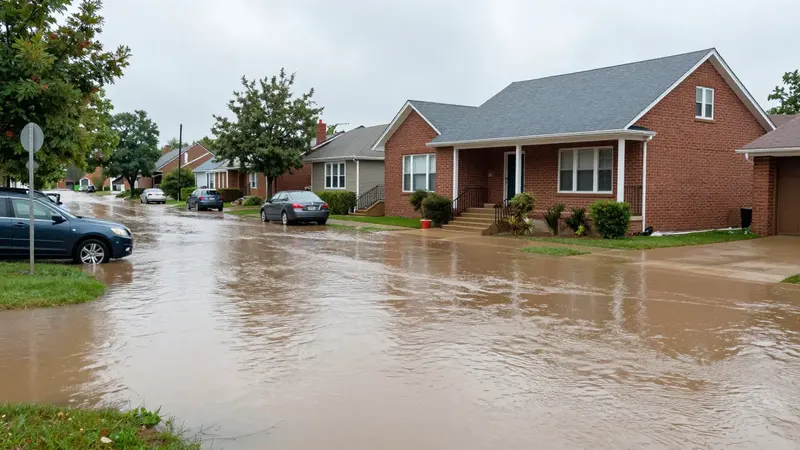
Kent stretches across the Green River valley in south King County, from the industrial Kent Valley up to the residential plateaus of East Hill and West Hill. For roughly seventy years before Howard A. Hanson Dam was finished upstream, floods were a regular part of valley life; today the dam and downstream levees manage that risk, but heavy winter rain still tests roofs, drains and low-lying lots.
Fire & Water Energy operates purely as a referral service, so it sends no crews of its own. Ring (866) 937-3230 and we'll try to link you with an independent restoration contractor who covers Kent; availability rests on the independent firms working nearby. You can read how it works or review the referral disclosure before calling from the valley.
A river valley with a long flood memory
Kent averages about 40 inches of precipitation a year across roughly 150 wet days, according to Wikipedia, with November and January the soggiest months and July nearly dry. A 1906 flood actually shifted the White River's channel, and a severe December 1959 flood damaged homes while the upstream dam was still under construction.
The dam's limits became a regional worry in January 2009, when its reservoir hit a record level and the Army Corps of Engineers found seepage in one abutment. Storage was restricted, sandbags were handed out across the Green River Valley, and officials warned that bigger releases could overtop levees until drainage fixes were completed in 2011. King County has been named in twelve FEMA major disaster declarations since 2000, including DR-1817 in 2009 and the 2026 storm and flood declaration DR-4906.
Water damage restoration in Kent's hillside and valley homes
Much of the city's housing went up during a postwar boom, when population multiplied many times over in the 1950s. Homes from that era can hide galvanized supply lines, aging water heaters and roofs on their second or third replacement. On East Hill and West Hill, runoff from steep driveways and clogged gutters can find its way into lower levels, while valley properties contend with a high water table during wet months.
For water damage restoration, Kent homeowners should expect a reputable company to stop the leak, extract, measure moisture behind walls and under floors, and run dehumidifiers until readings reach dry standard. See water damage restoration and structural drying for the details.
Federal disaster declarations that included King County
FEMA records show King County was included in 12 major disaster declarations for weather or fire events from 2000 through 2026 (8 severe storm, 4 flood, by FEMA incident type). Declarations are made at the county level, so they do not mean every neighborhood in Kent was affected. The most recent:
- 2026 – Severe Storms, Straight-line Winds, Flooding, Landslides, and Mudslides (DR-4906)
- 2024 – Severe Winter Storms, Straight-line Winds, Flooding, Landslides, and Mudslides (DR-4775)
- 2020 – Severe Storms, Flooding, Landslides, and Mudslides (DR-4539)
- 2017 – Severe Winter Storms, Flooding, Landslides, Mudslides (DR-4309)
- 2012 – Severe Winter Storm, Flooding, Landslides, and Mudslides (DR-4056)
- 2011 – Severe Winter Storm, Flooding, Landslides, and Mudslides (DR-1963)
Source: OpenFEMA Disaster Declarations Summaries, retrieved 2026-10-10. Counts include major disaster (DR) declarations with hurricane, flood, severe storm, tropical storm, fire, tornado, coastal storm, winter or ice storm, mudslide and dam/levee incident types.
Water, fire or storm damage in Kent?
Call (866) 937-3230 and tell us what happened at your Kent property.
After a house fire: soot, smoke and soaked rooms
Fires leave two kinds of damage: residue from smoke and the water used to put the flames out. Kitchen fires are a frequent cause, and winter cold snaps add portable heater risks. Soot is acidic and can etch fixtures and stain surfaces if it sits, so early cleaning matters.
Contractors commonly start with board-up and debris removal, then clean soot, wash or replace contents, and treat odor in fabrics and ductwork. Our fire damage restoration page walks through what a full job can include.
Rising water and windstorm debris on the valley floor
Even with dam control, intense rain can overwhelm local drainage and push water into garages, crawlspaces and ground floors, especially near creeks and on flat valley ground. Treat any outside floodwater as contaminated, since it can carry sewage, fuel and chemicals. Windstorms bring a different mess: broken limbs, damaged shingles and siding that let rain in.
Flood cleanup typically includes extraction, removing soaked drywall and insulation, sanitizing and drying. For wind and tree damage, see storm damage cleanup.
Mold after the wet season
Months of rain mean crawlspaces and basements here rarely dry out on their own. Mold growth can begin a day or two after materials get wet, often out of sight behind baseboards or beneath carpet.
The EPA advises that patches of roughly 10 square feet or less are usually manageable for a homeowner, while larger areas, contamination after sewage or floodwater, or anyone with respiratory issues call for professional help. Visit mold remediation to see how containment and removal work.
Staying safe in the first hours after damage in Kent
- Dial 911 for fire, injuries, gas odors or rapidly rising water.
- Follow evacuation directions from King County and city officials during river or storm emergencies.
- Keep out of water that is near electrical equipment; turn off power only if you can reach the panel from a dry spot.
- Take photos and video before removing anything, and keep damaged items until your adjuster says otherwise.
- Call your insurance company early; flood from outside water is usually handled by a separate flood policy, and other coverage depends on your own policy terms.
Neighborhoods and nearby communities
Areas in and around Kent that callers often mention include:
- East Hill
- West Hill
- Kent Valley
- Downtown Kent
- Panther Lake
Nearby communities with their own pages (straight-line distance from Kent):
Kent restoration FAQs
Does Howard A. Hanson Dam mean my Kent home can't flood?
The dam greatly reduced river flooding in the Green River valley, but it can't stop local drainage flooding during heavy rain. In 2009 seepage problems led officials to hand out sandbags across the valley. Know your property's flood zone and consider flood insurance.
When is the wettest time of year in Kent?
November and January are typically the wettest months, each averaging close to 6 inches. That is when gutter overflows, roof leaks and crawlspace water are most common, so inspect drainage in early fall.
My house on East Hill isn't near the river. Do I still need to worry about water?
Yes. Hillside homes see roof leaks, plumbing failures and runoff from slopes and driveways. Water heater and supply-line failures happen anywhere, regardless of flood zone.
What should I ask an independent contractor before hiring?
Ask whether the company carries liability insurance, whether Washington requires a license for the specific work, and for a written estimate. Ask how they will document moisture readings and drying progress.
Restoration guides
- Flood Cleanup
- Water Damage Restoration
- Structural Drying
- Storm Damage Cleanup
- Mold Remediation
- Fire Damage Restoration