
Seattle occupies a narrow strip of land between Puget Sound and Lake Washington, with Elliott Bay as its harbor and the Ship Canal cutting through Lake Union. Its famous hills, from Queen Anne and Magnolia to Beacon Hill, give the city its views but also its slopes, drainage challenges and landslide exposure. It is the seat of King County.
Fire & Water Energy is a referral line, not a restoration company. Call (866) 937-3230 and we'll try to link you with an independent restoration contractor that works in your neighborhood. Availability depends on independent providers nearby. For more, see how it works and the referral disclosure.
Wind, rain, slopes and shaking: the hazards behind local claims
The SeaTac weather station averages roughly 39 inches of precipitation a year, falling on about 150 days, with November the wettest month. Wikipedia calls the region the cloudiest in the continental US. Snow is modest, about 6 inches a year on average, mostly from December to February.
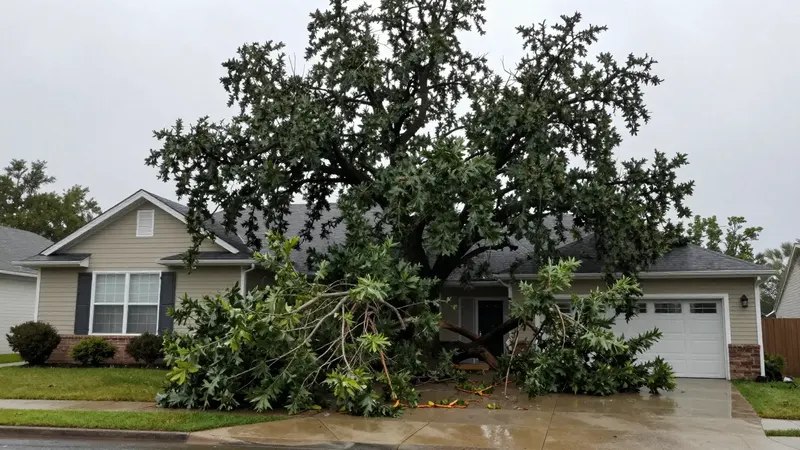
Wind has done serious harm here. The 1962 Columbus Day storm brought gusts over 100 mph, and the 2006 Hanukkah Eve Wind Storm left around 1.8 million customers without power. King County has been included in twelve FEMA major disaster declarations since 2000, most recently DR-4906 in 2026 for severe storms, straight-line winds, flooding, landslides and mudslides, along with others in 2024, 2020, 2017, 2012, 2011, 2009, 2007, 2006 and 2003. The city also lies near an active fault, and the 2001 Nisqually earthquake damaged buildings in Pioneer Square.
Drizzle that never quits: water damage restoration in Seattle
Rain here is more often persistent than torrential, which means slow leaks: moss-clogged gutters, aging roof valleys, window sills and siding seams that let water in over weeks. Basements on hillsides take on groundwater, and a rare cold snap can still crack exposed pipes. Older apartment buildings add another risk, where a leak upstairs can spread to units below.
Seattle water damage restoration usually follows a familiar path: shut off and fix the source, extract water, map moisture in walls and floors, and dry with dehumidifiers and air movers while monitoring daily. Once materials are dry, reconstruction or water damage repair follows. If the stain is above you, see ceiling water damage repair.
Federal disaster declarations that included King County
FEMA records show King County was included in 12 major disaster declarations for weather or fire events from 2000 through 2026 (8 severe storm, 4 flood, by FEMA incident type). Declarations are made at the county level, so they do not mean every neighborhood in Seattle was affected. The most recent:
- 2026 – Severe Storms, Straight-line Winds, Flooding, Landslides, and Mudslides (DR-4906)
- 2024 – Severe Winter Storms, Straight-line Winds, Flooding, Landslides, and Mudslides (DR-4775)
- 2020 – Severe Storms, Flooding, Landslides, and Mudslides (DR-4539)
- 2017 – Severe Winter Storms, Flooding, Landslides, Mudslides (DR-4309)
- 2012 – Severe Winter Storm, Flooding, Landslides, and Mudslides (DR-4056)
- 2011 – Severe Winter Storm, Flooding, Landslides, and Mudslides (DR-1963)
Source: OpenFEMA Disaster Declarations Summaries, retrieved 2026-10-10. Counts include major disaster (DR) declarations with hurricane, flood, severe storm, tropical storm, fire, tornado, coastal storm, winter or ice storm, mudslide and dam/levee incident types.
Water, fire or storm damage in Seattle?
Call (866) 937-3230 and tell us what happened at your Seattle property.
From the 1889 fire to modern smoke events
The Great Seattle Fire of 1889 wiped out the central business district, and a grander downtown quickly rose in its place. Today, most fire losses are individual homes and units, where soot and odor can travel through shared hallways and ventilation. Contractors commonly clean soot surface by surface, discard what can't be salvaged, and use air scrubbers and sealing to deal with smell; read about fire damage restoration and smoke odor removal.
Wildfire smoke has become a recurring concern too: the city's emergency management office has posted air quality advisories and is fitting library branches to serve as cooling and clean-air spaces during heat and smoke. After a heavy smoke period, replacing HVAC filters is a simple first step.
Landslides, windstorms and storm cleanup around the Sound
The city's emergency management office keeps separate hazard pages for landslides, floods and windstorms. Saturated soil on steep slopes, toppled trees on roofs and water backing up into low-lying basements are the patterns to watch for after long rainy stretches or big blows. The city's online Hazards Explorer map lets you look up risks by location.
Water entering from outdoors should be considered contaminated, and saturated porous materials are typically removed. More on storm damage cleanup and basement flood cleanup.
Gray skies, slow drying and mold
With so many overcast days, wet materials can take a long time to dry naturally, and that gives mold its opening. Bathrooms, window frames, basements and the backs of closets on exterior walls are common spots. Fixing ventilation and the moisture source comes before any cleaning.
EPA guidance treats mold covering less than about 10 square feet as something a homeowner can often tackle; larger or hidden growth, or anything tied to sewage or floodwater, warrants a professional. See mold removal for what to expect.
Protecting yourself first in Seattle
- Call 911 for fire, injuries, gas leaks or downed power lines, and leave a damaged building if you doubt its stability, especially after an earthquake or landslide.
- Turn off the water main for plumbing failures; don't wade through water that could be energized.
- Sign up for AlertSeattle, run by the Seattle Office of Emergency Management.
- Photograph damage before cleanup and keep a list of affected belongings. Each policy differs, so ask your insurer or agent what applies.
Neighborhoods and nearby communities
Areas in and around Seattle that callers often mention include:
- Capitol Hill
- First Hill
- West Seattle
- Beacon Hill
- Queen Anne
- Magnolia
- Wallingford
- Delridge
- Columbia City
- Laurelhurst
- Pioneer Square
- Alki
- Montlake
Nearby communities with their own pages (straight-line distance from Seattle):
- Mercer Island · 6 mi
- Bellevue · 6 mi
- White Center · 6 mi
- Kirkland · 8 mi
- Bryn Mawr-Skyway · 9 mi
- Bainbridge Island · 9 mi
Seattle restoration FAQs
How do Seattle residents get official emergency alerts?
The city's Office of Emergency Management runs AlertSeattle, which you can sign up for on the city website. Its site also has a Hazards Explorer map for checking landslide, flood and other risks near an address.
Which season causes the most water damage in Seattle?
Late fall and winter. November is typically the wettest month, followed by January and December, and that's also windstorm season. Gutters full of needles and moss are a frequent cause of interior leaks.
My building had smoke from a neighbor's unit fire. What now?
Smoke and soot can move through shared hallways and ducts, so units that never saw flames may still need cleaning. Talk to building management and your renter's or owner's insurer, and a restoration contractor can assess residue and odor.
Do you also refer contractors in Bellevue or Burien?
We try to connect callers with independent contractors across the area, including nearby places such as Bellevue, Burien, Mercer Island and Kirkland. Availability varies, so call (866) 937-3230 to check.
Can a hillside home be damaged by slow water rather than a big storm?
Yes. Long stretches of steady rain can saturate slopes and push groundwater into basements and crawlspaces. Watch for new cracks, sticking doors or damp lower walls after extended rainy periods, and check the city's landslide hazard information.
Restoration guides
- Water Damage Restoration
- Ceiling Water Damage Repair
- Storm Damage Cleanup
- Basement Flood Cleanup
- Smoke Odor Removal
- Mold Removal