
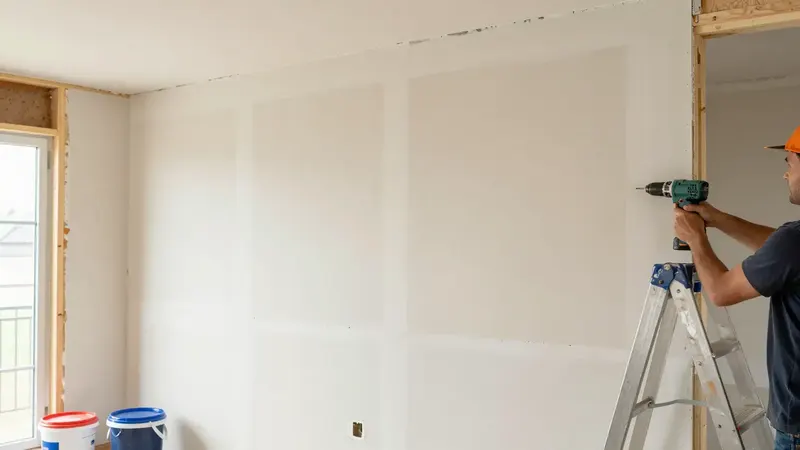
Mitigation and reconstruction are two separate phases. Mitigation stops the damage: extracting water, drying, removing smoke residue, or containing mold. Reconstruction comes after, replacing what had to be torn out, from insulation and drywall to cabinets, flooring, trim, paint, and sometimes framing or roofing. Some restoration companies do both; others hand off to a general contractor.
Fire & Water Energy is a referral service and does not do construction. Call (866) 937-3230 and we will try to connect you with an independent contractor who handles rebuild work in your area, depending on availability. This page explains what to expect so you can ask good questions.
When reconstruction is needed
- Flood cuts: lower drywall cut away above the water line after flood damage or a basement backup
- Ceilings and insulation removed after a roof leak or ceiling water damage
- Kitchens and rooms gutted after a fire, once fire damage restoration and smoke cleaning are finished
- Walls, subfloors, and framing replaced after mold remediation or sewage cleanup
- Roof decking, siding, windows, and structural members after storm damage or a fallen tree
Smaller jobs, such as patching one ceiling or replacing a section of flooring, are often described as water damage repair. Reconstruction tends to refer to larger rebuilds that involve several trades and building permits.
Before rebuilding starts: safety and readiness
Rushing to close walls is one of the most common rebuild mistakes. A few checks first:
- Structural safety. CDC advises staying out of damaged buildings until a building inspector or other official has checked them, and leaving right away if you hear shifting or strange noises.
- Return only when cleared. Ready.gov advises going home only when authorities say it is safe, and notes that children should not do disaster cleanup work.
- Dry first. Materials must be fully dry before new drywall or flooring goes in. EPA advises drying wet materials within 24 to 48 hours and never painting or caulking over mold.
- Utilities. Have wet electrical systems and gas appliances checked by qualified professionals before use. CDC warns against connecting a generator to home circuits without an approved automatic-interrupt device.
- Older homes. Damage repair can disturb old lead-based paint; see the next section.
A typical reconstruction sequence
- Final mitigation sign-off. Drying logs, smoke cleaning, or mold clearance confirm the structure is ready.
- Scope and estimate. The contractor measures, lists materials and finishes, and prepares a written estimate, often in a format your insurer can compare against its own.
- Permits. Where the local building department requires them, the contractor pulls permits for structural, electrical, plumbing, or roofing work.
- Structural and rough-in work. Framing, subfloor, roof decking, and any electrical or plumbing replacement, followed by required inspections.
- Insulation and drywall. Walls and ceilings are closed, taped, and finished.
- Finishes. Flooring, cabinets, trim, doors, paint, and fixtures are installed.
- Walkthrough and punch list. You review the work, list anything incomplete, and receive final inspection sign-offs and warranty paperwork.
Need help with property damage reconstruction?
Call (866) 937-3230 and tell us what happened and where.
Lead paint and older homes
If your home was built before 1978, rebuilding can disturb lead-based paint. EPA's Renovation, Repair and Painting Rule requires firms paid to disturb paint in pre-1978 homes to be lead-safe certified, including one-person businesses. EPA estimates about three-quarters of U.S. homes built before 1978 still contain some lead-based paint, and it recommends homeowners hire a lead-safe certified contractor. Ask for the firm's certification and use EPA's online search to confirm it.
Documentation and working with insurance
Keep photos from before and after mitigation, the mitigation company's drying or clearance records, and receipts for removed materials. If you have a claim open, share the reconstruction estimate with your adjuster before work starts and get any changes in writing. Coverage for upgrades, code-required changes, and matching undamaged areas varies widely; coverage depends on your policy, so check with your insurer or agent.
Choosing a reconstruction contractor
- Is the company licensed as a general or residential contractor where your state or city requires it? Ask for the license number.
- Does it carry general liability and workers' compensation insurance? Request certificates.
- Will it pull permits and schedule inspections, rather than asking you to?
- For pre-1978 homes, is the firm EPA lead-safe certified?
- Did it review the mitigation records, such as IICRC S500 drying logs, S520 mold clearance, or S700 fire and smoke cleaning documentation, before quoting?
- Is the estimate written and itemized, with a payment schedule tied to completed work?
- Who supervises subcontractors, and what warranty applies to labor and materials?
See how it works for what happens when you call, or browse service areas.
Reconstruction versus restoration and repair
Restoration usually describes the full process from mitigation through repair, while reconstruction is specifically the rebuild that follows. If water is still standing or materials are still wet, you need emergency water removal or structural drying before any rebuild begins.
Frequently asked questions
Can the same company do cleanup and rebuilding?
Some restoration companies handle both mitigation and reconstruction, while others focus only on cleanup and drying. Using one company can simplify scheduling, but you are free to choose a separate contractor for the rebuild. Ask early so the handoff and paperwork are clear.
Do I need a permit to rebuild after water or fire damage?
It depends on your city or county and on the scope. Structural, electrical, plumbing, and roofing work commonly require permits, while cosmetic repairs may not. Check with your local building department or ask your contractor to confirm.
How do I know the house is dry enough to rebuild?
Ask the mitigation company for moisture readings taken at the end of drying. A reconstruction contractor should review those records and can take their own readings before closing walls. Rebuilding over wet materials risks mold.
Why does my contractor need lead-safe certification?
If your home was built before 1978, EPA's Renovation, Repair and Painting Rule requires firms paid to disturb painted surfaces to be lead-safe certified. EPA recommends hiring a certified contractor trained in lead-safe practices. You can verify a firm through EPA's online search.
Will insurance pay to rebuild?
That depends on your policy, the cause of loss, and your coverage limits. Share the contractor's written estimate with your adjuster before work begins, and get any approved changes in writing. Check with your insurer or agent for details.
How do I find a reconstruction contractor?
Call (866) 937-3230 and we will try to connect you with an independent contractor serving your area, depending on availability. Fire & Water Energy is a referral service and does not do construction itself. Ask for licensing, insurance certificates, and a written estimate.
Related services
Find property damage reconstruction help by state
- Florida
- Georgia
- Texas
- Louisiana
- Alabama
- Mississippi
- California
- South Carolina
- North Carolina
- Tennessee
- Arizona
- New Mexico
- Virginia
- Maryland
- Oregon
- Washington