
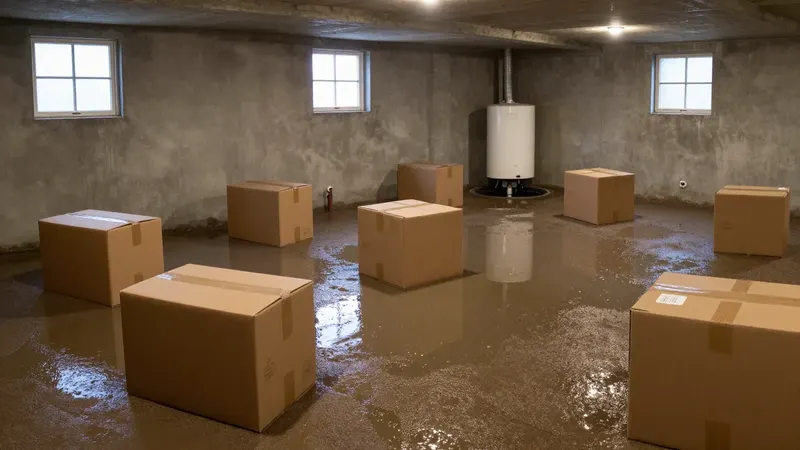
A basement is the lowest point in the house, so it is often the first place water collects after heavy rain, rising groundwater, a failed sump pump, or surface flooding. Basement flood cleanup addresses the problems unique to that space: water trapped below grade, furnaces and water heaters standing in it, and concrete and block walls that hold moisture long after the surface looks dry.
Fire & Water Energy connects callers with independent contractors; it is not a contractor itself. Call (866) 937-3230 and we'll try to find an independent restoration provider who serves your area and handles flooded basements, though availability depends on local providers.
Common reasons basements take on water
- Heavy rain and surface runoff flowing toward the foundation, window wells, or exterior stairwells.
- Sump pump failure, often during a power outage. Ready.gov suggests considering a battery-backed sump pump as a flood-preparation step.
- Rising floodwater from nearby streams or overwhelmed streets entering through openings.
- Sewer or drain backup through floor drains, which brings sewage into the mix; see sewage cleanup if that is what you are seeing.
- Plumbing failures such as a burst line, which is covered on our burst pipe water damage page.
The source matters because it affects how contaminated the water is and how an insurer may view the claim.
Safety in a flooded basement
Basements combine standing water with electrical panels, appliances, and gas equipment, which makes them more hazardous than most rooms.
- Do not step into a basement with standing water if outlets, cords, or appliances are submerged and the power is still on. Have the utility or an electrician shut it off if you cannot reach the panel safely.
- Do not relight a gas furnace or water heater that sat in water; have it inspected first. If you smell gas, leave and call the gas company or 911.
- Do not run a gas pump or generator inside or near basement windows; the EPA warns carbon monoxide can kill in minutes.
- Do wear rubber boots and waterproof gloves, as the CDC recommends for flood cleanup, and use a mask around mold.
- Do watch for bowing walls or cracks, and get out if the structure looks compromised.
How contractors typically handle basement flooding
- Utility and hazard check. Confirm power is off to the basement and inspect gas appliances before work starts.
- Staged pumping. When water is several feet deep, the EPA warns that removing it too quickly can make walls and floors crack and collapse, because saturated soil outside still pushes against the foundation. Contractors often lower the level gradually.
- Extraction and sludge removal. Vacuum remaining water and clear silt from the slab, drains, and sump pit.
- Tear-out. Remove wet carpet, pad, finished drywall, and insulation. Older vinyl tile may contain asbestos, which the EPA says should be handled by an asbestos professional.
- Cleaning and disinfection of the slab, framing, and lower walls.
- Drying and dehumidification until moisture readings in concrete, framing, and drywall reach normal levels for the home.
- Recommendations on sump capacity, backup power, or grading, before any finished basement is rebuilt.
Need help with basement flood cleanup?
Call (866) 937-3230 and tell us what happened and where.
Insurance and documentation for basement water
Coverage for basements can be complicated. FloodSmart notes that most homeowners policies do not cover flood damage, and flood policies and homeowners policies may treat below-grade spaces and finished basements differently. Coverage depends on your policy; check with your insurer or agent before you discard finished materials.
- Photograph the water line on walls, appliances, and stored items before pumping.
- Note make, model, and serial numbers for the furnace, water heater, washer, and dryer.
- Keep samples of carpet and flooring, as FloodSmart suggests for flood claims.
- Write down what you think the source was, such as rising water, a backup, or a pump failure, and when you found it.
Vetting a basement flood contractor
- Ask about any license your state requires and proof of liability and workers' compensation coverage.
- Get a written estimate that spells out pumping, tear-out, disposal, and drying separately.
- Ask whether the work follows IICRC S500 and whether staff hold IICRC certification.
- Ask how they will measure moisture in concrete and block, not just drywall.
- If mold is visible, ask whether they follow IICRC S520 and offer or recommend independent clearance testing.
- Ask whether they coordinate with licensed electricians or HVAC technicians for submerged equipment.
Basement cleanup compared with other services
This page focuses on below-grade spaces. Water on the main floor from a river or flash flood fits flood cleanup, while a project that continues into rebuilding a finished basement belongs under flood damage restoration. If you only need water pulled out quickly, emergency water removal covers that first triage. Find coverage areas on our service areas page.
Frequently asked questions
Should I pump my basement out right away?
If water is shallow, removing it promptly helps limit damage. If it is several feet deep, the EPA cautions that pumping too quickly can crack or collapse walls and floors, so lowering the level in stages is safer.
Is it safe to go into a flooded basement?
Not if the power is on and water reaches outlets, cords, or appliances. Have the electricity shut off first, avoid the area if you smell gas, and leave if walls are bowing or cracking.
Can my furnace and water heater be saved?
Sometimes, but equipment that sat in floodwater should be inspected by a qualified technician before use. Do not relight gas appliances yourself after flooding.
Why does my basement still feel damp after the water is gone?
Concrete and block walls absorb water and release it slowly, and below-grade spaces have limited airflow. Dehumidifiers and moisture readings over several days show whether the space is truly dry.
Does insurance cover a flooded basement?
It depends on the water source and your policies. Most homeowners policies do not cover flooding, and flood and homeowners policies may limit coverage below grade, so check with your insurer or agent.
How can I reduce the chance of another basement flood?
Ready.gov suggests clearing drains and gutters and considering a battery-backed sump pump. A contractor or plumber may also suggest grading or backflow changes for your home.
Related services
Find basement flood cleanup help by state
- Florida
- Georgia
- Texas
- Louisiana
- Alabama
- Mississippi
- California
- South Carolina
- North Carolina
- Tennessee
- Arizona
- New Mexico
- Virginia
- Maryland
- Oregon
- Washington