
Sugar Hill sits in the northern tip of Gwinnett County at about 1,079 feet, close to Lake Lanier and the first rise of the North Georgia foothills. The city has grown quickly, from roughly 18,500 residents in 2010 to an estimated 28,600 in 2024, so many households are dealing with their first leak or storm in a newer house.
Fire & Water Energy connects callers with restoration companies; it does not do the work. Phone (866) 937-3230 and we will try to reach an independent contractor who takes jobs in Sugar Hill. That contractor sets its own rates and timing. Details are on how it works and the referral disclosure.
Sugar Hill's weather extremes and Gwinnett's disaster record
Rain is spread fairly evenly through the year, with February the wettest month at about 5.3 inches and April the driest at about 3.7. Summers are hot and humid, with July highs near 87°F, but the cold can be real: the local record low is −8°F, set in 1985, and the record high of 107°F dates to 1952.
Gwinnett County has been included in three FEMA major disaster declarations since 2000: a severe winter storm in 2000, severe storms and flooding in 2009, and Hurricane Irma in 2017. Those declarations cover the whole county, but they line up with the risks local homeowners plan for: ice, heavy rain and tropical wind.
What causes most indoor water damage here
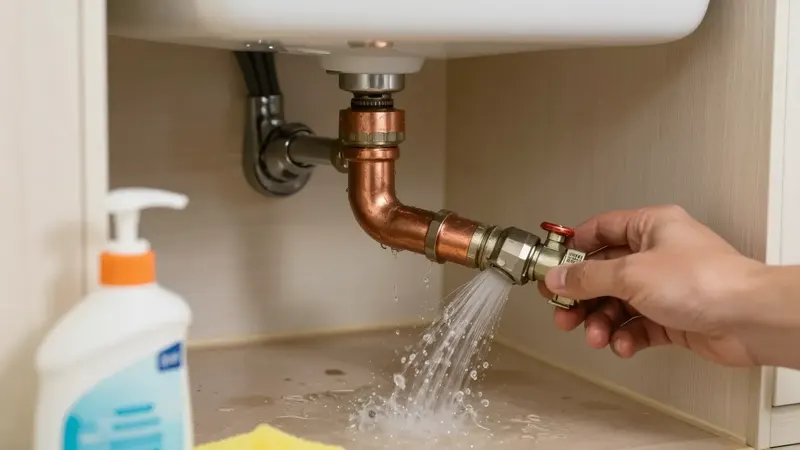
In a fast-growing suburb, the usual culprits are appliance and fixture failures: refrigerator ice-maker lines, dishwasher connections, toilet supply hoses and water heaters in attics or garages. Winter cold snaps can split pipes in exterior walls or unheated spaces, and a slow drip behind a shower may go unnoticed for months.
For water damage restoration in Sugar Hill, contractors commonly find the source, extract water, remove soaked padding or drywall where needed, and dry the structure with dehumidifiers while logging moisture readings. Then water damage repair rebuilds what was removed. Also see emergency water removal and burst pipe water damage.
Federal disaster declarations that included Gwinnett County
FEMA records show Gwinnett County was included in 3 major disaster declarations for weather or fire events from 2000 through 2026 (2 severe storm, 1 hurricane, by FEMA incident type). Declarations are made at the county level, so they do not mean every neighborhood in Sugar Hill was affected. The most recent:
- 2017 – Hurricane Irma (DR-4338)
- 2009 – Severe Storms and Flooding (DR-1858)
- 2000 – Severe Winter Storm (DR-1311)
Source: OpenFEMA Disaster Declarations Summaries, retrieved 2026-10-10. Counts include major disaster (DR) declarations with hurricane, flood, severe storm, tropical storm, fire, tornado, coastal storm, winter or ice storm, mudslide and dam/levee incident types.
Water, fire or storm damage in Sugar Hill?
Call (866) 937-3230 and tell us what happened at your Sugar Hill property.
Fire, smoke and a city-run gas system
Sugar Hill is unusual in operating its own natural gas utility; rate spikes in 2001 even sparked a petition to dissolve the city. If you ever smell gas, leave the house first and call 911 from outside, then contact the gas provider listed on your bill.
After a fire, smoke residue keeps acting on surfaces, so cleanup usually begins with ventilation, removal of charred material and dry soot cleaning before wet methods. Read about fire damage cleanup and smoke odor removal to understand the stages.
Storm runoff and flood cleanup near Lanier
Heavy rain on hilly suburban lots can push water toward foundations, basements and garages, and the 2009 severe storms and flooding declaration covered all of Gwinnett. Thunderstorms and tropical remnants also bring down trees, which can puncture roofs and let rain into attics.
Assume outside floodwater carries bacteria and chemicals. Independent firms that offer basement flood cleanup or storm damage cleanup usually pump out water, tarp openings, discard porous materials that soaked up floodwater, and sanitize before drying.
Humid summers and mold growth
With hot, humid summers, a damp basement or wall cavity can grow mold quickly, often within a couple of days of a leak. Running air conditioning and a dehumidifier helps, but wet building materials still need to be dried or removed.
The EPA's rule of thumb: an area under about 10 square feet is usually a homeowner project, while larger or hidden growth belongs with a professional. Our mold remediation page explains containment and air filtration.
Practical safety checklist for Sugar Hill
- For fire, injuries, gas smells or downed lines, get out and dial 911.
- Register for Alert Gwinnett through the Gwinnett County Office of Emergency Management so warnings reach your phone.
- Turn off the water main and, if it is safe, the breaker serving wet rooms.
- Record the damage with dated photos and a written list of ruined items.
- Ask your insurance carrier how your own policy treats the loss before work begins.
Find out whether Georgia or the city requires a license for the specific work, and see our Georgia service areas.
Neighborhoods and nearby communities
Nearby communities with their own pages (straight-line distance from Sugar Hill):
- Buford · 2 mi
- Suwanee · 4 mi
- Duluth · 10 mi
- Lawrenceville · 11 mi
- Johns Creek · 11 mi
- Peachtree Corners · 14 mi
Sugar Hill restoration FAQs
How cold does it get in Sugar Hill?
Most winters are mild, with January highs around 50 degrees, but the record low is -8 degrees from 1985. Hard freezes can still split pipes in garages, attics and outside walls, so insulate them and know where your shutoff is.
How do I get emergency alerts in northern Gwinnett?
Gwinnett County's Office of Emergency Management runs Alert Gwinnett, a free system that sends warnings to your phone. Sign up on the county's emergency management page.
My house is fairly new. Can it still get mold?
Yes. Newer homes are built tight, and a hidden plumbing leak in a humid summer can feed mold behind drywall or under flooring. Drying everything quickly after a leak matters more than the age of the house.
How does the referral work?
Call (866) 937-3230 and we will try to connect you with an independent restoration contractor serving your area. Fire & Water Energy is not a contractor, and the company you hire sets its own pricing.
Restoration guides
- Water Damage Repair
- Emergency Water Removal
- Burst Pipe Water Damage
- Basement Flood Cleanup
- Fire Damage Cleanup
- Mold Remediation