
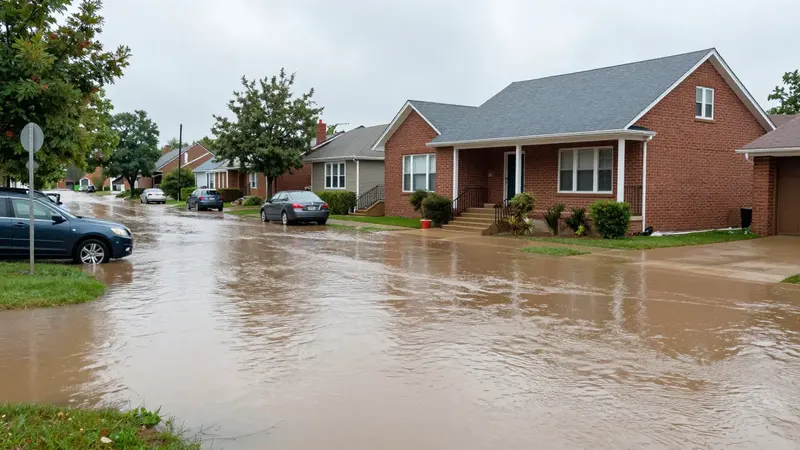
As the seat and only incorporated city of Dougherty County, Albany is surrounded by pecan groves, pine stands and farmland on the coastal plain. The ground is low, around 203 feet, and the Flint River runs right past downtown, which has shaped the city's history with water for well over a century.
If your home or business is damaged, call (866) 937-3230. Fire & Water Energy is strictly a referral service, and we will try to connect you with an independent restoration contractor serving Albany and Dougherty County. We do not employ crews and cannot promise availability or cost. Our how it works and referral disclosure pages have more.
Flint River floods, tornadoes and Hurricane Michael
The Flint has flooded Albany repeatedly, with major events in 1841 and 1925. In 1994, flooding from Tropical Storm Alberto killed 14 people and displaced about 22,000, and in 1998 the river crested 35 feet above its bed. Annual rainfall runs about 52.5 inches, and thunder is heard on roughly 86 days a year.
Tornadoes have been just as damaging. A February 10, 1940 tornado killed 18 people, and storms on January 2 and January 22, 2017 destroyed mobile home parks, including an EF3 on the south side that killed five. Then on October 10, 2018, Hurricane Michael became the first major hurricane to directly hit Georgia since the 1890s; the National Weather Service noted that in Albany signs were blown down and roofs peeled off buildings. FEMA declarations for Dougherty County since 2000 also include Tropical Storm Frances (2004), storms in 2007 and 2009, and Hurricane Irma (2017).
Roof leaks, AC lines and other everyday water damage
In a hot, humid climate, air conditioners run for months, and clogged condensate drains or rusted drain pans are a steady source of ceiling stains and wet subfloors. Roofs weakened by past storms may leak during the next heavy thunderstorm, and water heaters and supply lines fail here like anywhere else. Hard freezes are uncommon, but the record low of 1°F shows a cold snap can still burst exposed pipes.
A contractor offering water damage restoration in Albany typically removes standing water, takes moisture readings, opens up wet cavities and runs drying equipment before any rebuilding. Visit water damage restoration and property damage reconstruction to see how mitigation and repairs fit together.
Federal disaster declarations that included Dougherty County
FEMA records show Dougherty County was included in 7 major disaster declarations for weather or fire events from 2000 through 2026 (3 hurricane, 3 severe storm, 1 tornado, by FEMA incident type). Declarations are made at the county level, so they do not mean every neighborhood in Albany was affected. The most recent:
- 2018 – Hurricane Michael (DR-4400)
- 2017 – Hurricane Irma (DR-4338)
- 2017 – Severe Storms, Tornadoes, Straight-line Winds, and Flooding (DR-4297)
- 2017 – Severe Storms, Tornadoes, and Straight-line Winds (DR-4294)
- 2009 – Severe Storms, Flooding, Tornadoes, and Straight-line Winds (DR-1833)
- 2007 – Severe Storms and Tornadoes (DR-1686)
Source: OpenFEMA Disaster Declarations Summaries, retrieved 2026-10-10. Counts include major disaster (DR) declarations with hurricane, flood, severe storm, tropical storm, fire, tornado, coastal storm, winter or ice storm, mudslide and dam/levee incident types.
Water, fire or storm damage in Albany?
Call (866) 937-3230 and tell us what happened at your Albany property.
Fire and smoke damage cleanup
House fires can start from overloaded wiring, cooking or storm-damaged electrical service. Even a fire limited to one room tends to leave soot throughout the house and soak floors with water from fire hoses. Smoke odor can work into insulation and ductwork.
Reputable restoration companies usually secure the property, separate salvageable contents, clean soot from walls and ceilings, and deodorize. Our fire damage cleanup and smoke odor removal pages describe each step.
Cleaning up after river flooding and hurricane winds
Floodwater from the Flint or from overwhelmed drainage can carry sewage, fuel and farm chemicals, so treat it as Category 3 contaminated water. After a hurricane or tornado, the bigger problem may be wind: torn shingles, broken windows and trees on roofs let rain pour in for days. The NWS reported severe timber damage reaching into Dougherty County during Michael.
Contractors doing hurricane damage cleanup and flood damage restoration commonly tarp roofs, remove debris and soaked materials, sanitize, and then dry the structure. Keep a record of everything removed for your claim.
Mold risk in a southwest Georgia climate
Long, humid summers and frequent storms mean wet building materials can grow mold within a day or two. After a flood or roof leak, drywall, insulation and carpet pad should be dried or removed quickly.
Per EPA guidance, a homeowner can often clean an area smaller than about 10 square feet, but widespread growth or mold after contaminated floodwater calls for professional mold remediation with containment and air filtration.
Staying safe after a storm or flood in Albany
- Call 911 for fires, injuries, gas leaks or downed power lines.
- Never walk or drive through floodwater.
- Turn off electricity at the panel only if you can reach it without standing in water.
- Photograph damage, keep receipts, and hold onto damaged items for your adjuster.
- Contact your insurer; flood is often excluded from standard homeowners policies, so check your coverage.
- Follow Albany-Dougherty County emergency officials and NWS warnings.
Check whether your state or city requires a license for the work, and get written estimates. See more on our Georgia service areas page.
Neighborhoods and nearby communities
Nearby communities with their own pages (straight-line distance from Albany):
Albany restoration FAQs
How high has the Flint River flooded in Albany?
In 1998 the river crested 35 feet above its bed, and the 1994 Alberto flood killed 14 people and displaced about 22,000. Major floods were also recorded in 1841 and 1925. If you live near the river, check your flood zone and consider flood insurance.
What damage did Hurricane Michael cause in Albany?
Michael struck on October 10, 2018 as the first major hurricane to directly impact Georgia since the 1890s. The National Weather Service reported signs blown down and roofs peeled off buildings in Albany, and heavy timber damage in Dougherty County.
Are tornadoes a real risk here?
Yes. A 1940 tornado killed 18 people, and in January 2017 two tornado outbreaks hit the area, including an EF3 on the south side. Dougherty County received two FEMA declarations for severe storms and tornadoes that year.
Can you connect me with a contractor after a storm?
Call (866) 937-3230 and we will try to refer you to an independent contractor serving the Albany area. After widespread storms, local demand can be high, and each company sets its own schedule and pricing.
Restoration guides
- Hurricane Damage Cleanup
- Flood Damage Restoration
- Water Damage Restoration
- Property Damage Reconstruction
- Mold Remediation
- Fire Damage Cleanup