
Douglas is a south-central Georgia college town, home to South Georgia State College and Wiregrass Georgia Technical College, sitting at about 253 feet above sea level. Twenty Mile Creek and the Seventeen Mile River, a feeder of the Satilla, drain the area, and the town gets roughly 50 inches of rain in an average year.
If your house or business has been hit by a leak, a fire or storm damage, call (866) 937-3230. Fire & Water Energy is a referral service, not a contractor: we try to put you in touch with an independent restoration company that serves Coffee County. Whether a provider is free, and what it charges, is up to that business. Details on the process are on our how it works page, and the referral disclosure explains the arrangement.
What Helene and other storms taught Coffee County
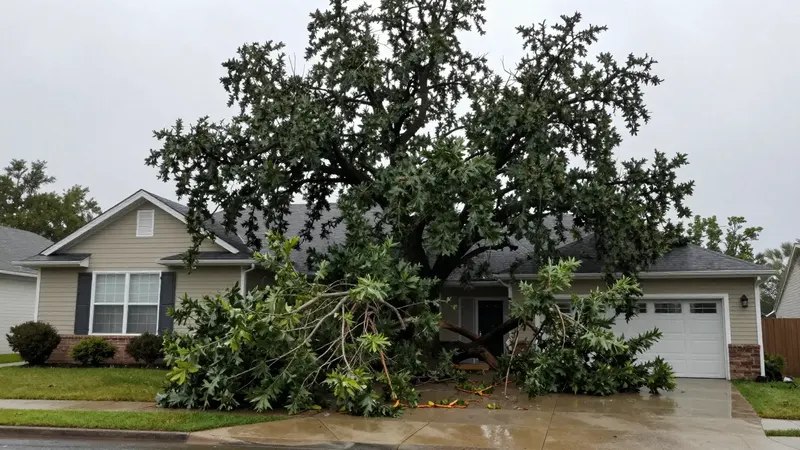
Wikipedia reports that Douglas was squarely in the path of Hurricane Helene in late September 2024, when a gust of 92 mph was measured in town and outages spread across the county. The same source says a large majority of Coffee County homes, roughly 80 to 85 percent, took some damage. The National Weather Service in Tallahassee notes Helene came ashore in the Florida Big Bend near Perry on September 26 with 140 mph sustained winds, and neighboring Ben Hill County reported more than 97 percent of its residents without power.
Helene was not a one-off. FEMA major disaster declarations covering Coffee County since 2000 include Tropical Storm Frances (2004), severe storms with flooding and tornadoes (2009), Hurricane Irma (2017), Hurricane Michael (2018), Hurricane Idalia (2023) and Tropical Storm Debby (2024). Winters are mild and snow averages only about 0.2 inches, though the recorded low of 1°F shows a hard freeze is possible.
Leaks, roof breaches and plumbing failures in Douglas homes
Most indoor water problems here start with rain finding a way in: shingles or flashing loosened by tropical wind, a tree limb through the decking, or gutters overwhelmed by a downpour. Inside, supply lines, water heaters and air conditioning drain pans that back up during the long, humid cooling season are common culprits too.
For water damage restoration in Douglas, a reputable company will usually stop the source, pull standing water, set fans and dehumidifiers, and track moisture readings before any drywall or flooring goes back. Learn more on our water damage restoration and ceiling water damage repair pages.
Federal disaster declarations that included Coffee County
FEMA records show Coffee County was included in 7 major disaster declarations for weather or fire events from 2000 through 2026 (5 hurricane, 1 tropical storm, 1 severe storm, by FEMA incident type). Declarations are made at the county level, so they do not mean every neighborhood in Douglas was affected. The most recent:
- 2024 – Hurricane Helene (DR-4830)
- 2024 – Tropical Storm Debby (DR-4821)
- 2023 – Hurricane Idalia (DR-4738)
- 2018 – Hurricane Michael (DR-4400)
- 2017 – Hurricane Irma (DR-4338)
- 2009 – Severe Storms, Flooding, Tornadoes, and Straight-line Winds (DR-1833)
Source: OpenFEMA Disaster Declarations Summaries, retrieved 2026-10-10. Counts include major disaster (DR) declarations with hurricane, flood, severe storm, tropical storm, fire, tornado, coastal storm, winter or ice storm, mudslide and dam/levee incident types.
Water, fire or storm damage in Douglas?
Call (866) 937-3230 and tell us what happened at your Douglas property.
When a fire or smoke event hits the house
House fires here usually trace back to everyday causes such as cooking, dryers, space heaters on the occasional cold night, or wiring stressed by surges after storm outages. Generators run too close to a door or window are also a hazard during long power cuts like the ones Helene caused.
Contractors commonly board up openings, remove charred material, clean soot from walls and contents, and deodorize ductwork. See fire damage restoration and smoke damage cleanup for typical steps.
Flooding and wind cleanup near Twenty Mile Creek and beyond
Low-lying ground along creeks and ditches can hold water after tropical rain, and fallen pines and oaks are a familiar sight after a tropical system. Treat any water that came in from outdoors as contaminated, since it may carry sewage, fuel or chemicals.
Crews handling storm damage cleanup or hurricane damage cleanup typically tarp the roof, clear debris, cut out wet insulation and drywall, sanitize, and dry the framing before rebuilding.
Why mold grows fast in south Georgia's humidity
Long, sticky summers mean soaked materials seldom dry on their own, and mold can appear within a day or two. If a closed-up house sat without power or air conditioning after a storm, check closets, the backs of furniture and the undersides of carpet.
The EPA suggests that mold covering more than about 10 square feet be handled by a trained professional. A good mold remediation contractor will find the moisture source, set up containment, remove affected material and confirm the area is dry.
First steps for Douglas residents after damage
- Call 911 for fire, injuries, gas odors or downed power lines.
- If the panel sits in a wet area, leave the breakers alone and wait for the utility or an electrician.
- Stay out of rooms with sagging ceilings or standing water near outlets.
- Photograph and video every damaged room and item before cleanup, and save receipts.
- Report the loss to your insurer promptly. Coverage depends on your policy, so ask your agent what is included; standard homeowners policies often exclude flood.
- Follow Coffee County officials and the National Weather Service during storms.
Neighborhoods and nearby communities
Areas in and around Douglas that callers often mention include:
- Downtown Douglas Historic District
- Gaskin Avenue Historic District
Nearby communities with their own pages (straight-line distance from Douglas):
Douglas restoration FAQs
Does Douglas get hurricanes even though it's inland?
Yes. Tropical systems that make landfall along the Gulf coast often track right across south-central Georgia. Helene passed directly over Douglas in 2024, and FEMA declarations for Coffee County also cover Irma, Michael and Idalia.
Are older buildings downtown more prone to water problems?
Douglas has two National Register historic districts, downtown and Gaskin Avenue, both listed in 1989. Older roofs, plaster and original plumbing can need gentler drying and repair methods, so ask any contractor about their experience with historic structures.
Do pipes ever freeze in Coffee County?
Not often, since snow averages about 0.2 inches a year. Still, the area has dropped as low as 1 degree Fahrenheit, so insulate exposed lines in crawlspaces and let faucets drip on the coldest nights.
Can you send someone to my home in Douglas?
No, we are a phone-based referral line with no trucks or workers of our own. When you call (866) 937-3230 we try to connect you with an independent contractor who works in the area, and that company sets its own schedule and pricing.
Restoration guides
- Hurricane Damage Cleanup
- Storm Damage Cleanup
- Water Damage Restoration
- Ceiling Water Damage Repair
- Mold Remediation
- Fire Damage Restoration