
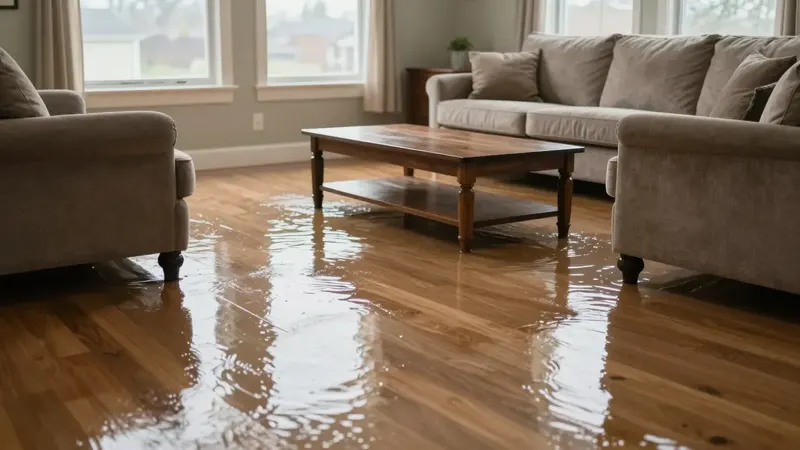
Savannah lies on the Savannah River about 20 miles inland from the Atlantic, surrounded by tidal marsh. Wikipedia describes the city as prone to flooding because of heavy rain, low elevation and the shape of the coast, which is why it depends on five canals and a set of pumping stations.
For help after a leak, flood or fire, call (866) 937-3230. Fire & Water Energy connects callers with independent restoration contractors; it isn't one itself. We'll try to reach a provider serving Chatham County, though we can't commit to anyone's availability, arrival time or pricing. Our process page and referral disclosure have more.
Tidal marsh, tropical systems and Lowcountry downpours
About half of the city's roughly 48 inches of annual rain falls from June through September, often in brief, intense thunderstorms. Hurricanes struck less often here than in some coastal cities during the 20th century, but history includes the 1893 Sea Islands hurricane, which killed at least 2,000 people, and Hurricane David in 1979.
Recent seasons have been busier. Hurricane Matthew made a partial eyewall landfall in 2016, Irma brushed the area in 2017, and both Debby and Helene affected the region in 2024. Each of those four events is also on the list of FEMA major disaster declarations covering Chatham County.
Why water gets into Savannah homes
Many leaks trace back to the climate: summer dew points near 70 degrees keep AC systems working constantly, and a clogged condensate line can drip into ceilings or subfloors for weeks. Wind-driven rain during tropical storms forces water past windows, doors and older roofing. Freezes are less frequent, about 21 days a year, but January 1985 hit 3°F, cold enough to burst unprotected pipes.
Owners searching for water damage restoration in Savannah should expect a contractor to stop the leak, use emergency water removal equipment if water is standing, and then dry walls and floors before repairs.
Federal disaster declarations that included Chatham County
FEMA records show Chatham County was included in 4 major disaster declarations for weather or fire events from 2000 through 2026 (3 hurricane, 1 tropical storm, by FEMA incident type). Declarations are made at the county level, so they do not mean every neighborhood in Savannah was affected. The most recent:
- 2024 – Hurricane Helene (DR-4830)
- 2024 – Tropical Storm Debby (DR-4821)
- 2017 – Hurricane Irma (DR-4338)
- 2016 – Hurricane Matthew (DR-4284)
Source: OpenFEMA Disaster Declarations Summaries, retrieved 2026-10-10. Counts include major disaster (DR) declarations with hurricane, flood, severe storm, tropical storm, fire, tornado, coastal storm, winter or ice storm, mudslide and dam/levee incident types.
Water, fire or storm damage in Savannah?
Call (866) 937-3230 and tell us what happened at your Savannah property.
Smoke and fire damage in historic and newer homes
The downtown Landmark Historic District and Victorian District include many older buildings, and restoration there can involve plaster, original wood floors and decorative trim that shouldn't be thrown away lightly. Newer homes on the Southside or in West Chatham have different materials but the same smoke problems: soot on every surface and odor that soaks into fabric and insulation.
A careful contractor will usually document the loss, stabilize the structure, and clean or replace damaged items. See smoke damage cleanup and fire damage restoration for what's typically involved.
Flood and hurricane cleanup near the river and marsh
When rain or tide outpaces the canals and pumps, water collects in streets and can enter homes. Any water that has crossed the ground outside is considered contaminated (Category 3), so porous materials it touched are generally removed and surfaces are disinfected before drying.
After a tropical system, contractors offering hurricane damage cleanup and flood cleanup commonly tarp roofs, clear debris and set up dehumidifiers. Don't throw out damaged belongings until your insurance adjuster has seen them or you have clear photos.
Coastal humidity and mold problems
Annual relative humidity averages close to 72 percent. In that environment, wet drywall, carpet pad and wood framing can develop mold within a day or two. Under EPA guidance, if the affected area is bigger than about 10 square feet, it's usually wise to hire a trained remediation professional.
A mold remediation contractor should be able to explain the source of moisture, how they'll isolate the area, and how they'll check that it's dry when they're done.
First moves for Savannah residents after damage
- Call 911 for a fire, gas smell, injury or electrical hazard.
- Stay out of standing water that could be energized, and don't drive through flooded streets.
- Register for CEMA Alerts and check your evacuation zone with the Chatham Emergency Management Agency.
- Photograph everything and keep receipts for emergency repairs.
- Contact your insurer or agent; coverage depends on your policy, and flood is generally a separate policy.
Neighborhoods and nearby communities
Areas in and around Savannah that callers often mention include:
- Landmark Historic District
- Victorian District
- Thomas Square
- Ardsley Park-Chatham Crescent
- Cuyler-Brownville
- Pin Point
- Midtown
- Southside
- Eastside
- Westside
Nearby communities with their own pages (straight-line distance from Savannah):
- Pooler · 9 mi
- Wilmington Island · 9 mi
- Richmond Hill · 16 mi
- Bluffton, SC · 18 mi
- Hilton Head Island, SC · 22 mi
- Port Royal, SC · 31 mi
Savannah restoration FAQs
Why does Savannah flood during heavy rain even without a hurricane?
The city sits close to sea level and depends on canals and pumping stations to carry water away. A short, intense downpour, especially at high tide, can overwhelm drainage for a while. That's why summer thunderstorms alone can cause street and yard flooding.
Where do I get official storm and evacuation information?
The Chatham Emergency Management Agency, known as CEMA, runs CEMA Alerts and publishes evacuation zone, flooding and hurricane guidance. Signing up before hurricane season gives you more time to act.
Can you find a contractor for Pooler, Garden City or the islands?
We try to connect callers with independent contractors serving their location, including nearby places such as Pooler, Garden City, Wilmington Island and Skidaway Island. Availability depends on local providers. Call (866) 937-3230 to ask.
Does restoring a historic downtown home take special care?
Often, yes. Older plaster, original wood and decorative features may be worth saving, and exterior changes in historic districts can require approval. Ask a contractor about their experience with older buildings before work starts.
Restoration guides
- Flood Cleanup
- Hurricane Damage Cleanup
- Emergency Water Removal
- Water Damage Restoration
- Mold Remediation
- Smoke Damage Cleanup