
Milton became a city on December 1, 2006, but the name goes back to the old Milton County, formed in 1857 and folded into Fulton in 1932. Land runs from about 950 to 1,280 feet in elevation, and zoning has kept much of it in large residential lots and agricultural parcels. Long driveways, detached barns and septic lines all matter when water or fire damage hits.
Fire & Water Energy makes referrals and does not carry out any restoration. Call (866) 937-3230, and we will try to put you in contact with an independent restoration contractor that works in Milton. Rates and timing are set by that business. For the details, read how it works and our referral disclosure.
Seven FEMA declarations and a rural landscape
Fulton County has appeared in seven FEMA major disaster declarations since 2000: a severe winter storm (2000), Hurricane Ivan (2004), severe storms and tornadoes (2008), severe storms and flooding (2009), a severe winter storm in 2014, Hurricane Irma (2017) and Hurricane Helene (2024).
During Helene on September 26-27, 2024, Atlanta, about 30 miles south, logged 11.12 inches of rain in 48 hours, its highest since records began in 1878, and received its first-ever flash flood emergency. Milton's hilly, wooded terrain means heavy rain and wind tend to show up as fallen trees, washed-out drives and water finding its way into lower levels.
Leaks in large homes and outbuildings
Many local houses are large, with multiple bathrooms, finished basements and long plumbing runs, so a slow leak can travel far before it is noticed. Barns, guest houses and pool equipment add more places for lines to freeze during winter storms like the one in 2014. Septic backups are a separate hazard, because that water is contaminated.
Water damage restoration in Milton typically begins with finding the source and mapping moisture with meters, followed by extraction and controlled drying. See structural drying and sewage cleanup if wastewater is involved.
Federal disaster declarations that included Fulton County
FEMA records show Fulton County was included in 7 major disaster declarations for weather or fire events from 2000 through 2026 (3 hurricane, 3 severe storm, 1 severe ice storm, by FEMA incident type). Declarations are made at the county level, so they do not mean every neighborhood in Milton was affected. The most recent:
- 2024 – Hurricane Helene (DR-4830)
- 2017 – Hurricane Irma (DR-4338)
- 2014 – Severe Winter Storm (DR-4165)
- 2009 – Severe Storms and Flooding (DR-1858)
- 2008 – Severe Storms and Tornadoes (DR-1750)
- 2004 – Hurricane Ivan (DR-1554)
Source: OpenFEMA Disaster Declarations Summaries, retrieved 2026-10-10. Counts include major disaster (DR) declarations with hurricane, flood, severe storm, tropical storm, fire, tornado, coastal storm, winter or ice storm, mudslide and dam/levee incident types.
Water, fire or storm damage in Milton?
Call (866) 937-3230 and tell us what happened at your Milton property.
Fire and smoke in a semi-rural setting
Fireplaces, wood stoves, barn equipment and generators used during outages are common ignition sources on larger rural properties. Distance from neighbors also means a fire can grow before anyone outside the household notices, so working smoke alarms matter.
A restoration contractor will generally secure the structure, remove charred material, clean soot from surfaces and contents, and address odor in framing and ductwork. Read more under fire damage cleanup and smoke odor removal.
Trees, wind and runoff after big storms
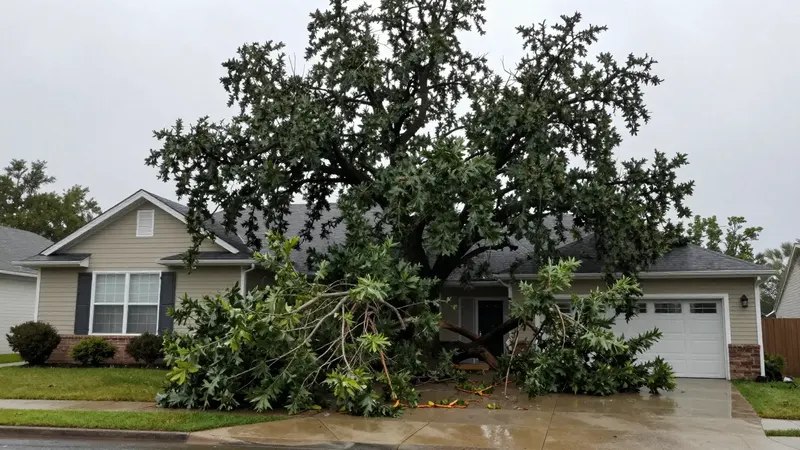
Mature hardwoods and pines line many roads and pastures. In tornadoes, tropical remnants and ice storms they can drop onto roofs, fences and outbuildings, opening the house to rain. On slopes, runoff can pour toward foundations and basement doors.
Water entering from outdoors should be treated as contaminated. Storm damage cleanup usually involves tarping, tree and debris removal and drying, while flood damage restoration covers removing soaked materials and sanitizing.
Mold prevention in basements and barns
Georgia's humid summers help mold spread on anything that stays damp, from basement drywall to stored tack and hay. After a leak or storm, drying materials quickly is the most effective way to prevent it.
EPA guidance indicates that mold under about 10 square feet is often a homeowner cleanup, provided the moisture source is fixed. Larger spread, growth in ducts or occupants with respiratory issues call for a professional using containment; see mold remediation.
Milton safety and insurance checklist
- Call 911 for fire, injuries, gas smells or wires down across a drive.
- Leave a building if the roof or floors are sagging.
- Keep generators outdoors, away from windows and barn doors.
- Turn off the water supply and avoid wet areas near electrical panels.
- Photograph damage to the house and outbuildings before cleanup.
- Contact your insurer or agent; coverage depends on your policy, and outbuildings may be handled differently.
- Follow Atlanta-Fulton County emergency management guidance during severe weather.
Before you hire anyone, check whether your state or city requires a license for the work. Neighboring communities such as Alpharetta and Cumming are included on our Georgia service areas page.
Neighborhoods and nearby communities
Areas in and around Milton that callers often mention include:
- Arnold Mill
- Bethany
- Birmingham
- Central Milton
- Crabapple
- Deerfield
- Milton Lakes
- Sweetapple
Nearby communities with their own pages (straight-line distance from Milton):
- Alpharetta · 4 mi
- Roswell · 8 mi
- Johns Creek · 9 mi
- Holly Springs · 12 mi
- Peachtree Corners · 12 mi
- Duluth · 13 mi
Milton restoration FAQs
My Milton home is on septic. What if it backs up into the house?
Treat sewage water as hazardous and keep people and pets away from it. Stop using water in the house, and call a septic professional to address the system. A restoration contractor can handle the cleanup and disinfection; call (866) 937-3230 for a referral.
How did Hurricane Helene affect the north Fulton area?
Fulton County was included in FEMA's Helene declaration (DR-4830). Atlanta, to the south, recorded 11.12 inches of rain in 48 hours and its first flash flood emergency. Local impacts varied by property, so document any damage you find.
Are barns and outbuildings covered after storm damage?
It depends on your policy. Some homeowners policies treat detached structures separately, and farm or equine properties may need different coverage. Ask your insurance agent before work begins.
Is Crabapple part of Milton?
Partly. Crabapple, first settled in 1874, is split among Milton, Roswell and Alpharetta, and part of it joined the new city in 2006. The city's comprehensive plan treats Crabapple as one of eight character areas.
Restoration guides
- Storm Damage Cleanup
- Structural Drying
- Sewage Cleanup
- Flood Damage Restoration
- Mold Remediation
- Fire Damage Cleanup