
About 19 miles from downtown Los Angeles, West Covina spans some 16 square miles at the eastern side of the San Gabriel Valley, rising from roughly 384 feet to the slopes of the San Jose Hills. Summers are hot, and winter storms arrive in bursts.
Fire & Water Energy is a referral service with no technicians in the field. Call (866) 937-3230 and we will try to link you with an independent restoration contractor serving West Covina, recognizing that availability rests with each company. Valley homeowners can review how it works plus the referral disclosure ahead of time.
Scrubby hills, a local fault and county storm declarations
The San Jose Hills, whose high point Buzzard Peak reaches a little over 1,300 feet, include portions of West Covina and separate the San Gabriel and Pomona valleys. Their slopes are dominated by drought-deciduous coastal sage scrub, which dries out in summer. The San Jose Hills Fault beneath them is considered capable of a magnitude 6.0 to 6.5 earthquake, enough to break pipes and water heater connections.
Los Angeles County has been part of 14 FEMA major disaster declarations since 2000, including the 2010 winter storms and debris flows (DR-1884), the 2023 and 2024 severe winter storms, and the 2025 wildfires and straight-line winds (DR-4856).
Plumbing in a city built during the 1950s boom
Between 1950 and 1960, the population rose from under 5,000 to more than 50,000, making it one of the fastest-growing cities in the country. Houses from that era are now some 70 years old, and many still have galvanized supply lines, cast iron drains, original slab plumbing or older roofs. Hot summers also mean heavy air conditioner use and clogged condensate drains.
Water damage repair in West Covina typically starts with stopping the source, testing moisture through floors and walls, removing wet materials and drying the structure. Slow slab leaks may show up as warm spots or damp carpet far from any fixture.
Federal disaster declarations that included Los Angeles County
FEMA records show Los Angeles County was included in 14 major disaster declarations for weather or fire events from 2000 through 2026 (7 fire, 5 severe storm, 2 flood, by FEMA incident type). Declarations are made at the county level, so they do not mean every neighborhood in West Covina was affected. The most recent:
- 2025 – Wildfires and Straight-line Winds (DR-4856)
- 2024 – Severe Winter Storms, Tornadoes, Flooding, Landslides, and Mudslides (DR-4769)
- 2023 – Severe Winter Storms, Straight-line Winds, Flooding, Landslides, and Mudslides (DR-4699)
- 2023 – Severe Winter Storms, Flooding, Landslides, and Mudslides (DR-4683)
- 2020 – Wildfires (DR-4569)
- 2018 – Wildfires (DR-4407)
Source: OpenFEMA Disaster Declarations Summaries, retrieved 2026-10-10. Counts include major disaster (DR) declarations with hurricane, flood, severe storm, tropical storm, fire, tornado, coastal storm, winter or ice storm, mudslide and dam/levee incident types.
Water, fire or storm damage in West Covina?
Call (866) 937-3230 and tell us what happened at your West Covina property.
Brush fire smoke and indoor fire damage
Dry sage scrub on hillside edges and the county's string of wildfire declarations (2007, 2008, 2018, 2020 and 2025) make smoke and ash a recurring concern. Ash can collect in gutters and on roofs and blow indoors through vents.
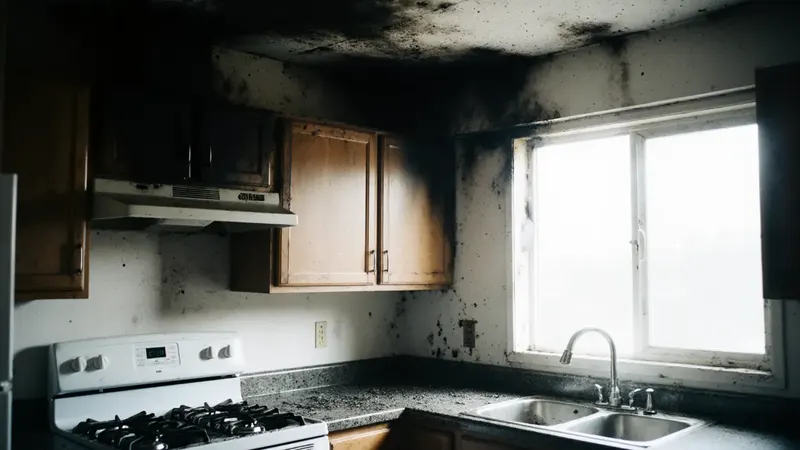
After a fire in the home, fire damage cleanup covers debris removal, protecting salvageable items and cleaning residue, followed by smoke odor removal. Ask how a contractor plans to handle soot in the attic and HVAC.
Hillside runoff and valley storm water
When winter storms stall over the valley, water runs off the hills quickly, carrying soil toward streets, yards and lower homes. Burned or bare slopes make that runoff muddier. Ready LA County offers rain, flooding and mudflow guidance for residents.
Treat any water entering from outside as contaminated. Flood damage restoration typically includes extraction, removing soaked drywall and flooring, sanitizing and drying, while wind-damaged roofs or fallen trees call for storm damage cleanup.
Mold where leaks stay hidden
Even in a hot, dry place, mold forms wherever water lingers, such as behind refrigerators, under vanities or along a slab leak. Older homes with limited ventilation in bathrooms are especially prone.
EPA guidance indicates mold areas under about 10 square feet are often suitable for a homeowner to clean with gloves, goggles and an N95. Larger or recurring growth, or mold after floodwater, should go to mold remediation with containment.
Safety steps for West Covina residents
- Call 911 for fire, a gas smell, injuries or a sagging ceiling.
- Do not touch switches or appliances while standing in water.
- Sign up for Alert LA County through Ready LA County before fire and storm seasons.
- Document conditions with photos and notes before any cleanup starts. Coverage depends on your policy; your agent or insurer can explain which damage they consider.
Neighborhoods and nearby communities
Nearby communities with their own pages (straight-line distance from West Covina):
West Covina restoration FAQs
Are West Covina's 1950s homes at higher risk for leaks?
Many houses from the 1950s boom still have original galvanized pipes and cast iron drains, which corrode with age. A plumbing inspection can identify weak spots before a failure. Re-piping is a common upgrade for homes of that era.
Is there an earthquake fault under the San Jose Hills?
Yes. The San Jose Hills Fault is thought capable of a magnitude 6.0 to 6.5 quake. Strapping the water heater and knowing where to shut off water and gas can limit damage.
Why does hillside vegetation matter for fire risk?
The San Jose Hills are covered mostly in coastal sage scrub, which dries out in summer and burns readily. Homes near open slopes may see ash and smoke during brush fires.
How do I receive Los Angeles County emergency alerts?
Register for Alert LA County on the Ready LA County website. The site also has pages on rain, flooding, mudflows and wildfire preparation.
Does calling (866) 937-3230 hire a contractor?
No. We try to refer you to an independent contractor that serves West Covina, and you decide whether to hire them after discussing the job directly.
Restoration guides
- Water Damage Repair
- Fire Damage Cleanup
- Smoke Odor Removal
- Flood Damage Restoration
- Storm Damage Cleanup
- Mold Remediation