
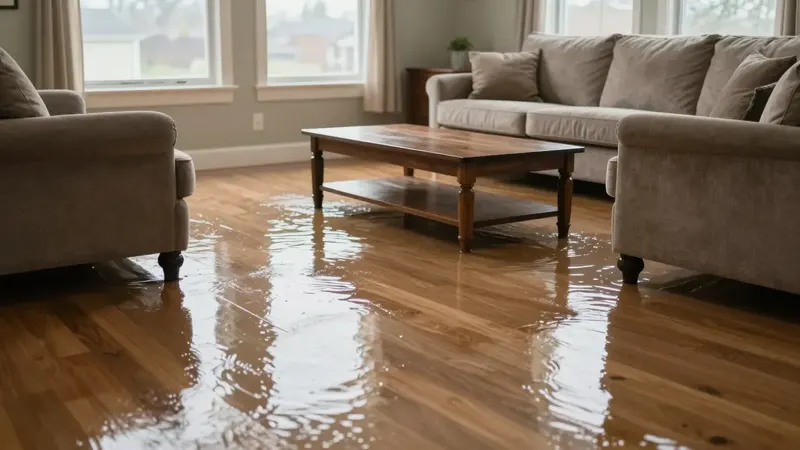
San Jose fills much of the Santa Clara Valley, from the Bay shoreline at Alviso south toward Coyote Valley, with the Guadalupe River and Coyote Creek both draining north through the city. In February 2017, Coyote Creek overflowed and roughly 14,000 people had to leave their homes, a reminder that a mostly dry Mediterranean climate can still produce serious flooding.
Fire & Water Energy connects callers with independent restoration contractors; we are a referral service and do not do the work. Call (866) 937-3230 and we will try to find a provider that covers your neighborhood, though availability depends on who is working locally. You can read how referrals work and our disclosure.
Two creeks, Bay lowlands and fault lines
The Guadalupe River runs from the Santa Cruz Mountains to the Bay at Alviso, and Coyote Creek drains the Diablo Range to the South Bay. Alviso sits as low as 13 feet below sea level, and Wikipedia notes that El Niño rains flooded it significantly in 1983. In the 2017 event, Anderson Reservoir spilled into Coyote Creek, which reached a record 14.4 feet; nearly 500 homes near Senter Road and Phelan Avenue were evacuated and William Street park went fully under water.
Santa Clara County has been included in five FEMA major disaster declarations since 2000, among them the 2017 Severe Winter Storms, Flooding, and Mudslides declarations (DR-4301 and DR-4308) and two in 2023. The city also sits between the San Andreas and Calaveras faults, and the 1989 Loma Prieta earthquake caused damage here.
Leaks, slab problems and older plumbing
Rain averages about 16 inches a year at the airport, with February usually the wettest month, and the city sees only a few freezing mornings annually. Day to day, most indoor water damage comes from plumbing: aging supply lines, water heaters, dishwasher and washer connections, and slab leaks under concrete floors. Late 19th and early 20th century houses in Willow Glen, Naglee Park, Hanchett Park and the Rose Garden may have older pipes and roofs worth watching.
A typical water damage restoration job in San Jose starts with stopping the leak and measuring moisture, then removing wet materials and drying with air movers and dehumidifiers. If a ceiling has stained or sagged, see ceiling water damage repair.
Federal disaster declarations that included Santa Clara County
FEMA records show Santa Clara County was included in 5 major disaster declarations for weather or fire events from 2000 through 2026 (2 severe storm, 2 flood, 1 fire, by FEMA incident type). Declarations are made at the county level, so they do not mean every neighborhood in San Jose was affected. The most recent:
- 2023 – Severe Winter Storms, Straight-line Winds, Flooding, Landslides, and Mudslides (DR-4699)
- 2023 – Severe Winter Storms, Flooding, Landslides, and Mudslides (DR-4683)
- 2020 – Wildfires (DR-4558)
- 2017 – Severe Winter Storms, Flooding, and Mudslides (DR-4308)
- 2017 – Severe Winter Storms, Flooding, and Mudslides (DR-4301)
Source: OpenFEMA Disaster Declarations Summaries, retrieved 2026-10-10. Counts include major disaster (DR) declarations with hurricane, flood, severe storm, tropical storm, fire, tornado, coastal storm, winter or ice storm, mudslide and dam/levee incident types.
Water, fire or storm damage in San Jose?
Call (866) 937-3230 and tell us what happened at your San Jose property.
Smoke from hillside fires and house fires
Wildfire smoke drifts into the valley from surrounding ranges. In August 2020, a lightning storm set off fires including the CZU Lightning Complex, which burned more than 86,000 acres in the Santa Cruz Mountains, and Santa Clara County was included in that year's federal wildfire declaration (DR-4558).
Smoke residue can coat walls and work into HVAC systems even when a home is not burned. After a kitchen or electrical fire, fire damage cleanup generally includes debris removal, soot cleaning and odor control. Ask contractors which cleaning methods suit your surfaces.
When Coyote Creek or the Guadalupe rises
Homes in low-lying areas along the creeks, and in Alviso near the Bay, face the highest flood exposure. Water that comes in from outside should be treated as contaminated, because it can carry sewage, fuel and debris.
Flood damage restoration usually means extracting water, cutting out soaked drywall and insulation, cleaning and disinfecting, then drying before rebuilding. Wind-driven rain and downed trees during winter storms may also call for storm water damage restoration.
Preventing mold after a leak or flood
Cool, wet winters slow natural drying, especially in crawl spaces and closed-up rooms. Mold can begin forming on wet drywall and carpet pad within a day or two.
EPA guidance indicates that a homeowner can often handle a moldy area up to about 10 square feet; anything larger, or growth after floodwater or sewage, is better left to mold remediation contractors who set up containment and confirm the area is dry before rebuilding.
Practical steps for San Jose homeowners and renters
- Call 911 for fire, rising water around you, injuries or a gas smell. Leave immediately if officials order an evacuation.
- Do not walk or drive through moving water, and switch off electricity only from a dry spot.
- Photograph damage room by room before cleanup and keep receipts for supplies.
- Contact your insurer or agent soon; coverage depends on your policy, and flood or earthquake losses often require separate policies.
- Renters should notify the landlord in writing right away.
For more around the state, see our California service areas.
Neighborhoods and nearby communities
Areas in and around San Jose that callers often mention include:
- Downtown
- Japantown
- Rose Garden
- Midtown
- Willow Glen
- Naglee Park
- Hanchett Park
- Burbank
- Alviso
- Alum Rock
- Little Portugal
- Little Saigon
- Blossom Valley
- Cambrian
- Almaden Valley
- Evergreen Valley
- Silver Creek Valley
- Berryessa
- Edenvale
- Santa Teresa
- Coyote Valley
Nearby communities with their own pages (straight-line distance from San Jose):
- Santa Clara · 3 mi
- Milpitas · 6 mi
- Sunnyvale · 8 mi
- Mountain View · 11 mi
- Fremont · 15 mi
- Union City · 19 mi
San Jose restoration FAQs
What happened in the 2017 Coyote Creek flood?
Heavy rain on February 20 and 21, 2017 sent Anderson Reservoir over its spillway, and Coyote Creek overflowed into San Jose neighborhoods. About 14,000 people were forced from their homes and repairs were estimated above $100 million. Homes near the creek should keep a flood plan ready during wet winters.
Is Alviso more likely to flood?
Alviso sits at the Bay edge, with the city's lowest ground about 13 feet below sea level. It flooded significantly during El Niño rains in 1983. Residents there should watch storm forecasts closely and keep valuables off the floor.
My Willow Glen house is over 100 years old. Does that change anything?
Older homes may have aging pipes, roofs or wiring, and some materials can contain asbestos or lead paint. Before demolition, ask the contractor whether testing is needed. Restoration in older homes often takes more care around original trim and plaster.
Should I worry about smoke if a wildfire is miles away?
Fine smoke particles travel far and can enter through vents and gaps. If your home smells of smoke or shows residue after a fire season, replacing HVAC filters and having surfaces cleaned may help. Ask contractors how they test for residue.
How quickly can someone come out?
We cannot promise any arrival time. Fire & Water Energy is a referral service; when you call, we try to connect you with an independent contractor serving San Jose, and timing depends on that provider.
Restoration guides
- Water Damage Restoration
- Flood Damage Restoration
- Storm Water Damage Restoration
- Fire Damage Cleanup
- Mold Remediation
- Ceiling Water Damage Repair