
Milpitas lies on the eastern shore of San Francisco Bay in Santa Clara County, between Fremont to the north and San Jose to the south, with Coyote Creek on its western edge and Calaveras Reservoir to the east. The median elevation is just 19 feet, yet the eastern hills climb past 1,200 feet toward Monument Peak. Most homes were built after incorporation in 1954, with growth accelerating through the 1960s and 1970s.
Fire & Water Energy is a referral service and does not handle restoration itself. When you call (866) 937-3230, we try to connect you with an independent contractor covering Milpitas; we cannot promise availability. Find out more on our process page and in the referral disclosure.
Hill-to-Bay creeks and a low western edge
Wikipedia places most local creeks in the Berryessa Creek watershed, with Calera, Arroyo de los Coches, Penitencia and Piedmont creeks flowing down from the hills. The Berryessa Creek article notes that in winter the water can rise high enough to threaten nearby homes, and that Calera Creek was turned into a ditch in the 1960s to keep floodwater out of then-new subdivisions. Rain totals about 15 inches a year, nearly all in winter.
FEMA major disaster declarations including Santa Clara County since 2000 cover the 2017 Severe Winter Storms, Flooding, and Mudslides (DR-4301 and DR-4308), the 2020 wildfires (DR-4558), and severe winter storms in 2023 (DR-4683 and DR-4699). Those apply countywide, not to particular streets in town.
Plumbing leaks in homes from the growth decades
Houses from the 1960s and 1970s boom are now 50 to 60 years old, so water heaters, galvanized or early copper lines, shutoff valves and drain pipes may be nearing the end of their service life. Slab leaks, toilet and sink supply failures, and washer hose bursts are frequent sources of soaked floors. Cold winter nights, with a record low of 19°F, occasionally threaten exposed outdoor pipes.
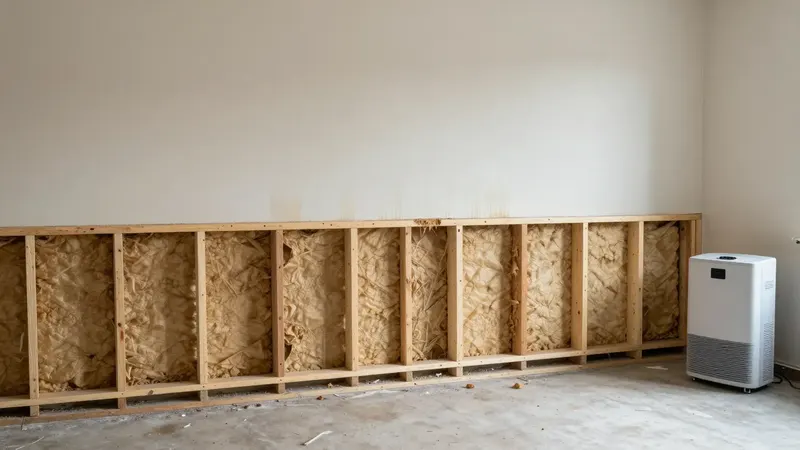
Good water damage repair in Milpitas starts with stopping the leak and mapping moisture with meters before anything is removed. A burst pipe can soak a wall cavity in minutes, so shutting the main fast matters.
Federal disaster declarations that included Santa Clara County
FEMA records show Santa Clara County was included in 5 major disaster declarations for weather or fire events from 2000 through 2026 (2 severe storm, 2 flood, 1 fire, by FEMA incident type). Declarations are made at the county level, so they do not mean every neighborhood in Milpitas was affected. The most recent:
- 2023 – Severe Winter Storms, Straight-line Winds, Flooding, Landslides, and Mudslides (DR-4699)
- 2023 – Severe Winter Storms, Flooding, Landslides, and Mudslides (DR-4683)
- 2020 – Wildfires (DR-4558)
- 2017 – Severe Winter Storms, Flooding, and Mudslides (DR-4308)
- 2017 – Severe Winter Storms, Flooding, and Mudslides (DR-4301)
Source: OpenFEMA Disaster Declarations Summaries, retrieved 2026-10-10. Counts include major disaster (DR) declarations with hurricane, flood, severe storm, tropical storm, fire, tornado, coastal storm, winter or ice storm, mudslide and dam/levee incident types.
Water, fire or storm damage in Milpitas?
Call (866) 937-3230 and tell us what happened at your Milpitas property.
Fire, soot and drifting wildfire smoke
Undeveloped hills east of Interstate 680 dry out each summer, and Santa Clara County was part of the 2020 federal wildfire declaration. Smoke from regional fires can also reach the valley floor. Inside homes, kitchen fires, electrical faults and dryer lint remain the usual causes of soot and smoke damage.
Soot removal depends on the residue type, since greasy kitchen soot and dry ash call for different cleaning. Contractors commonly combine soot cleanup with odor treatment and drying out any water left by firefighting.
When creeks rise or storms back up drains
Properties close to Berryessa Creek and its tributaries, and low areas in the western part of the city near the Bay salt ponds, carry the most flood exposure. Storm drains can also back up during long, heavy rains, pushing water into garages and ground floors.
Outside water is treated as contaminated, so flood damage restoration usually involves extraction, removing wet drywall and padding, cleaning and disinfecting, then drying. Downed trees and roof damage may require storm water damage restoration.
Mold prevention through the rainy months
Winter days average in the 50s, which slows evaporation from wet carpet, drywall and framing. A leak that goes unnoticed during the wet season can lead to mold behind cabinets or under flooring.
Following EPA guidance, homeowners can usually clean areas below roughly 10 square feet themselves. More extensive growth, or anything after creek water or sewage, is normally handled by a contractor under containment; see mold removal.
What Milpitas residents should do first
- Call 911 for fire, gas odor, sparking electrical equipment or injuries, and leave if the building seems unstable.
- Stay away from swollen creeks and do not drive through flooded underpasses.
- Close the main water valve for leaks and keep clear of outlets near standing water.
- Record the damage with photos and video before cleanup begins.
- Ask your insurer or agent about coverage, which depends on your policy and the cause of the water.
Neighborhoods and nearby communities
Areas in and around Milpitas that callers often mention include:
- Midtown
- Civic Center
Nearby communities with their own pages (straight-line distance from Milpitas):
- Santa Clara · 6 mi
- San Jose · 6 mi
- Sunnyvale · 8 mi
- Fremont · 9 mi
- Mountain View · 10 mi
- Union City · 13 mi
Milpitas restoration FAQs
Does Berryessa Creek flood in Milpitas?
Wikipedia notes that in winter the creek can rise high and pose a hazard to surrounding homes. Calera Creek, a tributary, was converted to a ditch in the 1960s specifically to protect new housing from flooding.
How much rain falls in Milpitas?
About 15 inches a year, almost all of it in winter. Long winter storms are the main time to watch creeks, drains and roofs.
Are older Milpitas homes more likely to have leaks?
Many homes date from the 1960s and 1970s, so original water heaters, supply lines and drains may be worn. A plumbing inspection can spot corroded fittings before they fail.
Do you do the repairs?
No. Call (866) 937-3230 and we will try to connect you with an independent restoration contractor serving the area; availability depends on local companies.
Restoration guides
- Water Damage Repair
- Burst Pipe Water Damage
- Soot Removal
- Flood Damage Restoration
- Storm Water Damage Restoration
- Mold Removal