
Victorville sits in the Victor Valley at the southwestern edge of the Mojave Desert, about 36 miles north of San Bernardino over the Cajon Pass. Rain is scarce, averaging just over 6 inches a year, but the desert climate swings from hard freezes to triple-digit heat, and the usually dry Mojave River can still flood.
Fire & Water Energy is not a contractor; our role is referrals only. Call (866) 937-3230 and we will try to connect you with an independent restoration company working in Victorville, though we cannot guarantee one is available. The overview of our process and our referral disclosure go into more depth.
Desert extremes: freezes, wind, heat and monsoon storms
Winter lows average at or below freezing, and the record low is −1°F. Summers average highs near 100°F, with a record of 116°F. High winds are common year-round and strongest in spring, sometimes downing power lines and raising dust storms. Late-summer monsoon thunderstorms can bring flash flooding, lightning and hail, and the wettest single day on record dropped 3.00 inches on February 24, 1998.
San Bernardino County has been included in eight FEMA major disaster declarations since 2000, including Severe Winter Storms, Flooding, and Debris and Mud Flows in 2010 (DR-1884) and 2011 (DR-1952), the 2020 Wildfires declaration (DR-4569) and severe winter storms with straight-line winds in 2023 (DR-4699).
Frozen pipes, evaporative coolers and other leak sources
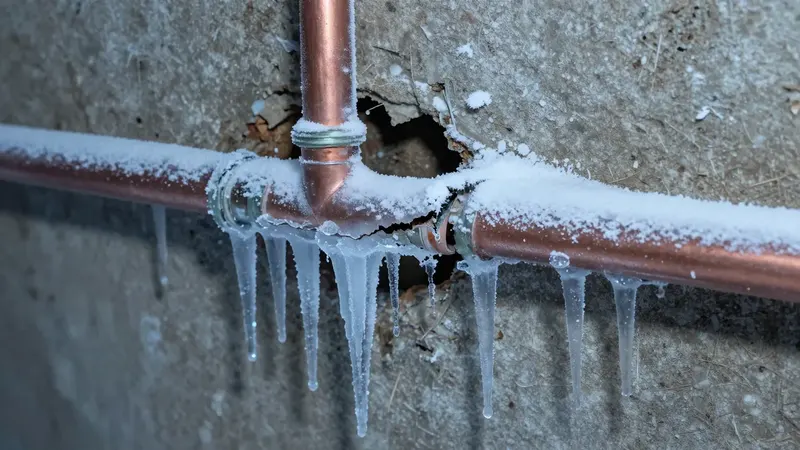
Freezing nights are the big plumbing threat here. Pipes in exterior walls, attics, garages and outdoor hose bibs can split overnight and then leak heavily once they thaw in the afternoon. Summer brings a different set of problems: rooftop evaporative cooler and AC lines that overflow, and water heaters strained by heavy use.
Water damage restoration in Victorville often begins with burst pipe water damage from a freeze. A contractor will typically extract water, remove saturated drywall and insulation and dry with dehumidifiers; desert air helps, but wall cavities and subfloors still need monitored drying. Afterward, water damage repair handles rebuilding.
Federal disaster declarations that included San Bernardino County
FEMA records show San Bernardino County was included in 8 major disaster declarations for weather or fire events from 2000 through 2026 (4 severe storm, 3 fire, 1 flood, by FEMA incident type). Declarations are made at the county level, so they do not mean every neighborhood in Victorville was affected. The most recent:
- 2023 – Severe Winter Storms, Straight-line Winds, Flooding, Landslides, and Mudslides (DR-4699)
- 2020 – Wildfires (DR-4569)
- 2011 – Severe Winter Storms, Flooding, and Debris and Mud Flows (DR-1952)
- 2010 – Severe Winter Storms, Flooding, and Debris and Mud Flows (DR-1884)
- 2007 – Wildfires, Flooding, Mud Flows, and Debris Flows (DR-1731)
- 2005 – Severe Storms, Flooding, Landslides, and Mud and Debris Flows (DR-1585)
Source: OpenFEMA Disaster Declarations Summaries, retrieved 2026-10-10. Counts include major disaster (DR) declarations with hurricane, flood, severe storm, tropical storm, fire, tornado, coastal storm, winter or ice storm, mudslide and dam/levee incident types.
Water, fire or storm damage in Victorville?
Call (866) 937-3230 and tell us what happened at your Victorville property.
Fire and smoke in a windy, dry valley
Dry vegetation and frequent strong winds can push a small fire quickly toward structures, and windblown smoke from fires in the surrounding mountains and desert can reach the valley. Lightning from summer monsoon storms is another ignition source.
Inside a home, smoke and soot travel through HVAC systems and leave residue on walls and contents. Fire damage restoration generally includes board-up, debris removal, cleaning and rebuilding, while soot removal focuses on lifting residue without smearing it.
Flash floods and the Mojave River
Most of the Mojave River flows underground, surfacing near Victorville at the narrows, but heavy storms can send water over its banks. On February 22, 1993, El Niño rains pushed the river onto bridges, with the worst damage at Bear Valley Road between Victorville and Apple Valley. Hard desert soil sheds monsoon downpours quickly, so washes and low streets can fill in minutes.
Desert floodwater carries sand, silt and debris, and should be treated as contaminated. Flood cleanup typically means removing water and sediment, cutting out wet materials, disinfecting and drying. Wind damage to roofs and fences is covered under storm damage cleanup.
Mold is less common here, but not impossible
The arid climate dries exposed surfaces quickly, but water trapped inside walls, under flooring or around a leaking cooler can still grow mold. Homes that stayed closed while a pipe leaked during a winter trip are a classic case.
The EPA's rule of thumb is that areas smaller than about 10 square feet are generally a homeowner job with proper protection. Larger patches, or mold after flooding or sewage, are better handled by mold remediation contractors.
Victorville safety basics
- Call 911 for fire, injuries, gas smells or people caught in floodwater.
- Learn about the county alert and warning system through San Bernardino County Fire OES.
- Never drive into a flooded wash or road; flash flood water can be deeper and faster than it looks.
- Before freezing nights, insulate exposed pipes and disconnect garden hoses; know where your main shutoff is.
- Stay away from downed power lines after windstorms.
- Photograph damage before cleanup and call your insurer or agent; coverage depends on your policy, and flood is typically separate.
More areas: California service areas.
Neighborhoods and nearby communities
Areas in and around Victorville that callers often mention include:
- Old Town Victorville
Nearby communities with their own pages (straight-line distance from Victorville):
- Apple Valley · 6 mi
- Hesperia · 8 mi
- San Bernardino · 30 mi
- Rialto · 30 mi
- Fontana · 32 mi
- Redlands · 34 mi
Victorville restoration FAQs
Do pipes really freeze in Victorville?
Yes. Average winter lows sit at or below freezing, and the city has recorded a low of minus 1 degree. Insulate exposed lines, drip faucets on the coldest nights and leave cabinet doors open on outside walls.
When is flash flooding most likely?
Late-summer monsoon thunderstorms are the main flash flood risk, along with strong winter storms. Desert soil absorbs little water, so washes and low streets fill quickly.
Has the Mojave River flooded in Victorville?
It has. In February 1993, heavy El Nino rains sent the river over bridges, with major damage at Bear Valley Road between Victorville and Apple Valley. Most of the time the river runs underground.
Does wind cause water damage too?
Strong winds can lift shingles, damage rooftop coolers and topple trees, opening the house to rain. After a windstorm, check the roof and attic for daylight or wet insulation.
How does Fire & Water Energy help in Victorville?
We are a referral service at (866) 937-3230. We try to match you with an independent restoration contractor serving the High Desert, who then does and prices the work.
Restoration guides
- Burst Pipe Water Damage
- Water Damage Repair
- Fire Damage Restoration
- Soot Removal
- Flood Cleanup
- Storm Damage Cleanup