
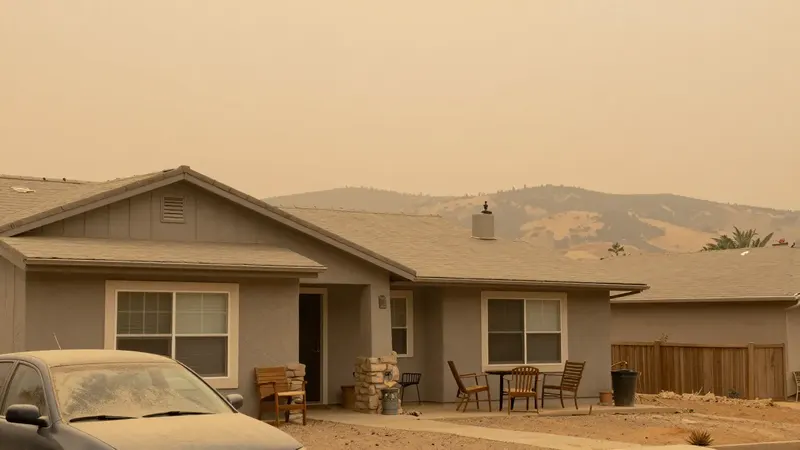
Vacaville sits where the Vaca Mountains meet the Sacramento Valley, with hills to the south and west and open valley to the north and east. Ulatis Creek runs through downtown, the roughly 105-acre Lagoon Valley Lake is the city's largest body of water, and elevations range from about 90 to 300 feet. Summer highs routinely pass 100 degrees, while winters are cool and wet. Fairfield is the closest neighboring city.
Fire & Water Energy refers calls to independent firms rather than doing restoration ourselves. Call (866) 937-3230 and we'll try to find an independent restoration contractor who covers Vacaville, though that depends on local availability. If you want to know how the hand-off works, the how it works page and the referral disclosure lay it out.
Wildfire in the Vaca Mountains and record-setting storms
In August 2020, lightning-sparked fires merged into the LNU Lightning Complex, which burned 363,220 acres across five counties and destroyed 1,491 structures. Its Hennessey Fire rolled down canyons toward Fairfield and Vacaville, prompting mandatory evacuations in northwest Vacaville and destroying farms and homes in the area. Solano County was included in the 2020 Wildfires declaration (DR-4558) and the 2017 Wildfires declaration (DR-4344).
Rain can be extreme as well. The wettest year on record was 1983 with 48.9 inches, January 1916 brought 19.83 inches, and 6.10 inches fell in one day on February 27, 1940. The county was also part of winter storm and flood declarations in 2006, 2017 (two) and 2023 (two).
Triple-digit heat and household leaks
Vacaville had about 36,000 housing units in 2020. Long stretches above 100 degrees put heavy loads on air conditioners, whose condensate lines and drain pans can overflow into ceilings and closets. Water heaters, washer hoses, toilet supply lines and slab plumbing are other frequent leak sources, and the first big winter storm often reveals worn roof flashing.
A contractor doing water damage restoration in Vacaville will typically stop the source, measure moisture, take out wet drywall or flooring and dry the structure with dehumidifiers and air movers. Structural drying focuses on getting framing and subfloors back to normal moisture levels.
Federal disaster declarations that included Solano County
FEMA records show Solano County was included in 7 major disaster declarations for weather or fire events from 2000 through 2026 (3 severe storm, 2 flood, 2 fire, by FEMA incident type). Declarations are made at the county level, so they do not mean every neighborhood in Vacaville was affected. The most recent:
- 2023 – Severe Winter Storms, Straight-line Winds, Flooding, Landslides, and Mudslides (DR-4699)
- 2023 – Severe Winter Storms, Flooding, Landslides, and Mudslides (DR-4683)
- 2020 – Wildfires (DR-4558)
- 2017 – Wildfires (DR-4344)
- 2017 – Severe Winter Storms, Flooding, and Mudslides (DR-4308)
- 2017 – Severe Winter Storms, Flooding, and Mudslides (DR-4301)
Source: OpenFEMA Disaster Declarations Summaries, retrieved 2026-10-10. Counts include major disaster (DR) declarations with hurricane, flood, severe storm, tropical storm, fire, tornado, coastal storm, winter or ice storm, mudslide and dam/levee incident types.
Water, fire or storm damage in Vacaville?
Call (866) 937-3230 and tell us what happened at your Vacaville property.
Smoke, ash and fire damage after the 2020 fires
Homes that escaped the flames in 2020 could still be left with smoke residue in attics, insulation, ducts and fabrics. Ash that settles on roofs and patios can also wash into gutters and drains with the next rain.
Smoke damage cleanup often involves HEPA vacuuming, surface cleaning, duct cleaning and odor treatment. For structures damaged by fire, fire damage restoration includes debris removal, soot cleanup and rebuilding.
Burn scars, creeks and winter runoff
Hills that burned can shed more water and debris when heavy rain follows. Runoff collects in Ulatis Creek and other minor creeks, and low-lying lots or homes with driveways sloping inward can take on water during strong storms.
Floodwater is considered contaminated. Flood cleanup involves pumping out water, removing saturated materials, sanitizing and drying. Wind damage, fallen limbs and roof openings come under storm damage cleanup.
Cool, wet winters and mold
Summer heat dries most surfaces quickly, but in the cool, wet months, leaks behind walls or under floors can stay damp long enough for mold to grow. Crawl spaces and closets on exterior walls are common trouble spots.
EPA guidance says homeowners can usually clean up mold covering less than about 10 square feet. Larger areas, hidden growth or mold after floodwater should go to mold remediation contractors who contain the work area and confirm drying.
Protecting your household first
- Call 911 for fire, gas smells, injuries or rising water, and evacuate immediately when ordered.
- Follow evacuation orders and updates from Solano County and city officials.
- Keep windows closed and replace HVAC filters during smoke events.
- Photograph damage room by room and keep all receipts.
- Contact your insurer or agent; coverage depends on your policy, and flood damage typically requires separate coverage.
For Fairfield, Davis and other locations, see our California service areas.
Neighborhoods and nearby communities
Areas in and around Vacaville that callers often mention include:
- Downtown
- Lagoon Valley
Nearby communities with their own pages (straight-line distance from Vacaville):
Vacaville restoration FAQs
Was Vacaville affected by the 2020 wildfires?
Yes. The Hennessey Fire, part of the LNU Lightning Complex, rolled down canyons toward the city in August 2020, leading to mandatory evacuations in northwest Vacaville and destroying farms and homes in the area.
How do I get smoke smell out after a nearby fire?
Replace HVAC filters, wash fabrics and wipe hard surfaces. If odor persists in insulation or ducts, a smoke cleanup contractor can assess and clean them.
Can extreme heat cause water damage?
Indirectly, yes. With summer highs routinely over 100 degrees, air conditioners produce a lot of condensate, and a clogged drain line can overflow into ceilings or walls.
Is flooding a risk after a wildfire?
Burned hillsides absorb less water, so heavy rain can produce more runoff and debris. Keep gutters and drains clear and watch for official warnings during storms.
Do you perform the cleanup yourselves?
No. We try to connect Vacaville callers with an independent contractor who decides whether they can take the job. Ask about licensing, insurance and written estimates.
Restoration guides
- Smoke Damage Cleanup
- Fire Damage Restoration
- Water Damage Restoration
- Structural Drying
- Flood Cleanup
- Mold Remediation