
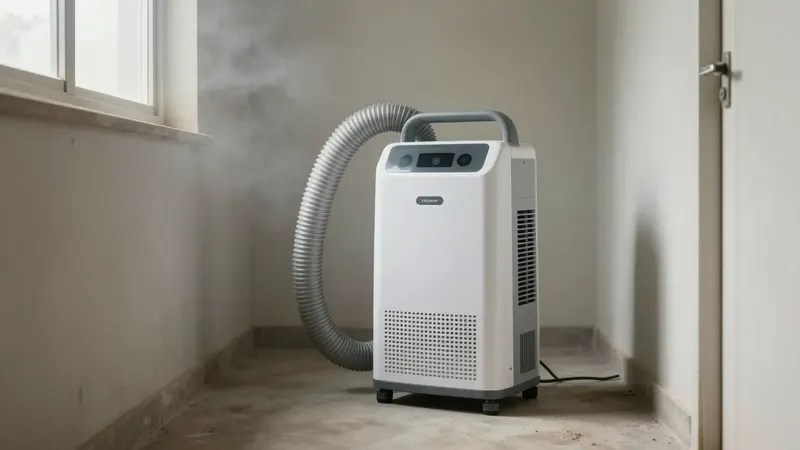
People searching for smoke odor removal usually already cleaned. The walls look fine, but the house still smells like a campfire on humid days or whenever the heat kicks on. That persistence is the problem this page addresses: odor molecules and fine residue that have worked into porous materials and hidden spaces.
Fire & Water Energy is a referral service, not a contractor. Call (866) 937-3230 and we'll try to connect you with an independent restoration contractor in your area who handles deodorization, subject to provider availability.
Why Smoke Smell Hangs On
Odor tends to persist when its source is still present. Common hiding places:
- Insulation and the back side of drywall inside wall cavities.
- HVAC ducts, return plenums, and the air filter.
- Carpet pad, upholstery foam, mattresses, and curtains.
- Unsealed wood framing, subfloors, and attic sheathing.
- Closets and cabinets that stayed closed during cleaning.
Heat and humidity can make smell stronger, which is why odor sometimes seems to return weeks later.
What to Do and Avoid Before Treatment
Start with general safety: re-enter only after the fire department says the home is safe, as Ready.gov advises, and call 911 for anything hazardous.
- Do ventilate with outdoor air when outdoor air quality allows.
- Do replace the HVAC filter; EPA suggests MERV 13 or the highest rating your system can accommodate.
- Do bag smoky textiles separately until they can be cleaned.
- Do not rely on air fresheners or candles, which only mask the smell.
- Do not run an ozone generator in an occupied home. EPA states that no federal agency has approved these devices for occupied spaces and that ozone can damage the lungs.
- People with asthma or other respiratory conditions should stay out of rooms being treated.
How Contractors Usually Approach Deodorization
- Confirm cleaning is complete. Deodorizing over remaining residue rarely lasts, so soot removal and surface cleaning come first.
- Find the source. Contractors check cavities, ducts, attics, and soft goods to locate where odor is coming from.
- Remove what cannot be saved. Smoky insulation or carpet pad is often replaced rather than treated.
- Clean the HVAC system where justified, since EPA advises duct cleaning only as needed.
- Apply deodorization. Methods may include thermal fogging, hydroxyl generators, or high-concentration ozone in a vacated building.
- Seal porous framing with an odor-blocking primer where needed.
- Re-check. Re-inspect after a period of normal heat and humidity to confirm odor has not returned.
Need help with smoke odor removal?
Call (866) 937-3230 and tell us what happened and where.
A Closer Look at Ozone
Ozone is often marketed for smoke odor, so it deserves a careful explanation. EPA's ozone generator guidance says that at levels within public health standards ozone is generally ineffective and may mask odors rather than remove them. It also notes that high-concentration ozone is sometimes used in unoccupied spaces after fire damage, but only under controlled conditions where no people or pets are exposed, and that ozone can harm rubber, artwork, and plants. If a contractor proposes ozone, ask how they will keep everyone out, how long they will wait before re-entry, and what they will do to protect sensitive belongings.
Insurance and Documentation for Odor Claims
Odor is hard to photograph, so written notes matter. Coverage depends on your policy; check with your insurer or agent about how lingering smoke odor is handled.
- Keep a dated log of where and when you notice the smell.
- Save written estimates and invoices for each deodorization step.
- Ask whether your insurer wants a re-inspection before closing out the claim.
To judge whether treatment worked, live in the home for several days and run the heat or air conditioning as usual. If the smell comes back with warmth or humidity, note the date and room, because the source may not have been fully addressed.
Choosing an Odor Removal Contractor
- Do you meet the licensing rules my state or city sets for this kind of work, and what insurance do you carry?
- Do your technicians hold IICRC certification, and do you follow IICRC S700?
- How will you find the odor source before treating it?
- Which deodorization method do you recommend, and what are its safety precautions?
- Is follow-up treatment included in the written estimate if odor returns?
If a musty smell appears alongside the smoke, ask about moisture and mold remediation. Odor treatment is one step in fire damage restoration; visible residue belongs to smoke damage cleanup. See how it works for the referral process.
Frequently asked questions
Why does my house still smell like smoke after cleaning?
The source is probably still present in a place cleaning did not reach, such as insulation, ducts, carpet pad, or unsealed wood. Heat and humidity can make the odor more noticeable. A contractor can help track down the source.
Are ozone generators safe for smoke odor?
EPA says no federal agency has approved ozone generators for occupied spaces and that ozone can damage the lungs. High concentrations are sometimes used in vacant buildings after fires, but only under controlled conditions with no people or pets present.
Will painting the walls get rid of smoke smell?
Regular paint alone usually does not. Surfaces need to be cleaned first, and contractors commonly use an odor-blocking primer before finish paint.
Can smoke smell be removed from clothes and furniture?
Many fabrics respond to professional cleaning, though results vary. Foam cushions and mattresses absorb odor deeply and are sometimes replaced. Keep smoky items bagged separately until they are treated.
Can smoke odor and mold smells get confused?
Sometimes. Firefighting water can leave materials damp long enough for mold to grow, which produces its own musty smell. If odor changes from smoky to musty, ask about moisture readings and see whether mold remediation is needed.
Does Fire & Water Energy perform odor treatment?
No. Fire & Water Energy is a referral service that tries to connect callers with independent contractors, depending on who is available in the area.
Related services
Find smoke odor removal help by state
- Florida
- Georgia
- Texas
- Louisiana
- Alabama
- Mississippi
- California
- South Carolina
- North Carolina
- Tennessee
- Arizona
- New Mexico
- Virginia
- Maryland
- Oregon
- Washington