
Named for its spot beside the Santa Ana River, Riverside spreads from Mount Rubidoux and the riverbank toward Box Springs Mountain, at roughly 800 to 860 feet. The climate is semi-arid, with a little over 9 inches of rain in a typical year, mostly between November and April.
We run a referral service. Fire & Water Energy does not repair property; instead, a call to (866) 937-3230 lets us try to connect you with an independent restoration contractor that takes work in Riverside, depending on local availability. What happens after you dial is described on how it works, with fuller terms in our referral disclosure.
Fire-prone hills, extreme heat and burst-prone winters
Temperatures have reached 118°F three times, most recently on July 6, 2018. Freezing days are rare, about three or four a year, though the record low is 18°F from January 1911. Rainfall swings sharply; the 1940–41 rain year brought 22.72 inches, more than double normal.
Riverside County shows up in ten FEMA major disaster declarations since 2000. Fire declarations in 2003, 2007 and 2008 were paired with flooding, mudflows and debris flows, and storm or flood declarations followed in 2005, 2010, 2011, 2017 and 2019 (DR-4431). Tropical Storm Hilary added another declaration in 2023 (DR-4750).
Leaks that start with cooling systems and aging pipes
Long, hot summers keep air conditioners and evaporative coolers running for months, so clogged condensate lines and failed pans are a regular source of ceiling and wall stains. Slab leaks, water heater failures and washing machine hoses are also common in the city's many single-family homes.
Historic areas such as the Wood Streets and the blocks around the Mission Inn hold older houses, and the Old Riverside Foundation runs an annual vintage home tour, a sign of how much older housing remains. Original plumbing in those homes can be fragile. Water damage restoration in Riverside usually means stopping the leak, extracting water, checking for hidden moisture and drying. If water is pooling right now, emergency water removal is the first stage; water damage restoration explains the rest.
Federal disaster declarations that included Riverside County
FEMA records show Riverside County was included in 10 major disaster declarations for weather or fire events from 2000 through 2026 (4 severe storm, 3 fire, 2 flood, 1 hurricane, by FEMA incident type). Declarations are made at the county level, so they do not mean every neighborhood in Riverside was affected. The most recent:
- 2023 – Tropical Storm Hilary (DR-4750)
- 2019 – Severe Winter Storms, Flooding, Landslides, and Mudslides (DR-4431)
- 2017 – Severe Winter Storms, Flooding, and Mudslides (DR-4305)
- 2011 – Severe Winter Storms, Flooding, and Debris and Mud Flows (DR-1952)
- 2010 – Severe Winter Storms, Flooding, and Debris and Mud Flows (DR-1884)
- 2008 – Wildfires (DR-1810)
Source: OpenFEMA Disaster Declarations Summaries, retrieved 2026-10-10. Counts include major disaster (DR) declarations with hurricane, flood, severe storm, tropical storm, fire, tornado, coastal storm, winter or ice storm, mudslide and dam/levee incident types.
Water, fire or storm damage in Riverside?
Call (866) 937-3230 and tell us what happened at your Riverside property.
Wildfire smoke, ash and structure fires
With brush-covered hills and open space at the city's edges, smoke and ash are a familiar part of fire season. Ash can blow into garages and attics, and smoke odor can soak into carpets, drapes and duct systems even when flames stay miles away.
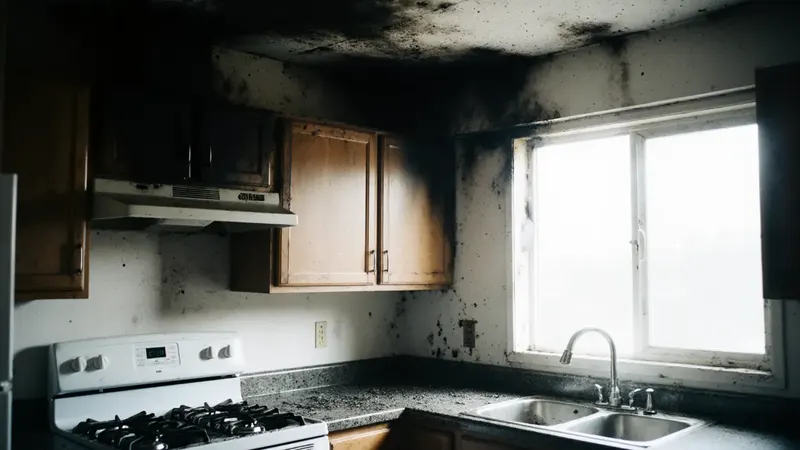
For structure fires, contractors usually tarp or board openings, clear debris, clean soot with methods suited to each surface, run air filtration and dry areas soaked by firefighting. Severe losses often need property damage reconstruction. Related: smoke damage cleanup and fire damage restoration.
Storm runoff, mudflows and the burn-scar link
Several of the county's declarations combine wildfires with flooding and debris flows, reflecting how burned slopes can shed water and mud during the next rainy season. Short, intense storms can also overwhelm yard drainage and push water under doors, especially on properties below hillsides.
Treat outside water as contaminated. Flood damage restoration contractors typically remove water and mud, cut out saturated drywall and insulation, sanitize and dry before rebuilding. Wind and rain damage to roofs may fall under storm damage cleanup.
Can mold grow in such a dry place?
Yes, wherever water lingers. An unnoticed slab leak or a cooler line dripping into a wall can feed mold no matter how dry the outdoor air is. Bathrooms, laundry rooms and spaces near water heaters are frequent problem spots.
EPA guidance suggests homeowners can usually handle mold smaller than about 10 square feet. Larger areas, mold after floodwater, or any growth in a home with someone sensitive to it are better left to a mold remediation contractor using containment.
Protecting your Riverside household first
- Call 911 for any fire, smoke inside, gas leak, downed power line or injury.
- Sign up for Alert RivCo through the Riverside County Emergency Management Department and follow evacuation orders right away.
- On extreme heat days, check on neighbors and keep cooling equipment maintained.
- For water damage, close the main valve and keep away from wet electrical outlets.
- Take photos before cleanup and call your insurer or agent. Coverage depends on your policy; flood losses usually need separate coverage.
Neighboring Inland Empire communities appear under California service areas.
Neighborhoods and nearby communities
Areas in and around Riverside that callers often mention include:
- Downtown
- Wood Streets
- Canyon Crest
- Magnolia Center
- Arlington
- Arlington Heights
- Arlanza
- La Sierra
- La Sierra Hills
- Alessandro Heights
- Hawarden Hills
- Mission Grove
- Orangecrest
- Casa Blanca
- Eastside
- Northside
- University
- Victoria
- Sycamore Canyon Park
- Presidential Park
- Ramona
- Grand
- Airport
Nearby communities with their own pages (straight-line distance from Riverside):
- Moreno Valley · 10 mi
- Fontana · 10 mi
- Rialto · 11 mi
- Corona · 11 mi
- San Bernardino · 12 mi
- Redlands · 14 mi
Riverside restoration FAQs
Which warning system should I sign up for as a Riverside resident?
The county uses Alert RivCo to warn residents about emergencies. You can register through the Riverside County Emergency Management Department website, which also has planning guides for wildfire, flooding, earthquakes and extreme heat.
Why does the county's flood risk go up after a wildfire?
Burned hillsides absorb less water, so heavy rain can turn into fast runoff carrying mud and debris. Several FEMA declarations for Riverside County list wildfires together with flooding and mudflows. If you live below a burned slope, plan ahead for the next rainy season.
My house in the Wood Streets is very old. What should I watch for?
Older homes may have original pipes, roofs and wiring that are more likely to fail. Watch for stains, musty smells and rising water bills. Before any demolition, ask the contractor whether testing for lead paint or asbestos is needed.
Does smoke damage happen even if my house did not burn?
Yes. Smoke and ash from nearby wildfires can settle on surfaces and enter through vents, leaving odor and residue. Light cases may clear with ventilation and filter changes; heavier residue often needs professional cleaning.
Can you find someone in Corona or Moreno Valley too?
Many independent restoration contractors cover several Inland Empire cities, including Corona, Moreno Valley and Colton. When you call (866) 937-3230 we try to connect you with one that serves your address, but availability is up to them.
Restoration guides
- Smoke Damage Cleanup
- Fire Damage Restoration
- Property Damage Reconstruction
- Water Damage Restoration
- Flood Damage Restoration
- Mold Remediation