
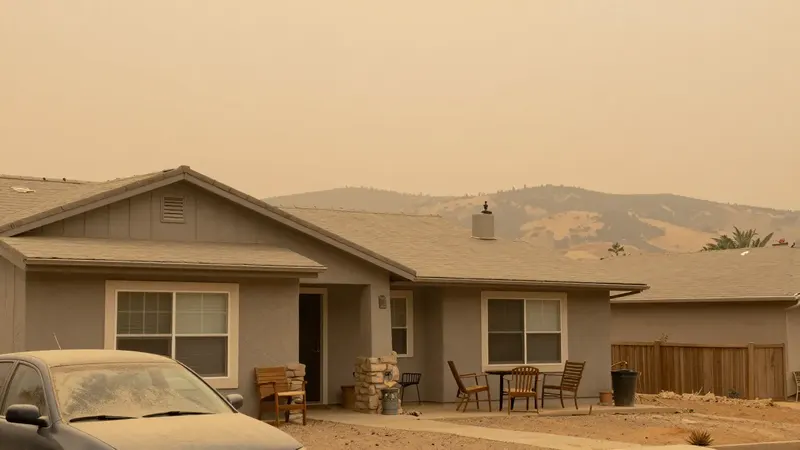
Ventura sits on the Pacific shore between two rivers: the Ventura River runs up a narrow, steep-sided valley on the west side, and the Santa Clara River marks the southern city limit. Steep foothills rise behind the north part of town, while East Ventura spreads across the flat edge of the Oxnard Plain. That mix of slopes, canyons and coastline shapes what kind of damage a household is likely to face.
Fire & Water Energy does not repair homes itself; it runs a referral line. Dial (866) 937-3230 and we will try to connect you with an independent restoration contractor who works in Ventura; whether one is available depends on local providers. Before calling, you can skim how a call is handled or read the referral disclosure in full.
Rivers, barrancas, Santa Ana winds and the coast
Rain here averages roughly 16 inches a year, almost all of it in winter, with January and February the wettest months and summers close to dry. Several barrancas carry runoff from the foothills toward the Santa Clara River, the same channel that carried the deadly 1928 St. Francis Dam flood to the sea. A 1995 storm wrecked much of the Ventura Pier, which was later rebuilt.
Fire is the other big hazard. The Thomas Fire began near Santa Paula in December 2017, burned into hillside neighborhoods and destroyed 504 residences in the city. FEMA's DR-4353 declaration covered the wildfires plus the flooding, mudflows and debris flows that followed, with an incident period running into January 2018. The county has appeared in nine FEMA major disaster declarations since 2000, including winter storm declarations in 2023 and 2024. Geologists also flag the Ventura Fault as capable of a strong earthquake and a local tsunami.
Common leak sources in Ventura houses
Because hard freezes are rare (the record low is 27°F), most indoor water problems come from failed supply hoses, water heaters, toilet and sink connections, slab leaks and roofs that only get tested during a few big storms each year. Older buildings near downtown, where much of the core dates to the 1920s oil boom, may still have aging drain and supply lines.
A contractor handling water damage restoration in Ventura will usually trace the source, take moisture readings, pull up wet padding or baseboards, and set drying equipment. Where a roof leak has stained drywall overhead, ask about ceiling water damage repair along with the dry-out.
Federal disaster declarations that included Ventura County
FEMA records show Ventura County was included in 9 major disaster declarations for weather or fire events from 2000 through 2026 (4 severe storm, 4 fire, 1 flood, by FEMA incident type). Declarations are made at the county level, so they do not mean every neighborhood in Ventura was affected. The most recent:
- 2024 – Severe Winter Storms, Tornadoes, Flooding, Landslides, and Mudslides (DR-4769)
- 2023 – Severe Winter Storms, Straight-line Winds, Flooding, Landslides, and Mudslides (DR-4699)
- 2023 – Severe Winter Storms, Flooding, Landslides, and Mudslides (DR-4683)
- 2018 – Wildfires (DR-4407)
- 2018 – Wildfires, Flooding, Mudflows, and Debris Flows (DR-4353)
- 2007 – Wildfires, Flooding, Mud Flows, and Debris Flows (DR-1731)
Source: OpenFEMA Disaster Declarations Summaries, retrieved 2026-10-10. Counts include major disaster (DR) declarations with hurricane, flood, severe storm, tropical storm, fire, tornado, coastal storm, winter or ice storm, mudslide and dam/levee incident types.
Water, fire or storm damage in Ventura?
Call (866) 937-3230 and tell us what happened at your Ventura property.
After a house fire or a hillside blaze
Homes that survived the Thomas Fire still had ash and smoke to deal with, and that pattern repeats whenever dry Santa Ana winds push a fire toward town. Fine soot settles into carpets, attic insulation, ductwork and closets even when flames never reach the structure.
Ask any company you hire how it plans to test and clean surfaces, whether it will clean or replace HVAC filters and ducts, and how it handles lingering odor. Our pages on smoke damage cleanup and fire damage restoration describe the usual steps.
Mud, debris and runoff after winter storms
Burned slopes shed water and sediment quickly, which is why the 2017–2018 federal declaration paired wildfire with mudflows and debris flows. Properties below canyons or along the river corridor on the west side should treat any incoming water as contaminated: floodwater can carry sewage, fuel and soil.
Flood cleanup generally starts with removing mud and standing water, then cutting out soaked drywall and insulation before disinfecting and drying. Wind damage to roofs or fences during the same storms falls under storm damage cleanup.
Keeping mold out of coastal homes
Marine air keeps humidity up near the harbor and beach, so wet wood and drywall may dry slowly without dehumidifiers. Mold can start on damp materials within a day or two.
The EPA suggests that a small patch, under about 10 square feet, is often something a homeowner can clean; larger growth, or mold following sewage or floodwater, is a job for professionals. See mold remediation for what containment and removal involve.
First steps for Ventura residents
- Call 911 if there is fire, injury, a gas smell or a building that looks unstable.
- Shut off water at the main valve, and turn off power only if you can reach the panel while standing somewhere dry.
- Obey evacuation orders from county officials during fires and storms, and stay away from moving water in barrancas.
- Take photos or video of wet rooms and ruined belongings before anything is hauled off, and save receipts for fans, tarps or a motel stay.
- Call your insurer or agent early; coverage depends on your policy and the cause of the damage.
Hiring help you can trust
California licenses construction contractors at the state level, so ask any company for its license number and check it before signing. Request a written scope of work, ask who will do the work, and ask whether the contractor holds IICRC certification for water, fire or mold jobs.
Neighborhoods and nearby communities
Areas in and around Ventura that callers often mention include:
- Downtown
- Midtown
- East Ventura
- Montalvo
- Ventura Harbor
- Ventura Avenue
Nearby communities with their own pages (straight-line distance from Ventura):
- Oxnard · 9 mi
- Santa Barbara · 25 mi
- Thousand Oaks · 27 mi
- Simi Valley · 29 mi
- Santa Clarita · 44 mi
- Santa Monica · 49 mi
Ventura restoration FAQs
When is flood risk highest in Ventura?
Most of the year's rain falls in winter, and January and February are usually the wettest months. Risk climbs further when heavy rain follows a wildfire, because burned hillsides shed water and debris fast, as happened after the Thomas Fire.
My house didn't burn, but smoke got in during a fire. What should I do?
Avoid wiping soot with a damp cloth, which can smear it deeper. Change HVAC filters, ventilate when the air outside is clean, and consider professional cleaning for upholstery, ducts and porous surfaces that still smell of smoke.
Are homes near the barrancas or the west-side river more exposed?
Properties close to drainage channels and river corridors can see faster runoff and mud during heavy storms. Check your flood zone, keep gutters and drains clear before the rainy season, and leave early if officials order an evacuation.
What does the phone number on this page actually do?
We are a referral service. When you call (866) 937-3230, we try to connect you with an independent restoration contractor serving Ventura, but we do not do the work and cannot promise who is available.
Restoration guides
- Fire Damage Restoration
- Smoke Damage Cleanup
- Water Damage Restoration
- Flood Cleanup
- Storm Damage Cleanup
- Mold Remediation