
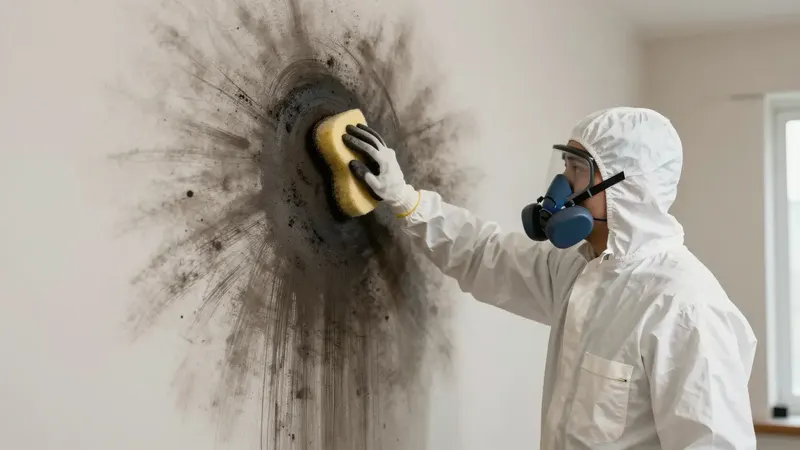
If you are searching for soot removal, you are probably looking at a specific surface: a blackened ceiling over the stove, a stained fireplace wall, or dark streaks on cabinets and trim. The goal is narrow and practical: get the deposit off without grinding it deeper into paint, grout, or fabric.
Fire & Water Energy is a referral service, not a contractor. To look for help, call (866) 937-3230 and we'll try to connect you with an independent restoration contractor serving your area; who is available depends on local providers.
Common Soot Problems Homeowners Face
- Black film on ceilings and upper walls after a kitchen fire.
- Puff-back from an oil furnace that coats a basement or an entire floor.
- Streaks above a fireplace or wood stove.
- Dark lines along carpet edges and behind furniture, where air carried particles.
- Greasy residue on cabinets after a cooking fire.
- Soot on textured or popcorn ceilings, which are hard to clean.
Safety and What Not to Do
The U.S. Fire Administration notes that soot may contain substances that could make you sick. Only go back in once the fire department clears the building, and call 911 if you notice gas odors or other hazards.
- Do wear gloves, long sleeves, and an N95 respirator, the protection EPA recommends for handling ash.
- Do use a HEPA-type vacuum if you vacuum loose particles, as EPA advises, holding the nozzle slightly off the surface.
- Do not wipe soot with a wet rag or spray cleaner first; moisture can drive it into porous surfaces.
- Do not use a regular household vacuum, which can blow fine particles back into the room.
- Do not paint over soot; it can bleed through and keep odor trapped.
- Keep children and anyone with asthma or heart disease out of the area.
How Professionals Typically Remove Soot
A reputable company will usually work from least aggressive to most aggressive:
- Identify the soot. Dry, powdery soot from fast, hot fires behaves differently from oily soot left by slower, smoldering fires or burned plastics.
- Contain and filter. Plastic barriers and HEPA air scrubbers keep particles from drifting.
- HEPA vacuum. Loose particles come off before anything touches the surface.
- Dry cleaning sponge. Chemically treated dry sponges lift remaining dry soot from walls and ceilings.
- Wet cleaning. Detergents or degreasers matched to the residue tackle oily soot, tested first on a hidden spot.
- Specialty methods. Some contractors use abrasive blasting or other techniques on framing or masonry.
- Seal and finish. Once clean, stain-blocking primers prepare surfaces for paint.
Need help with soot removal?
Call (866) 937-3230 and tell us what happened and where.
Documenting Soot Damage for Your Insurer
Soot can lighten once cleaning starts, so capture it first. Coverage depends on your policy; check with your insurer or agent before authorizing work.
- Take wide shots and close-ups of each affected surface, including inside cabinets.
- Write down which rooms and items are affected before discarding anything, following Ready.gov's advice to inventory damaged property.
- Ask for written cleaning estimates and confirm who pays, as the USFA guide recommends.
Surfaces That Need Extra Care
Not every material tolerates the same cleaning, which is why testing a small hidden area comes first.
- Flat or matte paint absorbs residue quickly and may need repainting even after cleaning.
- Textured and popcorn ceilings can crumble under sponges; some older textures may also contain asbestos, so ask about testing before disturbing them.
- Brick, stone, and grout are porous and often need specialized cleaners.
- Unfinished wood soaks up oily soot and is sometimes sanded or sealed rather than washed.
- Electronics and appliances should stay unplugged until checked, because residue can settle inside them.
Vetting a Soot Removal Contractor
- Do you meet any licensing requirement my state or city has for this work?
- What insurance do you carry, and can I see certificates?
- How do you test soot type before choosing a cleaning method?
- Do your technicians hold IICRC certification, and do you follow IICRC S700?
- What happens to surfaces that cannot be cleaned, and is replacement in the estimate?
- Will you provide a written scope and estimate before starting?
Our referral disclosure explains how we connect callers with providers.
Soot Removal Versus Smoke Cleanup and Odor Treatment
Smoke damage cleanup is the broader job of treating residue across a home, including light films and HVAC concerns. Soot removal is the hands-on technique for heavy black deposits. Once surfaces are clean, smoke odor removal deals with lingering smell, and the overall project is described under fire damage restoration.
Frequently asked questions
Why does soot smear when I try to wipe it?
Soot particles are very fine, and oily soot contains residues that spread when wet. Water or spray cleaners can push them deeper into paint and porous surfaces. Professionals typically vacuum and dry-sponge before any wet cleaning.
Is soot harmful to breathe?
Soot and fire residue may contain substances that can make you sick, according to the U.S. Fire Administration. Wear an N95 respirator and gloves if you must handle it, and keep people with asthma or heart conditions away.
Can I just paint over soot stains?
Painting directly over soot usually fails; stains and odor can bleed through. Surfaces generally need cleaning first, then a stain-blocking primer before finish paint.
What is furnace puff-back?
Puff-back happens when an oil burner misfires and pushes soot through the ducts or into the room. It can coat large areas with fine, oily residue. Turn the system off and have it serviced before cleaning.
How do I tell dry soot from oily soot?
Dry soot tends to be powdery and smudges like charcoal, while oily soot feels sticky and smears into dark streaks. The difference affects which cleaning method works. A contractor can test the residue before choosing an approach.
Can soot be removed from fabric and upholstery?
Often, but results vary with the fabric and residue. Contractors commonly use specialized laundering or dry-cleaning methods. Avoid washing heavily sooted items at home before getting advice.
Related services
Find soot removal help by state
- Florida
- Georgia
- Texas
- Louisiana
- Alabama
- Mississippi
- California
- South Carolina
- North Carolina
- Tennessee
- Arizona
- New Mexico
- Virginia
- Maryland
- Oregon
- Washington