
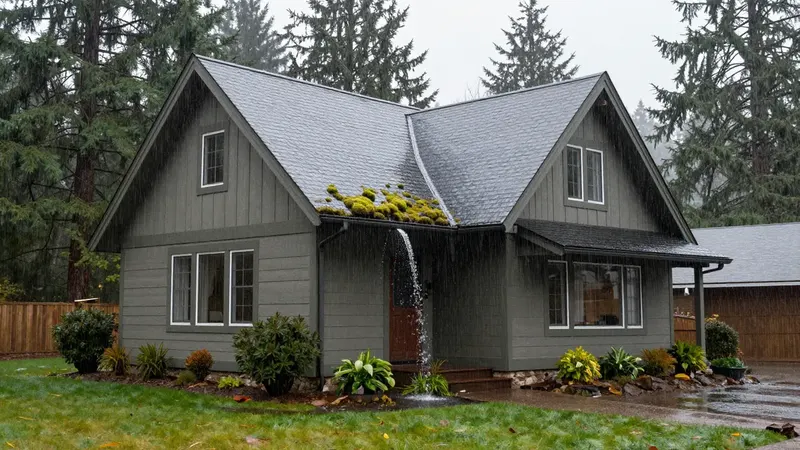
Portland straddles the Willamette River just upstream of where it joins the Columbia, with the West Hills on one side and volcanic buttes such as Mount Tabor on the other. Most of the city lies in Multnomah County, with small slices in Clackamas and Washington counties. That mix of riverfront flats and steep slopes means property damage here can range from a soggy basement to a hillside drainage problem.
Fire & Water Energy is a referral service, not a contractor. Call (866) 937-3230 and we'll try to connect you with an independent restoration contractor serving your part of town, whether that's St. Johns, Sellwood or somewhere in between. Availability depends on local providers. See how it works and our referral disclosure.
Rain, ice and heat: what the local climate does to buildings
According to Wikipedia's climate summary, the airport averages about 36.9 inches of precipitation a year and downtown about 44 inches, spread over roughly 157 wet days. November through January is the soggiest stretch. Freezing nights can show up anywhere from mid-November to mid-March, averaging about 32 a year, and snow is light in most winters but heavy in some.
Multnomah County has been part of several FEMA major disaster declarations since 2000, including severe winter storms in 2004 (DR-1510), record and near-record snow in 2009 (DR-1824), winter storms with flooding and landslides in 2016 (DR-4258), wildfires and straight-line winds in 2020 (DR-4562), and winter storms with landslides in 2024 (DR-4768). Summers bring their own extremes: the city hit an all-time high of 116°F on June 28, 2021. The 1948 Vanport flood, which displaced many residents, is part of local history too.
Leaks, wet crawlspaces and frozen lines: water damage restoration in Portland
Months of steady drizzle find every weak point: clogged gutters, failing roof flashing, window seals and grading that sends runoff toward the foundation. Many homes have basements or crawlspaces where moisture builds slowly and goes unnoticed until floors cup or a musty smell appears. When a cold snap arrives, pipes in unheated crawlspaces, garages and exterior walls are the usual casualties.
If you're searching for water damage restoration in Portland, it helps to know what a typical contractor does: find and stop the source, extract standing water, measure moisture in framing and subfloors, then set up structural drying equipment and recheck readings until materials are dry. Afterward, water damage repair replaces drywall, flooring or trim that couldn't be saved. For a split supply line, see burst pipe water damage.
Federal disaster declarations that included Multnomah County
FEMA records show Multnomah County was included in 5 major disaster declarations for weather or fire events from 2000 through 2026 (4 severe storm, 1 fire, by FEMA incident type). Declarations are made at the county level, so they do not mean every neighborhood in Portland was affected. The most recent:
- 2024 – Severe Winter Storms, Straight-line Winds, Landslides, and Mudslides (DR-4768)
- 2020 – Wildfires and Straight-line Winds (DR-4562)
- 2016 – Severe Winter Storms, Straight-line Winds, Flooding, Landslides, and Mudslides (DR-4258)
- 2009 – Severe Winter Storm, Record and Near Record Snow (DR-1824)
- 2004 – Severe Winter Storms (DR-1510)
Source: OpenFEMA Disaster Declarations Summaries, retrieved 2026-10-10. Counts include major disaster (DR) declarations with hurricane, flood, severe storm, tropical storm, fire, tornado, coastal storm, winter or ice storm, mudslide and dam/levee incident types.
Water, fire or storm damage in Portland?
Call (866) 937-3230 and tell us what happened at your Portland property.
Smoke from house fires and regional wildfires
Indoor fires leave soot on walls, ceilings and inside ductwork, and the odor tends to linger in soft furnishings long after the flames are out. Contractors commonly start by securing the structure, then remove debris, clean soot with methods matched to each surface, and treat odor with air scrubbing and sealing. Read more about fire damage restoration and smoke damage cleanup.
The regional PublicAlerts hazard pages list wildfire and wildfire smoke among the threats facing the Portland-Vancouver area, and a 2020 FEMA declaration covering the county involved wildfires and straight-line winds. Fine ash can settle on decks, filters and attics even when no flames come close, so changing HVAC filters and asking a contractor about smoke residue is reasonable after a heavy smoke event.
When the river rises or the hillside moves
Low areas near the Willamette and Columbia, plus slopes in the West Hills, face different storm problems. Heavy winter rain can saturate soil, overwhelm drains and push water into lower levels, while several county declarations specifically named landslides and mudslides.
Floodwater from outside is treated as contaminated, so a reputable company will usually remove soaked porous materials rather than just drying them. Related pages: flood cleanup, basement flood cleanup and storm damage cleanup.
Keeping mold in check through the wet season
With so many cloudy, damp days, materials that stay wet for more than a day or two can start growing mold, especially in crawlspaces, bathrooms and behind furniture on exterior walls. The fix always starts with the moisture source; cleaning without drying just resets the clock.
EPA guidance says a homeowner can often handle a moldy patch under about 10 square feet, while larger areas, or growth tied to contaminated water or HVAC systems, call for a qualified professional. Larger jobs typically involve containment, HEPA filtration and removal of affected materials. See mold remediation.
First moves for Portland households after damage
- For fire, gas odors, downed power lines or anyone hurt, call 911 and get out.
- Shut off water at the main if a pipe has failed, and turn off power to wet areas only if you can do so without standing in water.
- Sign up for alerts through PublicAlerts and review preparedness material from the Portland Bureau of Emergency Management.
- Photograph damage, keep receipts and save damaged items until your insurer says otherwise. Coverage depends on your policy; check with your insurer or agent.
Vetting an independent contractor in Oregon
Before hiring, ask for a written scope and estimate, proof of insurance, and whether the work requires a state or city license; check that on the relevant official site yourself. It's fair to ask whether the contractor holds IICRC certification and follows standards such as S500 for water and S520 for mold. Request moisture readings at the start and finish so you can see the drying actually happened.
Neighborhoods and nearby communities
Areas in and around Portland that callers often mention include:
- Pearl District
- Nob Hill
- Lloyd District
- Hollywood District
- St. Johns
- Sellwood
- Lents
- Hawthorne District
- Albina
- South Waterfront
- Brooklyn
- Belmont
Nearby communities with their own pages (straight-line distance from Portland):
- West Haven-Sylvan · 4 mi
- Milwaukie · 6 mi
- Cedar Hills · 6 mi
- Cedar Mill · 7 mi
- Beaverton · 7 mi
- Lake Oswego · 7 mi
Portland restoration FAQs
When is water damage most likely in Portland?
The wettest months are November through January, and freezing nights are possible from mid-November to mid-March. That overlap is when roof leaks, saturated crawlspaces and split pipes tend to pile up. Clearing gutters and insulating exposed pipes before late fall helps.
How do I get emergency alerts for the Portland area?
PublicAlerts is the regional hazard and alert site for the Portland-Vancouver area, and it covers flooding, winter weather, extreme heat and wildfire smoke. The Portland Bureau of Emergency Management also publishes preparedness guidance and runs Neighborhood Emergency Teams.
Does Portland really need to worry about wildfire smoke?
Yes. The regional hazard list includes wildfire smoke, and Multnomah County was included in a 2020 FEMA declaration for wildfires and straight-line winds. Even distant fires can leave ash in attics and HVAC systems, which a contractor can inspect and clean.
Do you serve suburbs like Beaverton or Milwaukie?
We try to connect callers with independent contractors throughout the metro, including nearby communities such as Beaverton, Milwaukie and Raleigh Hills. Whether a provider is available depends on the area and timing, so call (866) 937-3230 to check.
Is basement water from a storm the same as a pipe leak?
No. Water that comes in from outside is generally treated as contaminated, so soaked carpet, pad and drywall are usually removed rather than dried in place. Clean water from a supply line can often be dried if it's addressed promptly.
Restoration guides
- Water Damage Restoration
- Structural Drying
- Burst Pipe Water Damage
- Basement Flood Cleanup
- Smoke Damage Cleanup
- Mold Remediation