
Cedar Hills sits at about 243 feet, tucked between U.S. 26 to the north and Oregon Route 217 to the east, with Beaverton about a mile off. When plans were announced in April 1946, The Oregonian called it the most ambitious suburban housing project ever attempted in the Northwest: some 2,000 homes on roughly 800 acres. Today the Homes Association of Cedar Hills covers 2,114 homes, and the original shopping center from 1955 is being redeveloped, with work starting in April 2026.
Fire & Water Energy connects callers with independent contractors; it is a referral service and does no restoration itself. Call (866) 937-3230 and we'll try to find an independent restoration contractor that serves Cedar Hills, with availability depending on local providers. Read how it works and the referral disclosure if you'd like the fine print on our role first.
Postwar houses meet west-side Portland weather
Neighboring Beaverton's climate records show about 39 inches of precipitation a year spread over roughly 150 wet days. December, November and January each bring close to six inches or more, while July and August are nearly dry. Snow averages under two inches, yet the area has seen −8°F in December and 115°F in June, so pipes, roofs and HVAC systems all get tested.
FEMA has included Washington County in four major disaster declarations since 2000: severe storms with flooding, landslides and mudslides in 2007 (DR-1733), a severe winter storm with record and near-record snow in 2009 (DR-1824), winter storms with straight-line winds and flooding in 2016 (DR-4258), and wildfires and straight-line winds in 2020 (DR-4562).
Old plumbing, crawlspaces and water damage in mid-century homes
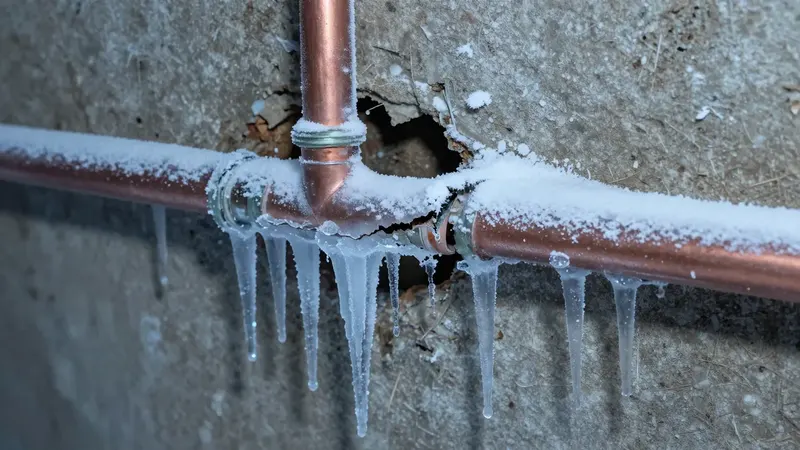
Houses built from the late 1940s onward may still have original galvanized supply lines, older drain piping or roofs that have been layered over more than once. Crawlspaces under these homes can collect water when gutters overflow during a wet December, and a hard freeze can split pipes running near foundation vents.
Water damage restoration in Cedar Hills typically follows the usual contractor sequence: stop the leak, remove water, measure moisture inside walls and subfloors, then dry with air movers and dehumidifiers. In older homes, ask whether materials like plaster or older flooring need testing before demolition. For the rebuild that follows, see water damage repair; pipe failures are covered on burst pipe water damage.
Federal disaster declarations that included Washington County
FEMA records show Washington County was included in 4 major disaster declarations for weather or fire events from 2000 through 2026 (3 severe storm, 1 fire, by FEMA incident type). Declarations are made at the county level, so they do not mean every neighborhood in Cedar Hills was affected. The most recent:
- 2020 – Wildfires and Straight-line Winds (DR-4562)
- 2016 – Severe Winter Storms, Straight-line Winds, Flooding, Landslides, and Mudslides (DR-4258)
- 2009 – Severe Winter Storm, Record and Near Record Snow (DR-1824)
- 2007 – Severe Storms, Flooding, Landslides, and Mudslides (DR-1733)
Source: OpenFEMA Disaster Declarations Summaries, retrieved 2026-10-10. Counts include major disaster (DR) declarations with hurricane, flood, severe storm, tropical storm, fire, tornado, coastal storm, winter or ice storm, mudslide and dam/levee incident types.
Water, fire or storm damage in Cedar Hills?
Call (866) 937-3230 and tell us what happened at your Cedar Hills property.
Kitchen fires, smoke odor and filters after smoky summers
Tualatin Valley Fire and Rescue provides fire and emergency medical service here. Once a fire is out, cleanup usually involves removing charred materials, cleaning soot from each surface type, and treating odor that has soaked into cabinets, insulation and fabrics. Smoke can travel through older forced-air ductwork to rooms far from the fire.
The 2020 wildfire declaration included Washington County, and smoky late-summer weeks can leave fine ash in HVAC systems. Our smoke damage cleanup and fire damage cleanup pages describe what a typical contractor does for a house of this age.
Ice, wind and soggy-ground cleanup
The established tree canopy that makes postwar neighborhoods attractive also brings risk when wind or ice hits. Limbs falling on roofs, as in the 2016 straight-line wind and winter storm declaration, can open a home to rain for days. Prolonged storms can also leave water ponding against foundations and seeping into crawlspaces.
Outdoor water that gets inside is considered contaminated, so a reputable company will usually remove affected insulation and carpet pad and sanitize before drying. Learn about storm damage cleanup and basement flood cleanup if storm runoff reached your lower level.
Keeping mold out of an older Cedar Hills house
Older homes often have less insulation and fewer exhaust fans than newer ones, which means more condensation on cold walls and windows during wet months. Bathrooms, closets on north walls and crawlspaces are common mold spots.
EPA guidance indicates a homeowner can usually handle mold covering less than about 10 square feet; beyond that, a professional using containment is the safer choice. Fixing ventilation and leaks is what keeps it from coming back. See mold remediation to learn what containment and clearance involve.
Safety steps and paperwork for Cedar Hills residents
- Call 911 for fire, a gas smell, injuries or any immediate danger.
- Keep away from sagging ceilings and from wet areas near outlets or the electrical panel.
- Register for Washington County alerts through OR-Alert.
- If your home is part of the Homes Association, check whether exterior repairs need approval.
- Photograph damage before cleanup and confirm coverage with your insurer or agent.
Neighborhoods and nearby communities
Nearby communities with their own pages (straight-line distance from Cedar Hills):
- Beaverton · 1 mi
- Cedar Mill · 2 mi
- West Haven-Sylvan · 2 mi
- Oak Hills · 3 mi
- Aloha · 3 mi
- Rockcreek · 5 mi
Cedar Hills restoration FAQs
How old are most homes in Cedar Hills?
The development began in 1946, with the shopping center following in 1955, so many houses date to the late 1940s and 1950s. Older plumbing, roofing and insulation can make these homes more vulnerable to leaks and condensation.
When do leaks usually show up here?
Mostly from November through January, when Beaverton's records show the heaviest rain. Clogged gutters and aging roofs are common sources. Summer problems tend to be plumbing or appliance failures.
Who provides fire service to Cedar Hills?
Tualatin Valley Fire and Rescue provides fire protection and emergency medical services. After the fire is out, a restoration contractor you choose handles soot, odor and rebuilding.
Do I need HOA approval for repairs?
Many homes fall under the Homes Association of Cedar Hills. Interior restoration usually isn't an issue, but check the association's rules before changing roofing, siding or other exterior features.
How can I find a contractor quickly?
Call (866) 937-3230 and we'll try to connect you with an independent restoration contractor serving the area. We can't promise timing or availability, which depends on local providers.
Restoration guides
- Water Damage Restoration
- Burst Pipe Water Damage
- Water Damage Repair
- Smoke Damage Cleanup
- Storm Damage Cleanup
- Mold Remediation